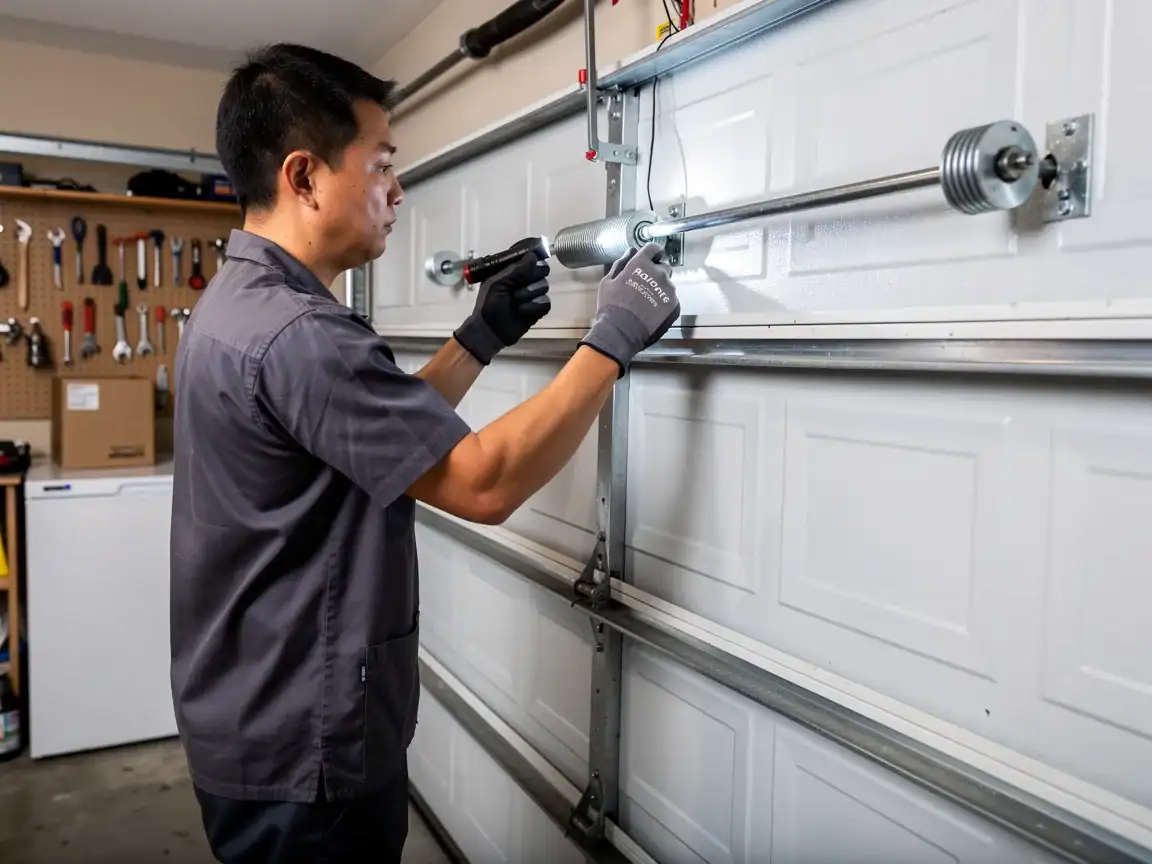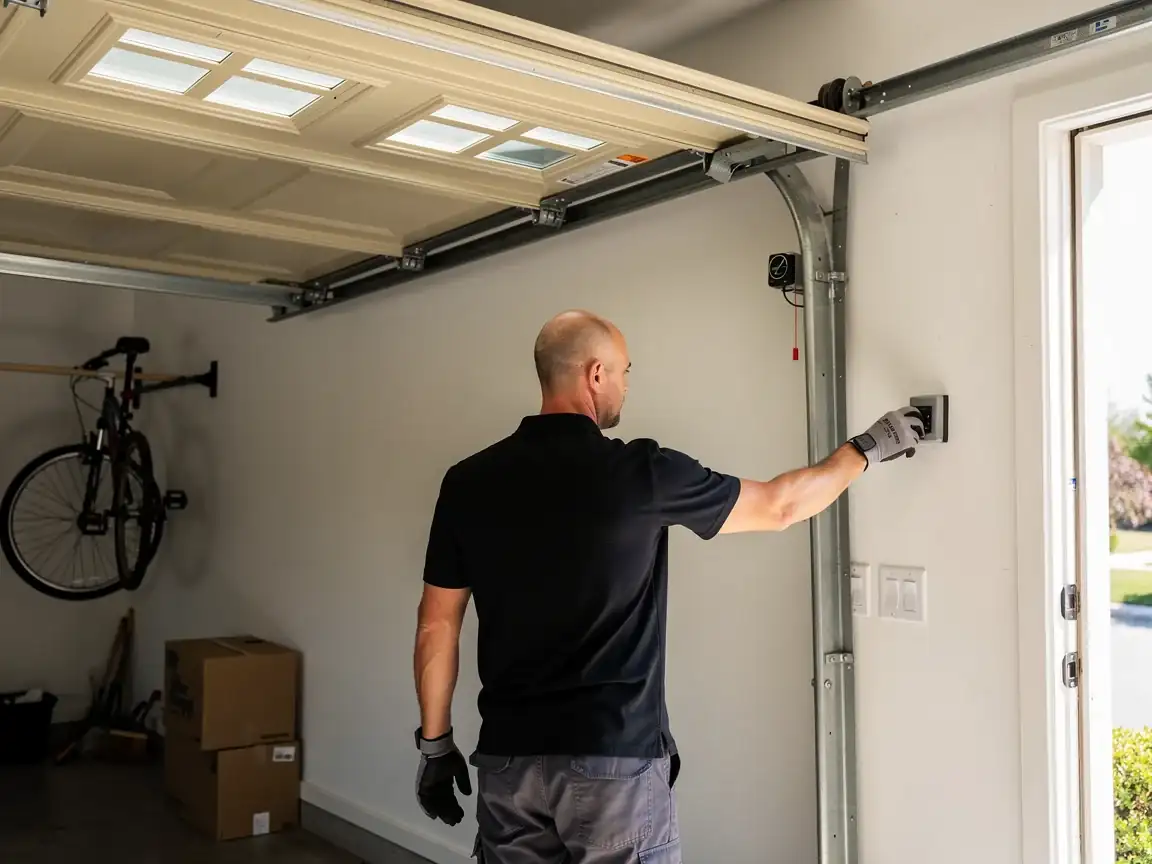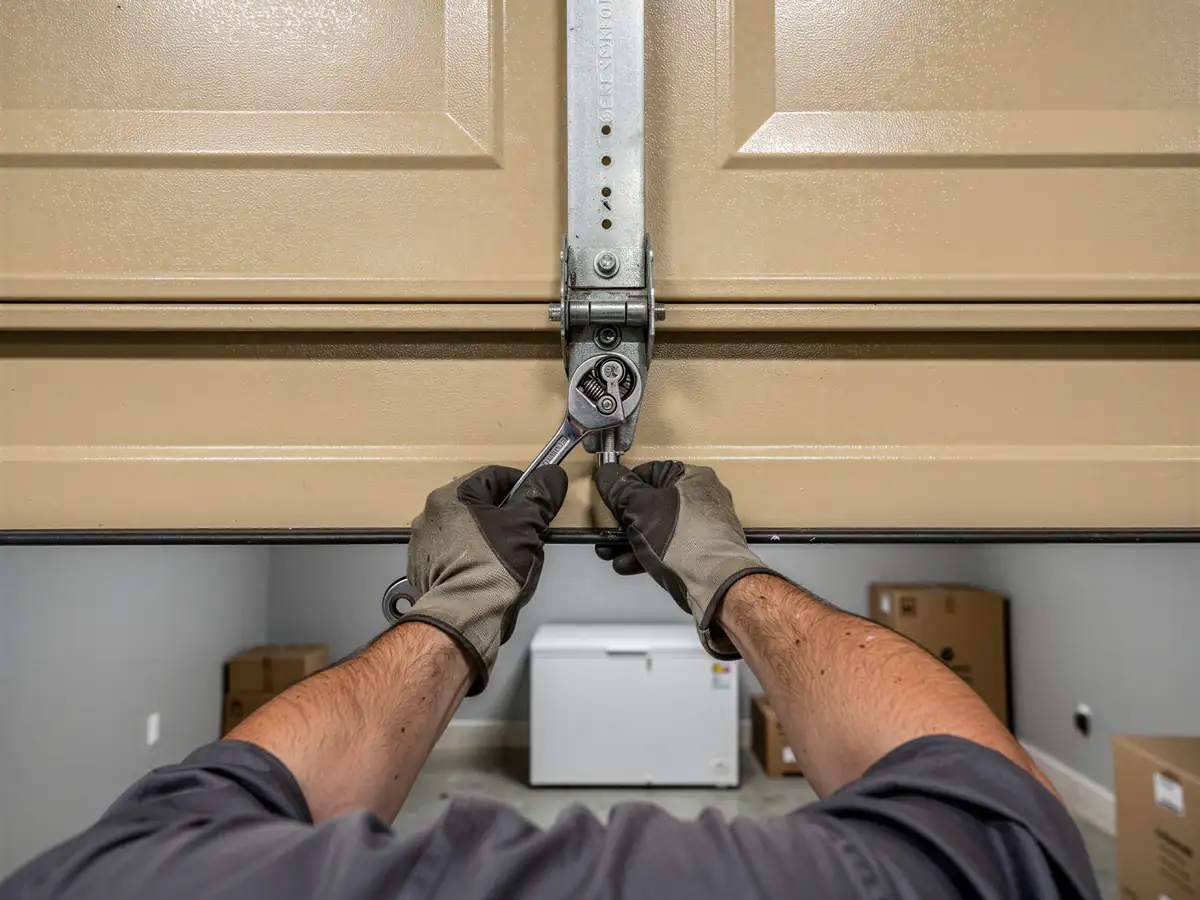
What Is Going On
Most of the housing around Waltham went up between 1938 and 1993, with the median build year landing at 1966. That matters more than people think. A door hung on a house built in the 1960s or 70s was framed and sized to codes that didn't ask much of insulation or air sealing. The result, decades later, is a lot of original jamb framing and rough openings that were never built to hold a thick, insulated panel door - they were built for thin steel or wood slabs with no thermal break.
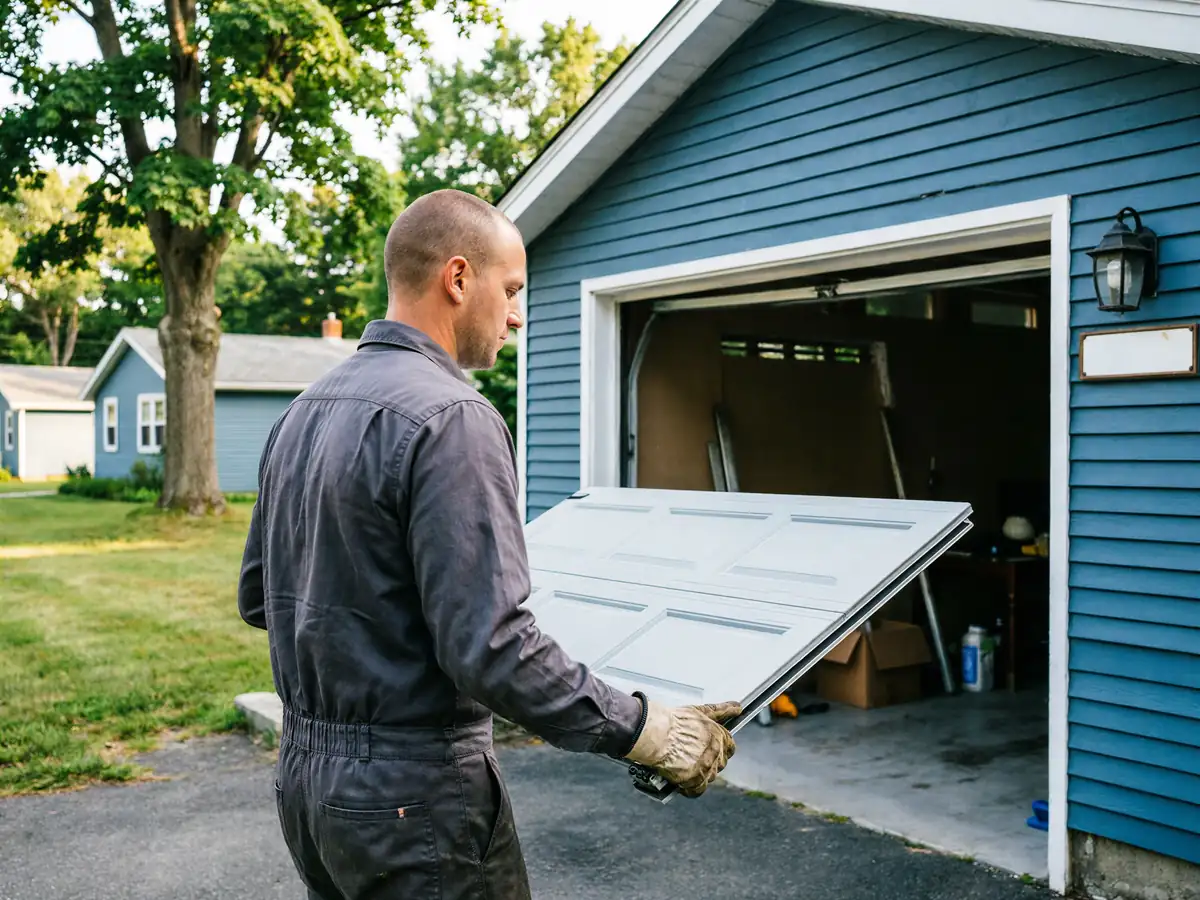
In pockets like that older framing is common, and a lot of the garages were built as afterthoughts to houses that predate the attached two-car garage norm. When you go to replace a door in one of these openings, you're often fighting a rough opening that's slightly out of square after 60 years of settling, not just swapping one door for another.
Across the 71 named areas that make up this part of the service territory, the pattern repeats: 1960s and 70s stock dominates, with pockets older and newer mixed. That's the baseline we work against on almost every call - not a newer subdivision where every opening is standard.
What You Pay
We're not going to give you a number here
Because we don't have one to give honestly - it depends on the door, the opening, and whether the hardware is original or already replaced. What we can tell you is what drives the cost up on a house from this era: non-standard rough openings, settled framing that needs shimming, and torsion hardware mounted for a lighter door than what you'd put in today.
If your garage hasn't been touched since the house was built
Budget time and conversation into the estimate, not just a door price. A straightforward swap on a newer opening is a different job than fitting a door to a 1960s frame that's moved an inch since it was poured.
One honest limitation
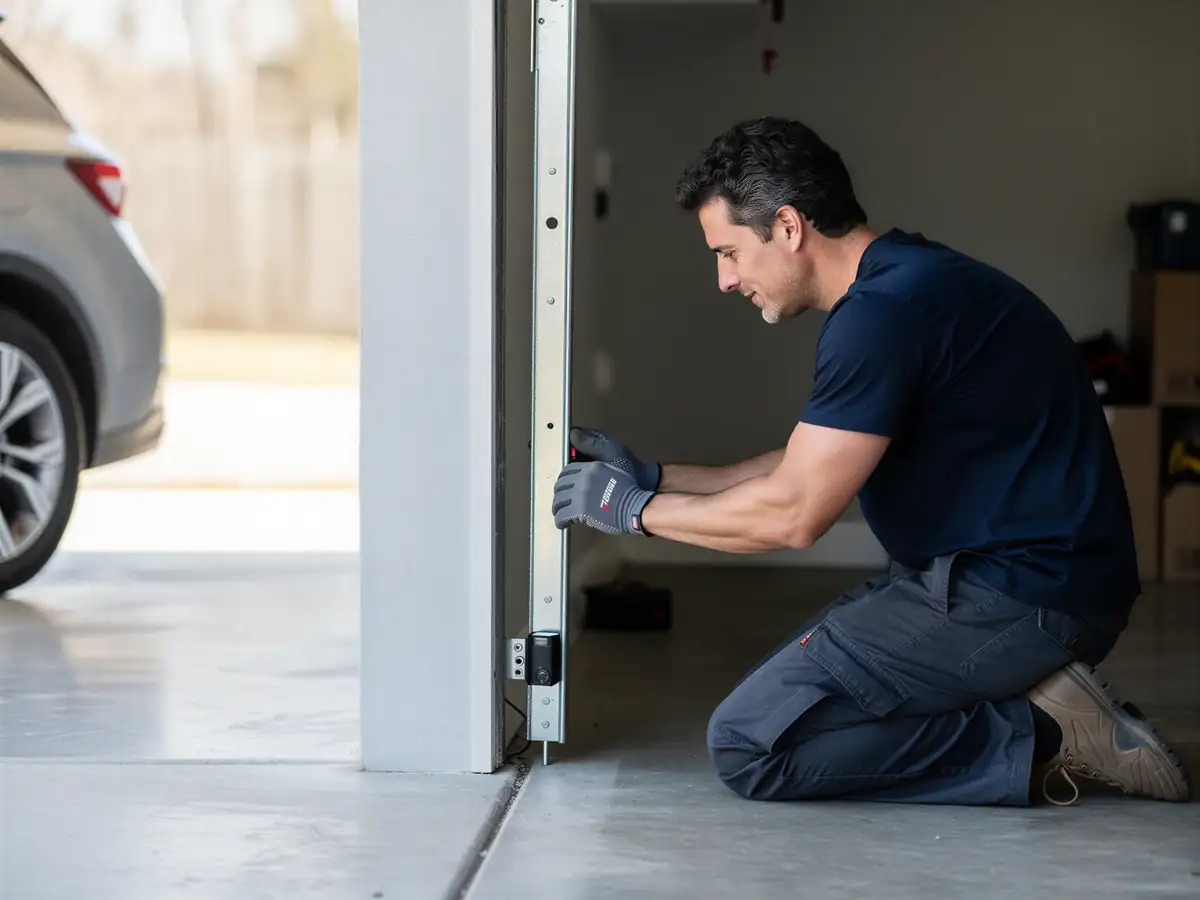
If your opening is badly out of square, sometimes the right answer is reframing before the door goes in, not forcing a stock door to fit. We'll tell you when that's the case rather than install something that'll bind in six months.
The Seasonal Bit
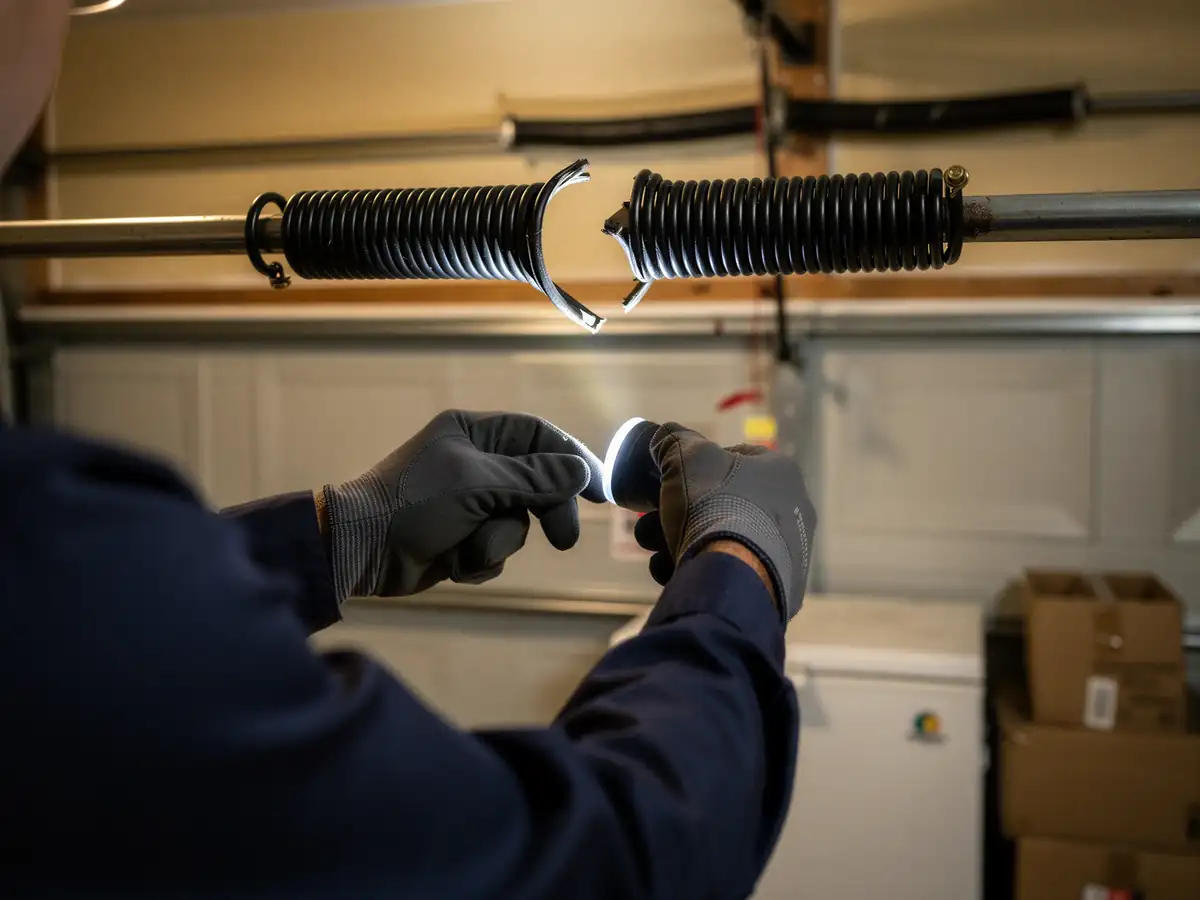
This area sits in a cold, severe climate band, and that shows up on two ends of the year. In winter, steel contracts and lubricant thickens, so springs that were already marginal tend to fail on the first really cold morning rather than gradually. In a house built before insulation rules were common, the garage itself is often uninsulated too, which means the temperature swing inside the garage tracks the outdoor swing almost one for one - there's no buffer.
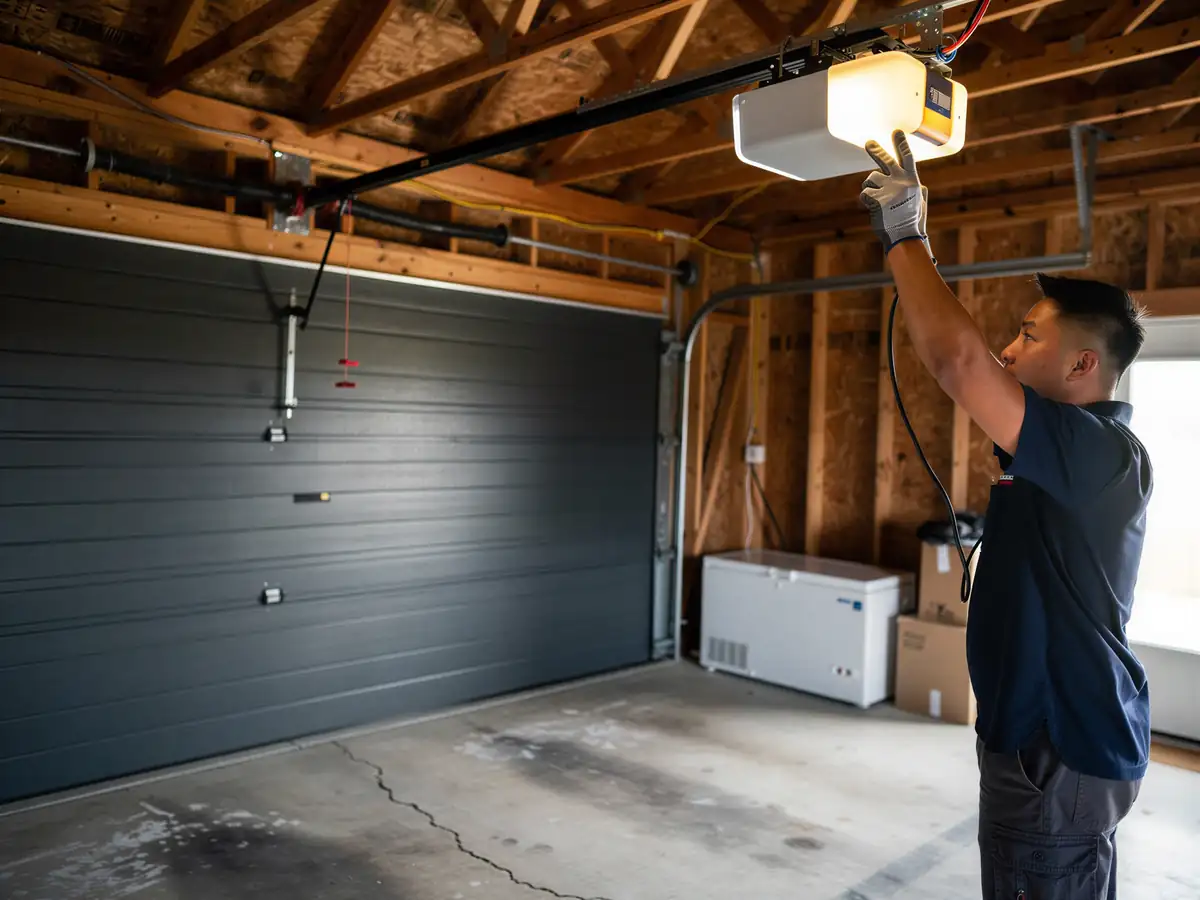
Spring and fall are when we see the openers acting up most, because temperature swings of 40-50 degrees in a day stress the drive gear and belt on units that are already a decade or two old. If your opener is original to a 1970s build, it's likely a chain-drive unit that was never rated for today's insulated, heavier panel doors - another reason the door and the opener often need to be addressed together, not separately.
What the Weather Here Does to It
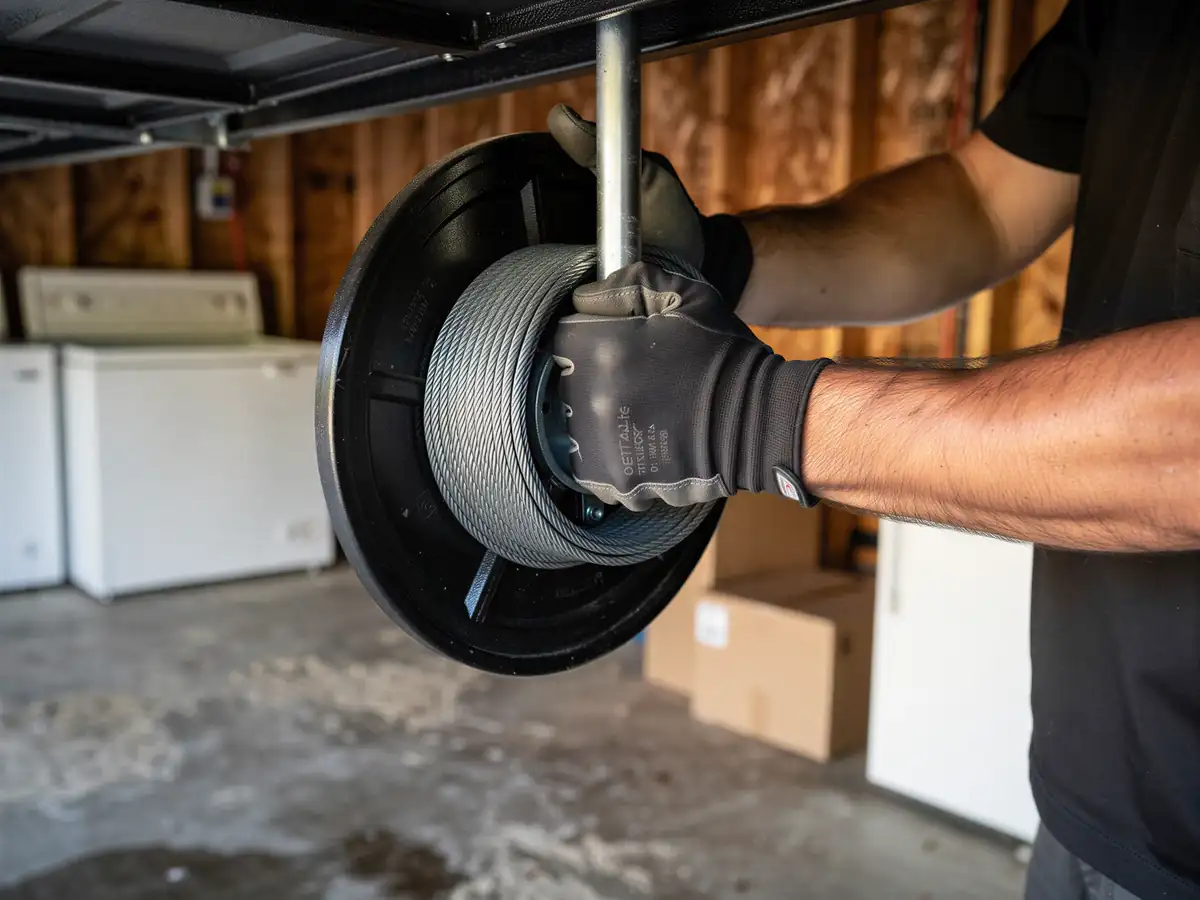
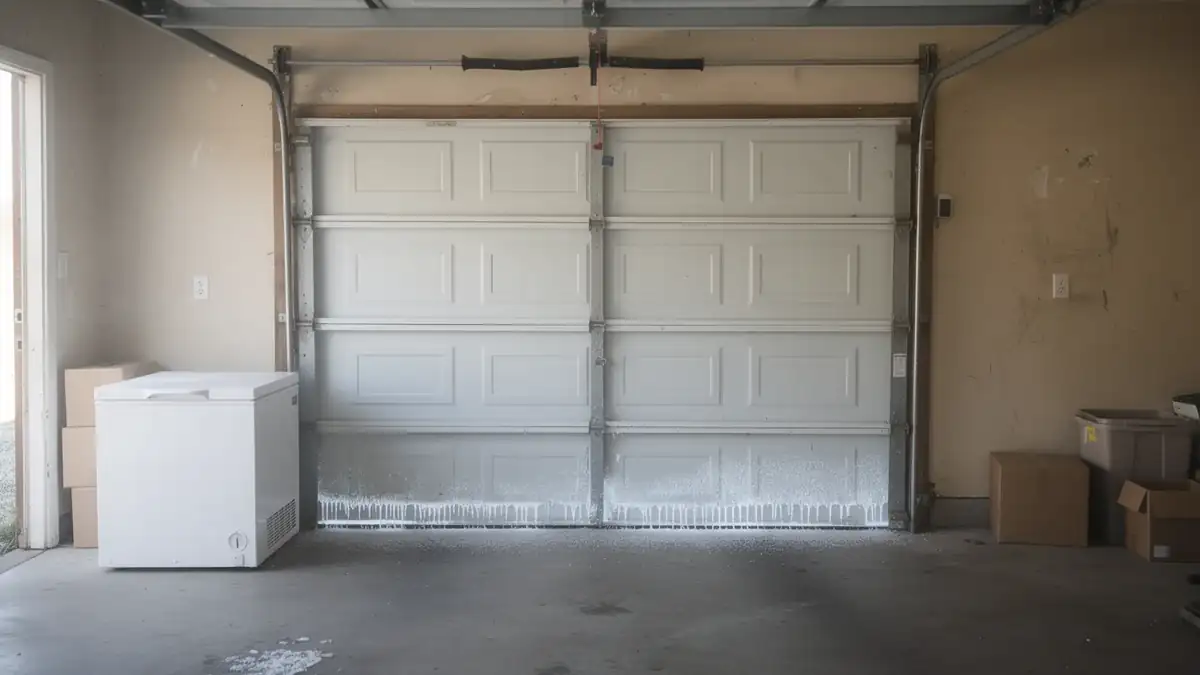
A cold, severe climate band means real freeze-thaw cycling, and that's hard on anything metal that flexes - tracks, hinges, and especially torsion springs that were sized for a lighter, uninsulated door decades ago. On houses built before insulation rules, the garage door is often the single largest uninsulated opening in the building envelope, and in a cold winter that shows up as condensation on the inside of the panel, which speeds up rust on original steel hardware.
We see this most on original one-piece or early sectional doors still running on their factory springs. They weren't built wrong - they were built for a climate expectation and a code era that's 50-plus years behind where we are now. Swapping to an insulated door doesn't just cut a draft; it takes load off hardware that was never meant to carry today's heavier panels through a New England winter.