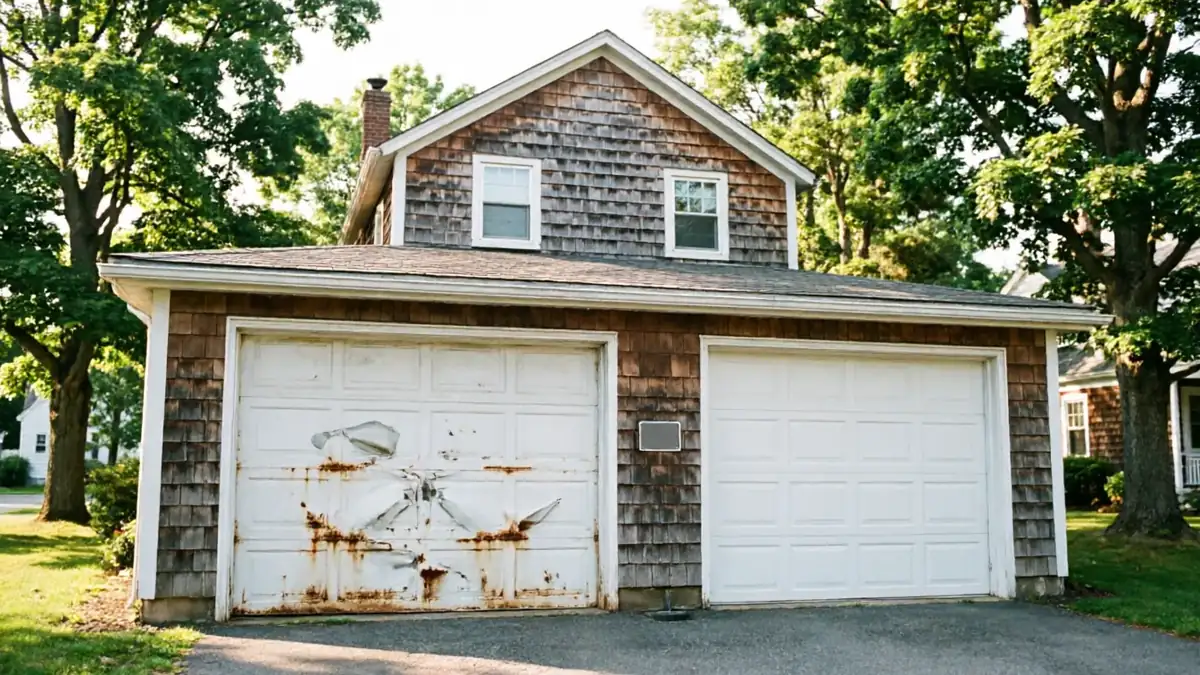
What Is Going On
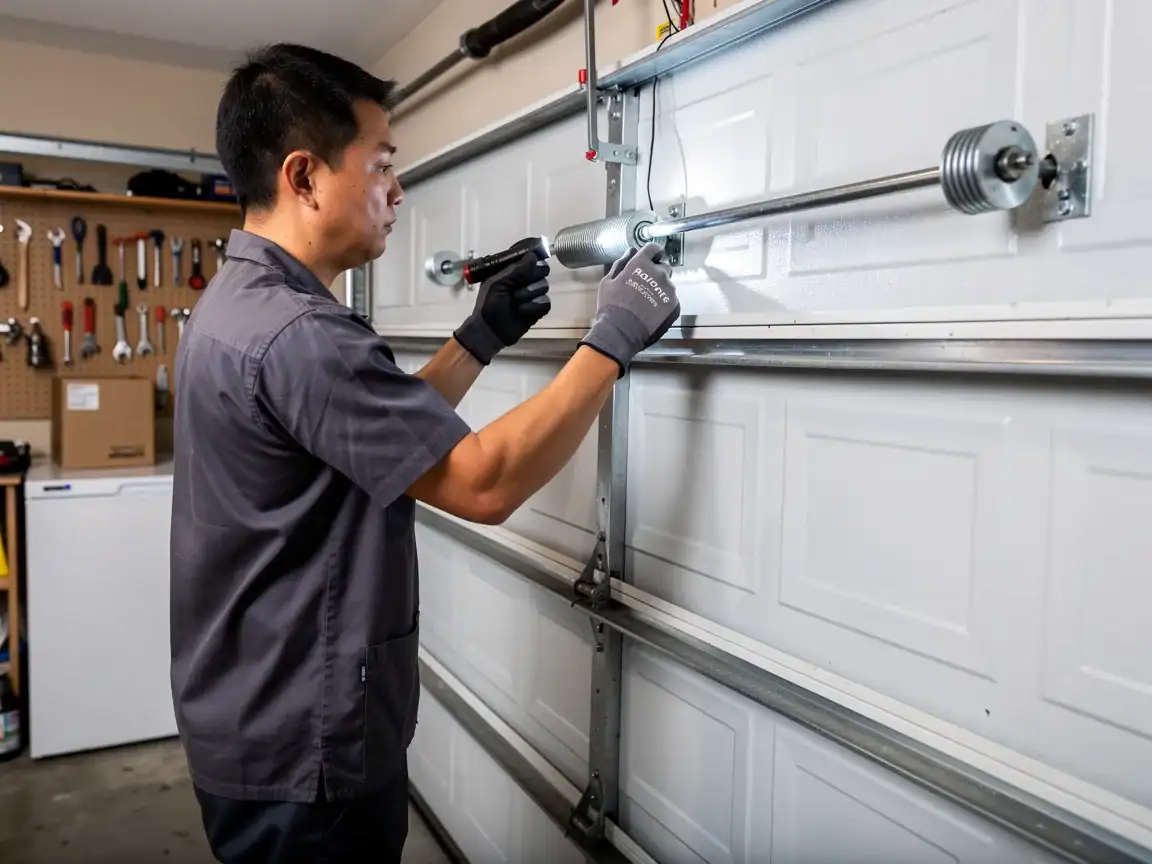
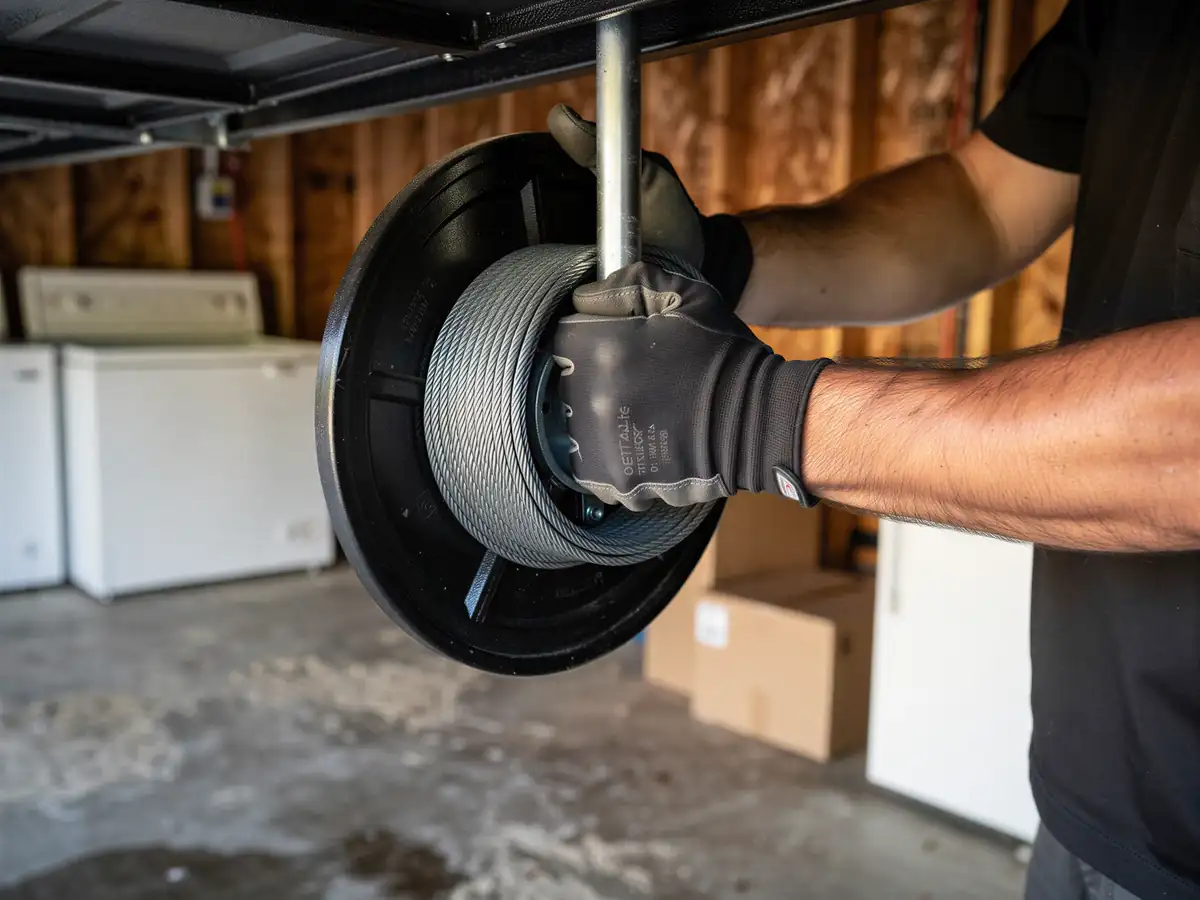
Most of the housing around Waltham went up between 1938 and 1993, with the median landing around 1966. That puts a lot of doors and openers at or past the end of their working life, not because anyone neglected them, but because the hardware is that old. A door from the 1960s or 70s build wave is running on a torsion spring system that's been cycled tens of thousands of times, on track that's been re-shimmed more than once, on an opener motor that was never built for forty-plus years of service.
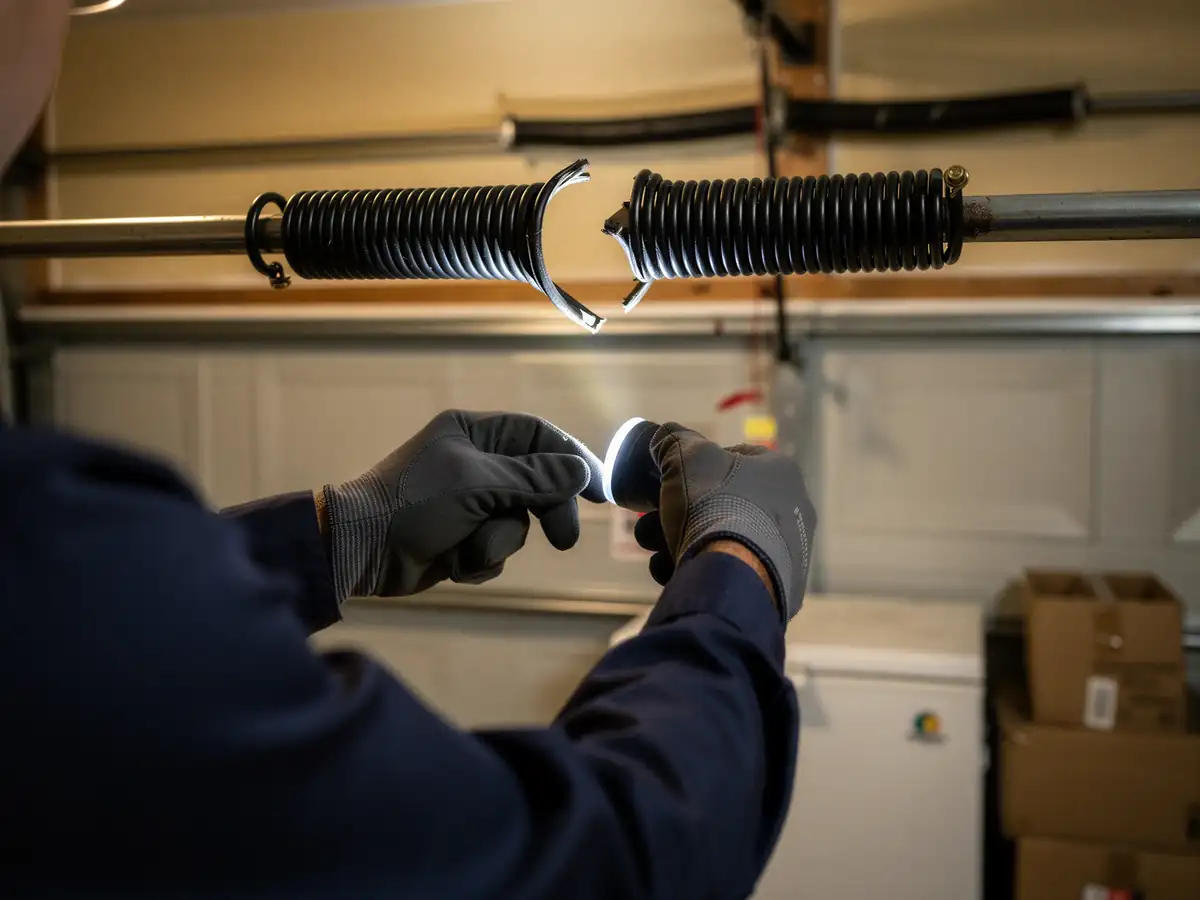
The question isn't whether the door still opens. It's whether you're fixing a door or fixing a house's worth of accumulated wear one part at a time. A broken spring on a door that age is a normal call. A broken spring plus a worn opener plus bent track plus a panel that's rusted through at the bottom is a different conversation - at that point each fix you pay for is buying a little more time on a system that's already told you where it's headed.
We'll tell you straight when a repair is a repair and when it's a stopgap. We don't have a fixed age cutoff to hand you, because two doors from the same year can be in very different shape depending on how they were maintained. But if your door is from that original 1960s-70s stock and you're calling us for the second or third time in a year, that's the signal worth paying attention to.
What You Pay
We don't publish a flat price list here
Because what a repair costs depends on what's actually wrong and what parts your specific door needs - and on hardware this old, that varies door to door. What we can tell you is how to think about the decision. A single spring or cable replacement on an otherwise sound door is money well spent. Stacking repairs on a door that's already had its track, its opener, and one spring replaced in the last couple of years usually isn't.
The math that matters is simple
Add up what you've spent on that door in the last two years, and ask what a new door and opener would run. If the repair bills are closing that gap, you're not saving money by keeping the old one going - you're just paying for it in installments with less to show for it. We'll give you a real number for your door rather than a rule of thumb, but we won't talk you into a repair we think is a short-term patch.
The Seasonal Bit
With a service area whose housing stock mostly dates to the 1960s and 70s, the wear pattern we see is pretty consistent: springs and openers that were installed as original equipment, or replaced once decades ago, finally giving out. That means late fall and early winter are when we get the most calls - not because doors break more often in cold weather, but because a spring that's been weakening for years tends to let go right when the temperature drop adds extra load.
If your door is original to a house built in that era and you haven't had the spring looked at, don't wait for it to snap on a morning when you need to get the car out. A spring inspection takes a few minutes and tells you whether you're looking at months of life left or years.
What the Weather Here Does to It
This area sits in a cold climate zone with real winter severity, and that matters more for an older door than people expect. Steel contracts in the cold, torsion springs lose tension faster when they're already near the end of their rated cycle count, and nylon rollers on original 1960s-70s hardware get brittle and start cracking in a way you won't see in a mild climate. None of that is dramatic on its own, but it's why a repair that would hold up fine in a warmer area can fail again within a season here.
That's part of why we're cautious about recommending a third or fourth repair on an old door once winter is close. A patch that works in October can fail in a January cold snap, and at that point you're paying for the same job twice. If your door and opener are both original to a house from that mid-century build era, we'll tell you honestly whether it's worth getting through one more winter or whether replacement now saves you a bad call in February.