What Is Going On
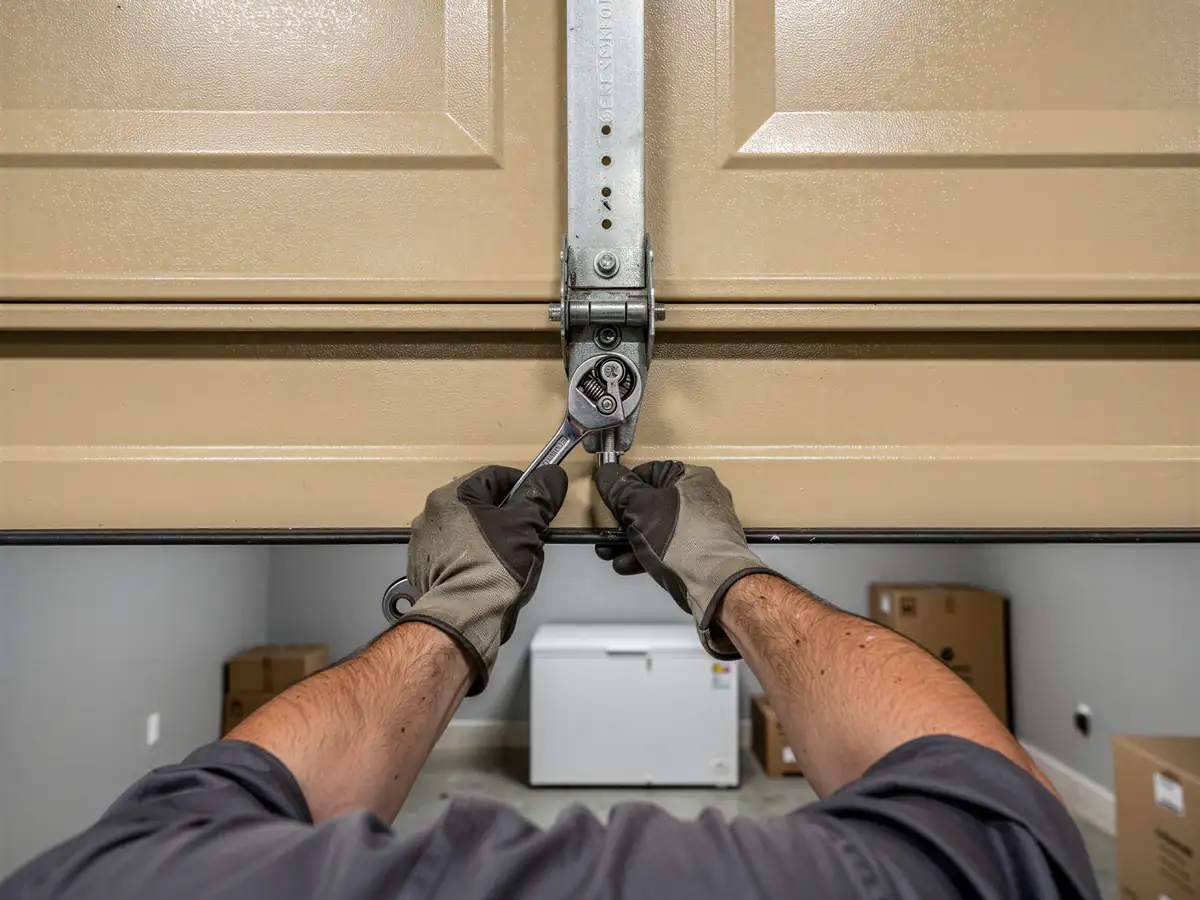
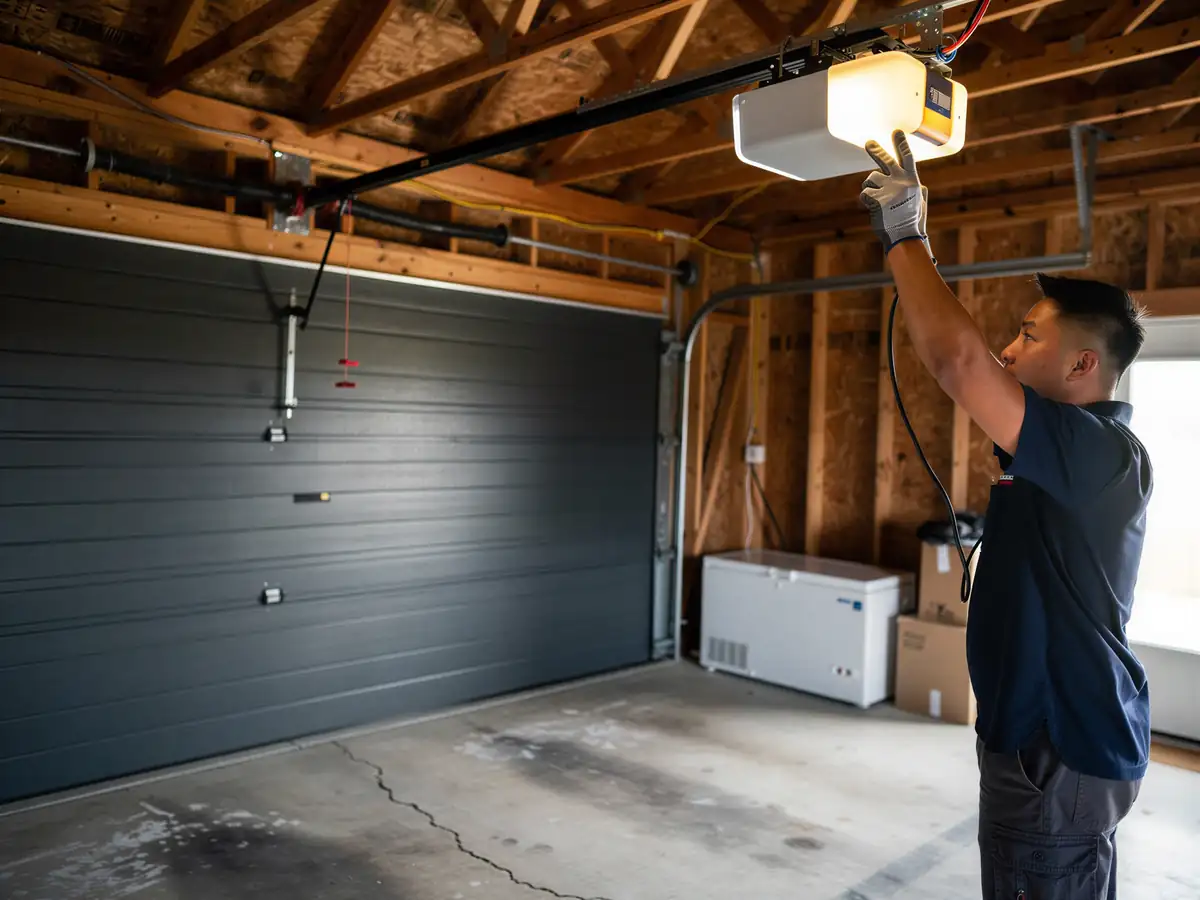
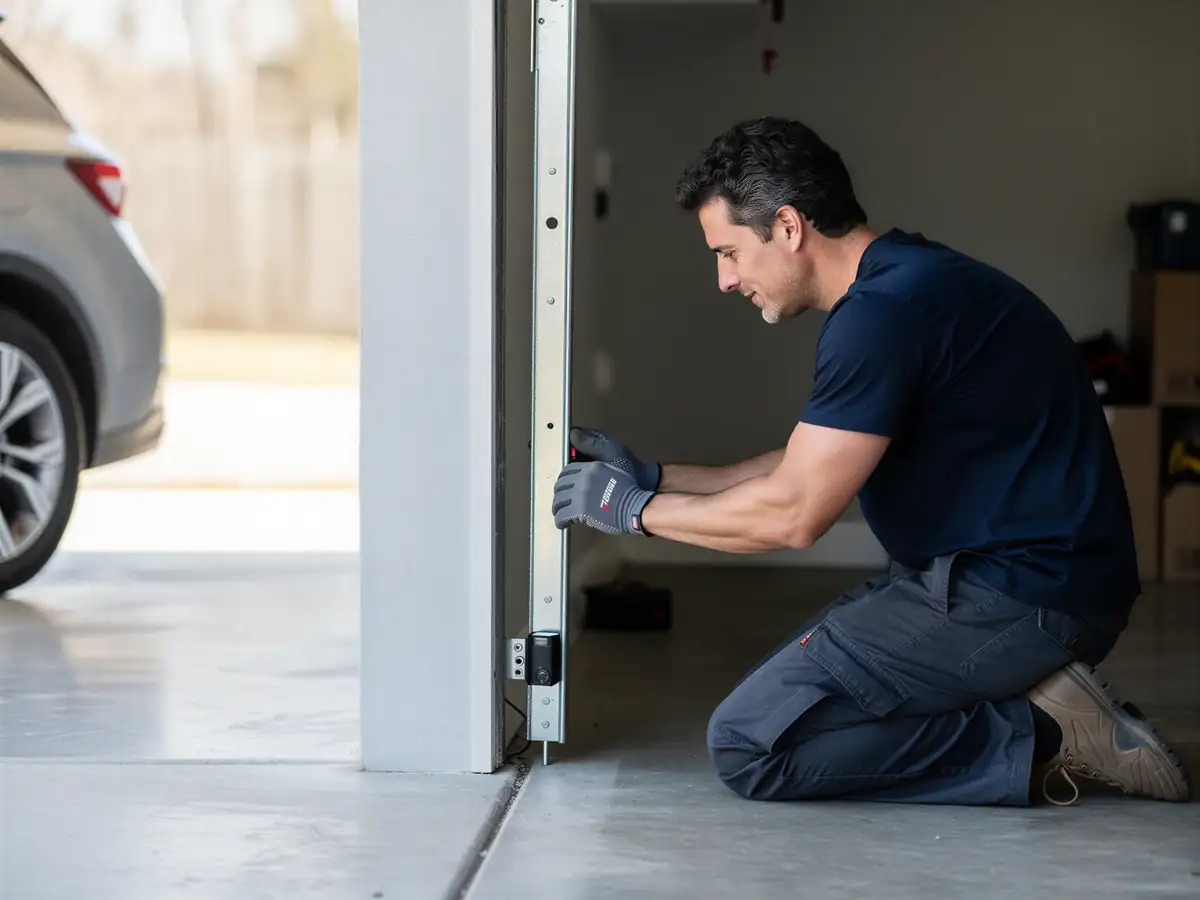
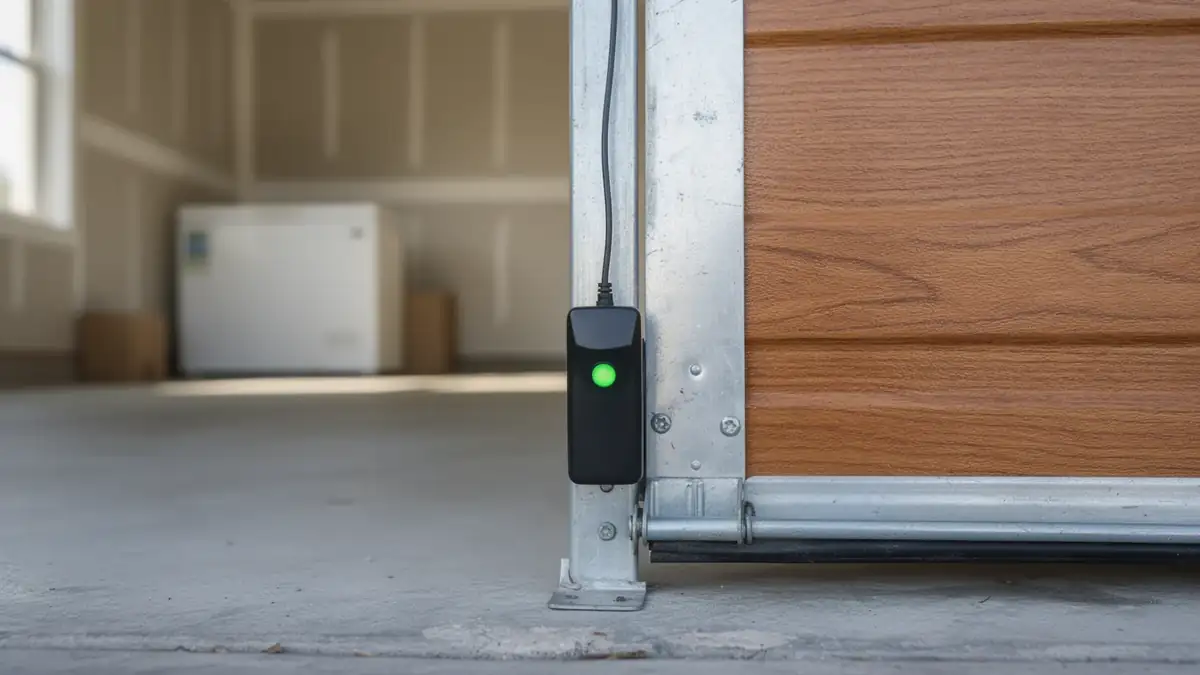
Those two small eyes near the bottom of your tracks are the safety sensors - one sends an infrared beam, the other catches it. Break the beam and the door won't close, or it reverses halfway down. In most of the houses we work on here, built between 1938 and 1993 with a lot of that stock going up in the 1960s and 70s, the sensors aren't the problem. The bracket they're bolted to is. Garages from that era were framed with the opener as an afterthought, and the sensor brackets got screwed into jamb trim that's been shifting slightly every year since. A quarter-inch of drift at the bracket shows up as a half-inch miss at the beam, and the door starts acting erratic for no reason anyone in the house can see. We get calls where someone's convinced the opener is dying when it's really just two eyes looking past each other.
Dust, spiderwebs, and a stray garden hose knocking a bracket also cause it, but on houses this old, structural movement is the usual suspect, not grime.
The Seasonal Bit
Alignment problems cluster around the shoulder seasons here - the stretch when the ground freezes and thaws, or when humidity swings hard from a dry cold spell into a damp one. Wood jambs in houses from the 1938-1993 range, especially the 1960s-70s builds that make up most of this stock, expand and contract with that moisture swing. The bracket doesn't move much in any one week, but it moves enough over a winter that a door aligned fine in October is throwing errors by February. If your door started skipping closes right around a cold snap, that's not a coincidence - that's the jamb moving under the bracket.
We see the same pattern on doors near Piety Carlisle, I mean over toward where a lot of the original framing is still in place. Newer additions and garages built after a remodel tend to hold alignment longer, simply because the lumber's had less time to move.
What the Weather Here Does to It
This area sits in a cold, severe climate band, and that matters more for sensors than people expect. Overnight temperature drops condense moisture right on the sensor lens, and on an older wood-framed garage that moisture has somewhere to go - into the jamb, which swells, which nudges the bracket. It's a slow cycle, but it repeats every winter for as long as the house stands, and on a house with a median build year around 1966, that's a lot of winters behind the current misalignment. Ice buildup on the bracket itself can also tilt it a degree or two, which is enough to break the beam.
One honest limitation: we can realign a sensor in one visit, but we can't stop the seasonal movement that caused it. On older frames, expect to recheck alignment once a year, usually after the first hard freeze, rather than treating one fix as permanent.