What Is Going On
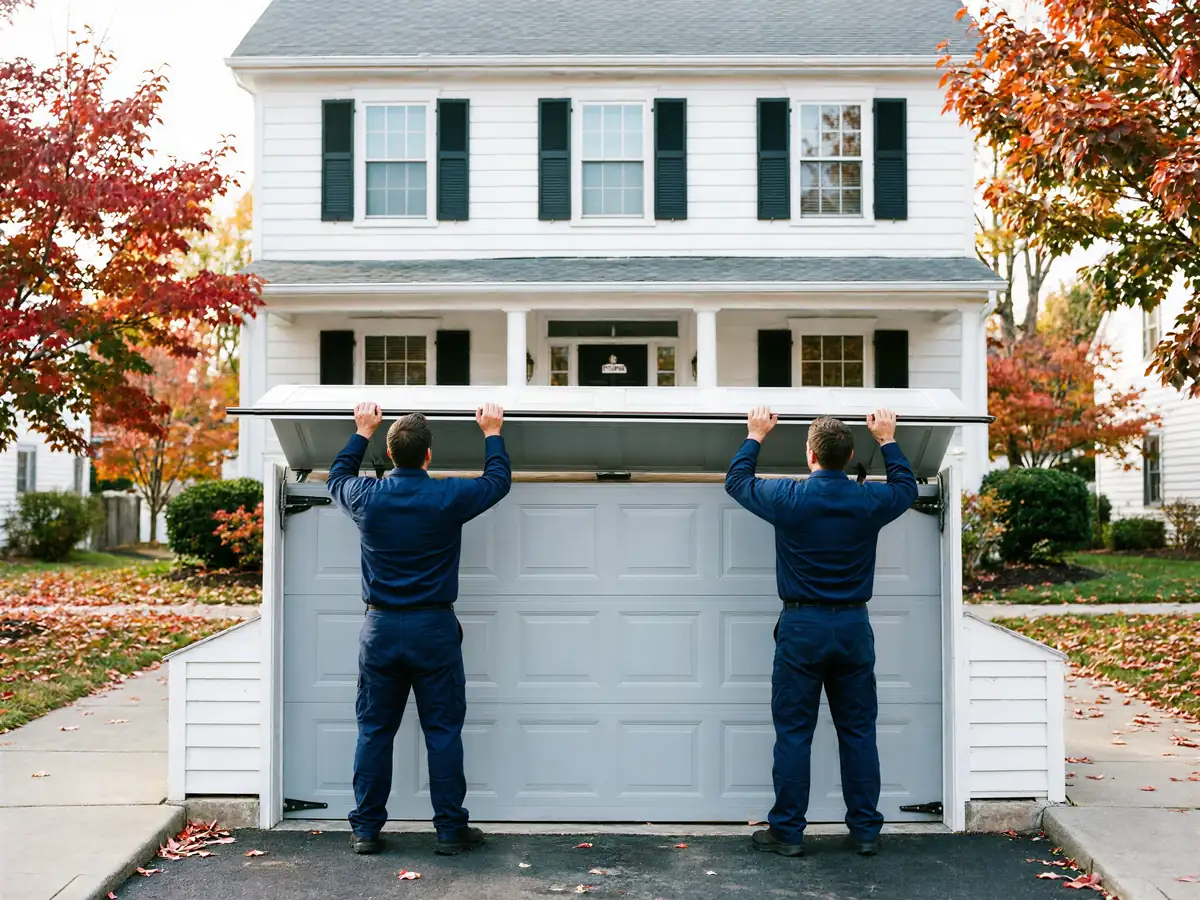
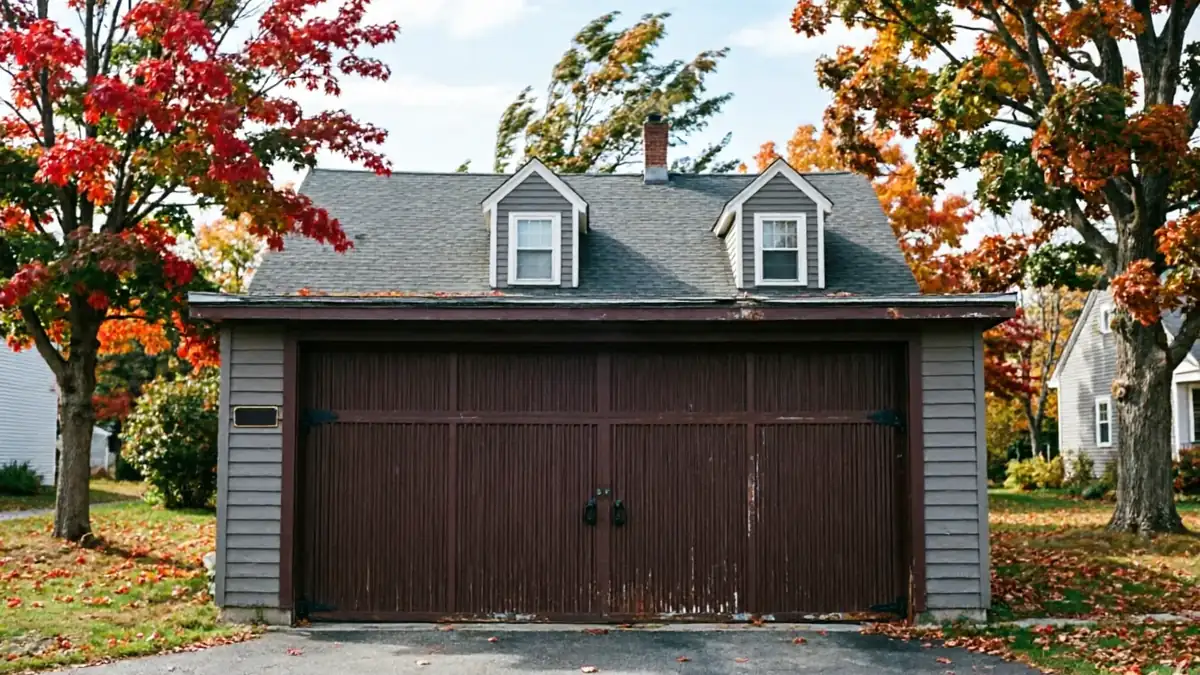
A double-wide garage door is a sail. Hang eighteen feet of panel on a track and point it into open wind, and you've built a surface that wants to flex every time the gusts pick up. In Waltham, most houses went up between 1938 and 1993, with the typical build year sitting around 1966 - right in the middle of the postwar wave of single-story ranches and split-levels that defined this part of town for decades. A lot of those garages started life with a single narrow opening and got widened later to fit a second car, without anyone swapping in heavier track brackets or a reinforced strut to match the new span.
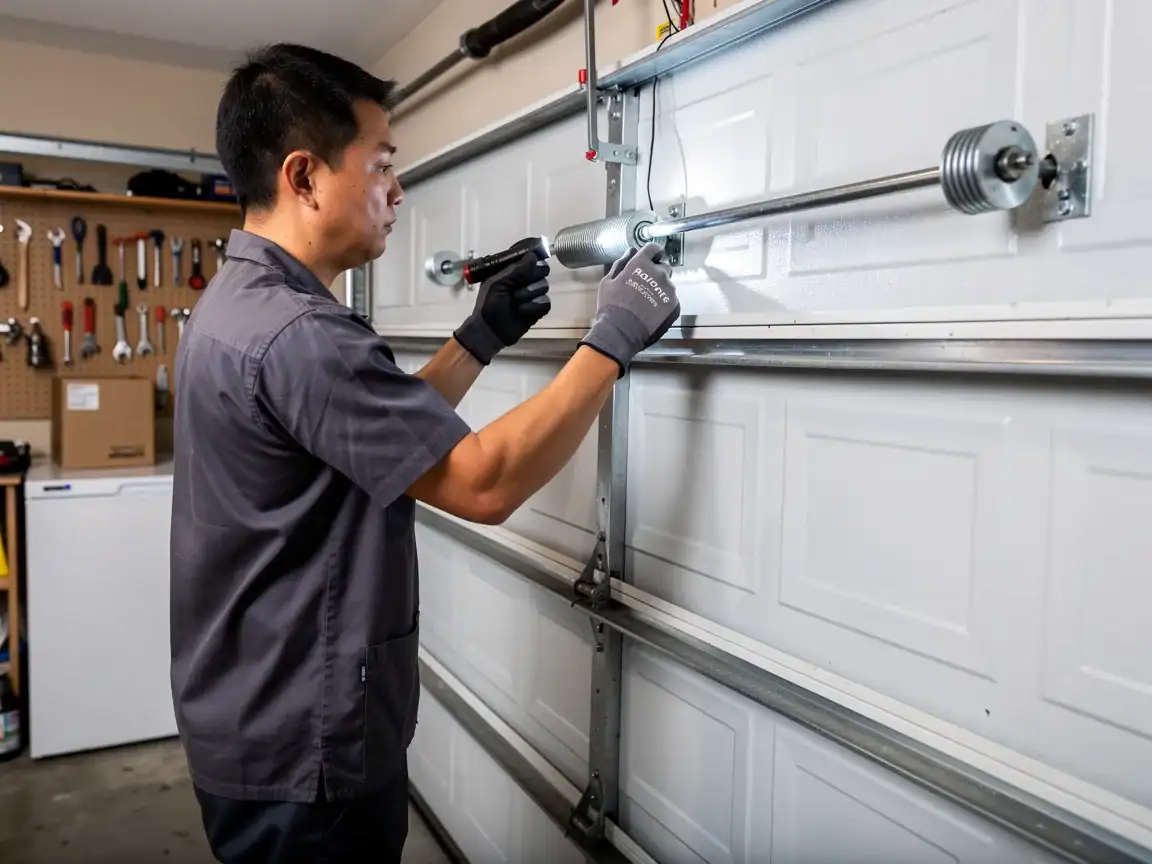
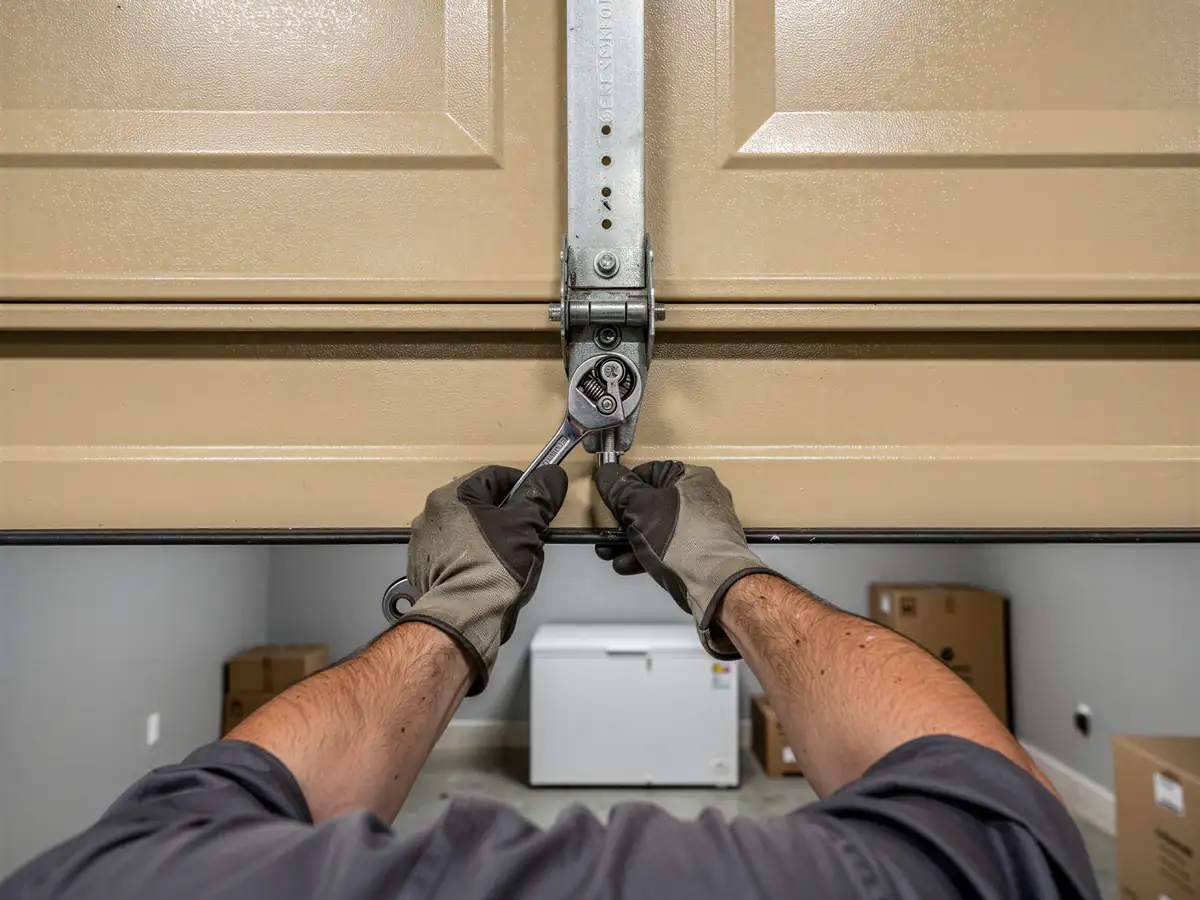
That matters because a wide door needs more than a motor to stay straight. It needs stiffeners running horizontally across the panel, lag-bolted jamb brackets instead of the lighter hardware a narrow door gets away with, and rollers that aren't worn thin from forty years of use. On a lot of the 1960s-70s stock still standing here, that upgrade never happened. The door still closes fine on a calm day. It's the gusty ones that find the weak spot - usually the top panel, where the wind catches the most area and the track has the least support.
What You Pay
We don't have a flat number to hand you here, and we're not going to make one up
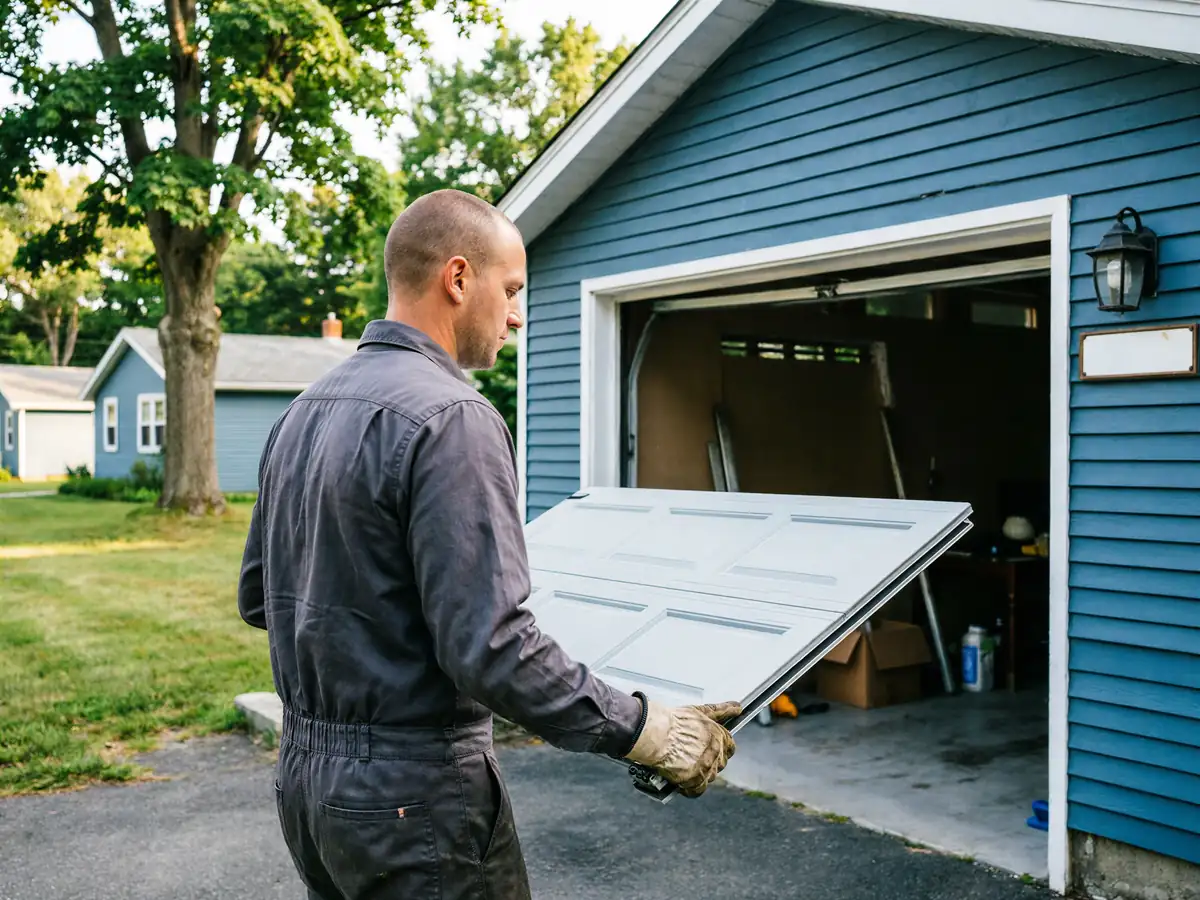
What drives the bill on a wind-related repair is usually whether you need a bent track straightened, a strut added to an existing panel, or a full panel replaced because the metal creased and won't pull back flat. The first is a service call. The third means ordering a matched panel, which can take time depending on the manufacturer and whether your door is still in production.
Across this service area, the median household income runs $150,820
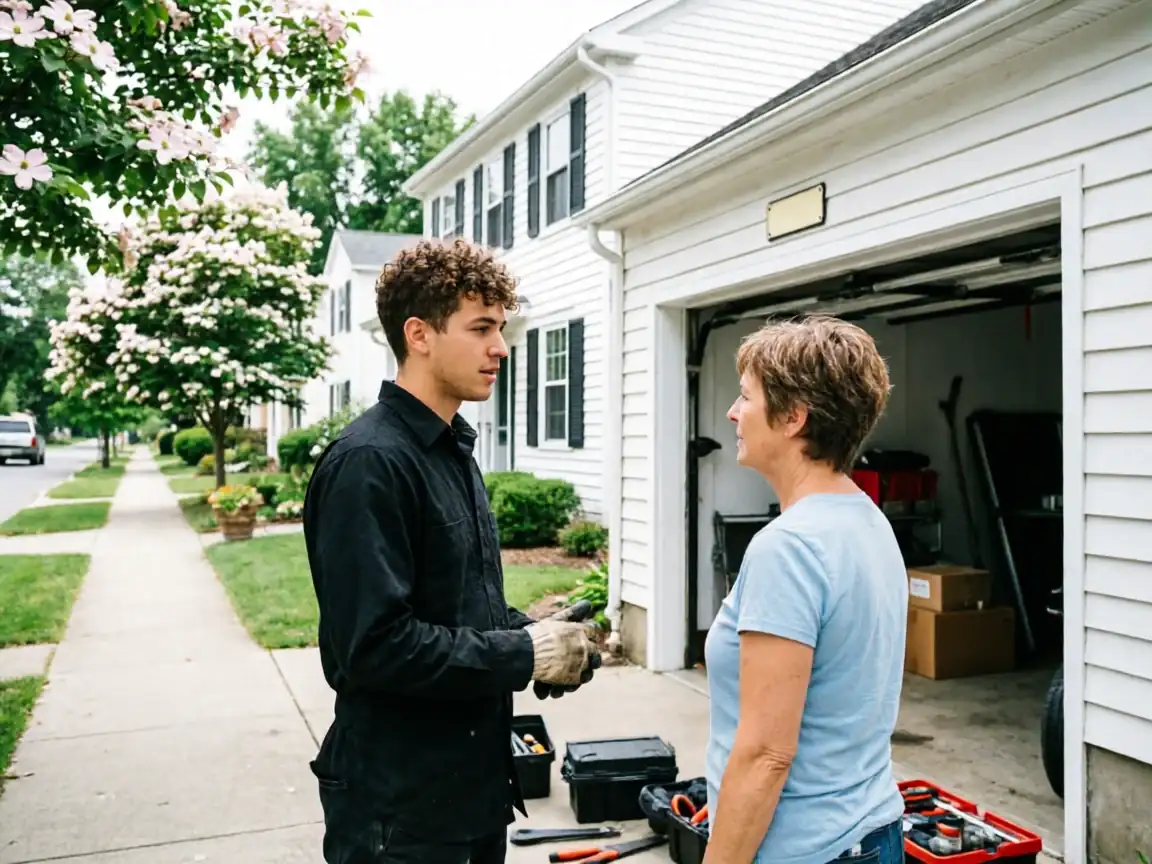
And in practice that means most owners here choose to fix the damaged section rather than wait it out through another storm season with a door that's already bowed. We won't quote you a number without seeing the door - a hairline crease and a sheared bracket are two different jobs even though they can look similar from the driveway.
- $150,820 median household income
The Seasonal Bit
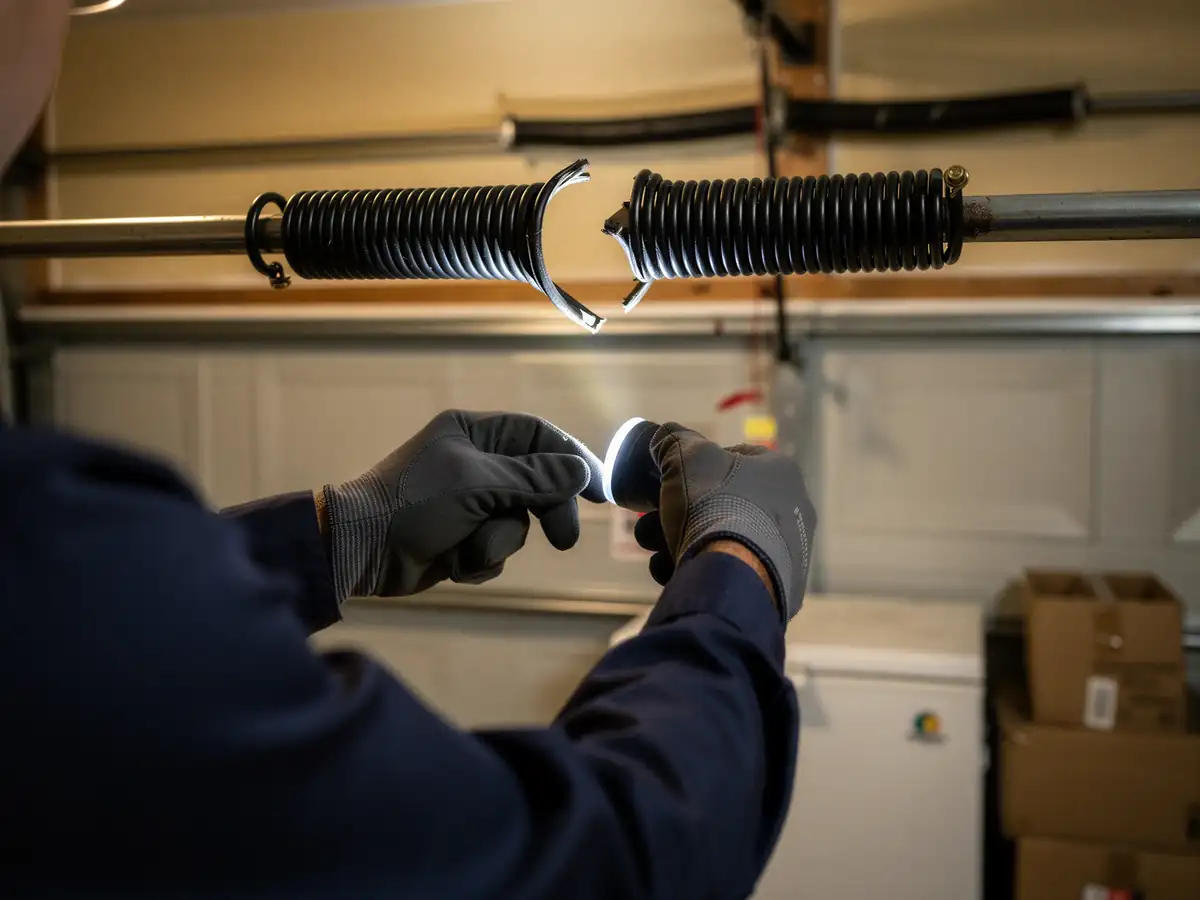
Wind damage doesn't show up evenly through the year. It clusters around the stretch when cold fronts move through fast and bring gusts ahead of them, which in a COLD severe climate band like this one means the real pressure on a wide door comes in late fall and winter, not summer. Cold makes everything stiffer and less forgiving at the same time wind is loading the panel harder - a spring that's already lost some tension from age has less give left to absorb a gust, and a track that's slightly out of plumb from decades of settling is more likely to bind right when the door is under the most lateral load.
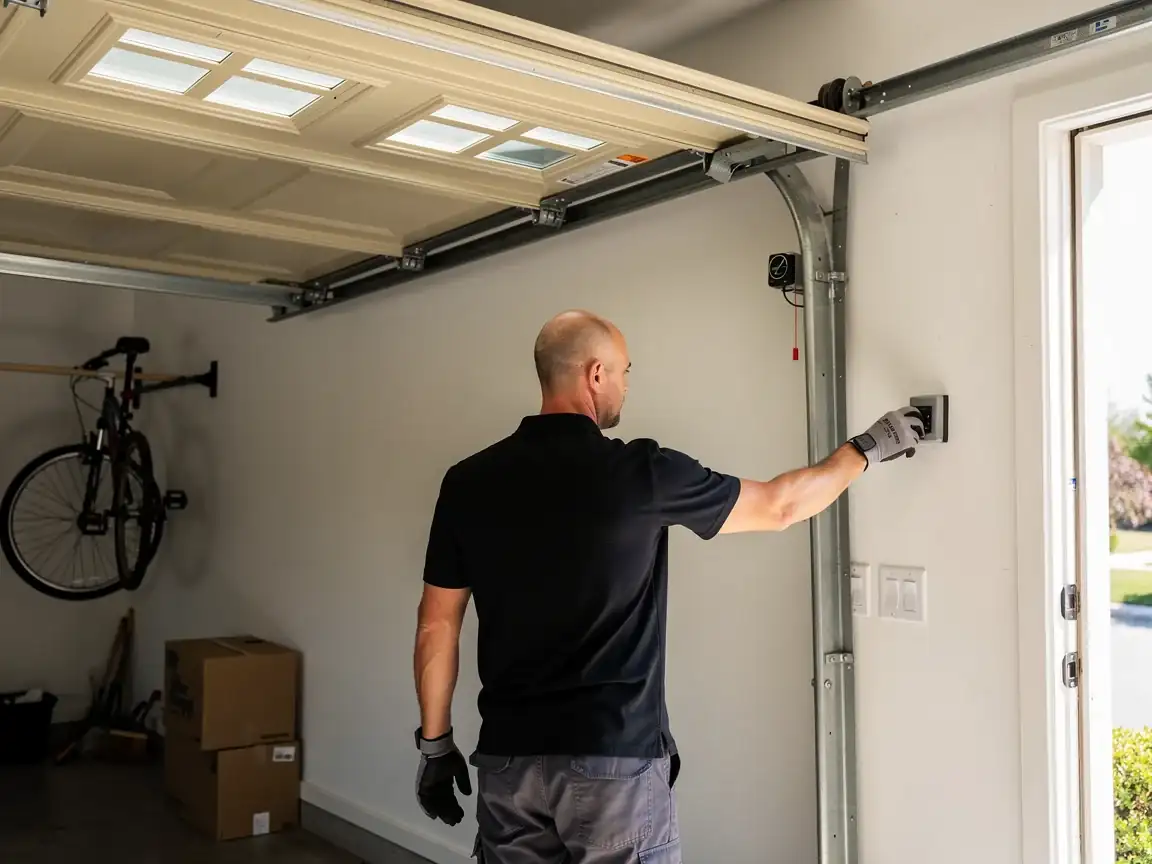
This is also when we see the complaints come in: a door that worked fine all summer suddenly won't seat right at the bottom, or it shudders audibly when the wind catches it mid-cycle. That's usually not a new problem. It's an old one that finally had enough load behind it to show itself.
What the Weather Here Does to It
Waltham's COLD severe classification isn't just a label - it shapes what a garage door has to survive every winter. Wind-driven cold cycles the hardware between contraction and flex faster than a mild climate would, and on a door built to 1960s-70s spec, that hardware was never engineered with today's wider openings or today's wind loads in mind. Across the roughly 243,594 owner-occupied houses in this part of the service area, a large share of garage doors are still running original or first-generation replacement hardware from that build-out era.
We can reinforce an older wide door with struts and heavier brackets, and often that's the right call. What we won't do is promise that reinforcement turns a forty-year-old panel into a new one - at some point the steel itself is fatigued, and a replacement door built for the span you actually have outperforms anything we bolt onto the old one. If your door is already bowing visibly, that's usually past the point where reinforcement is the honest answer.