What You Are Seeing
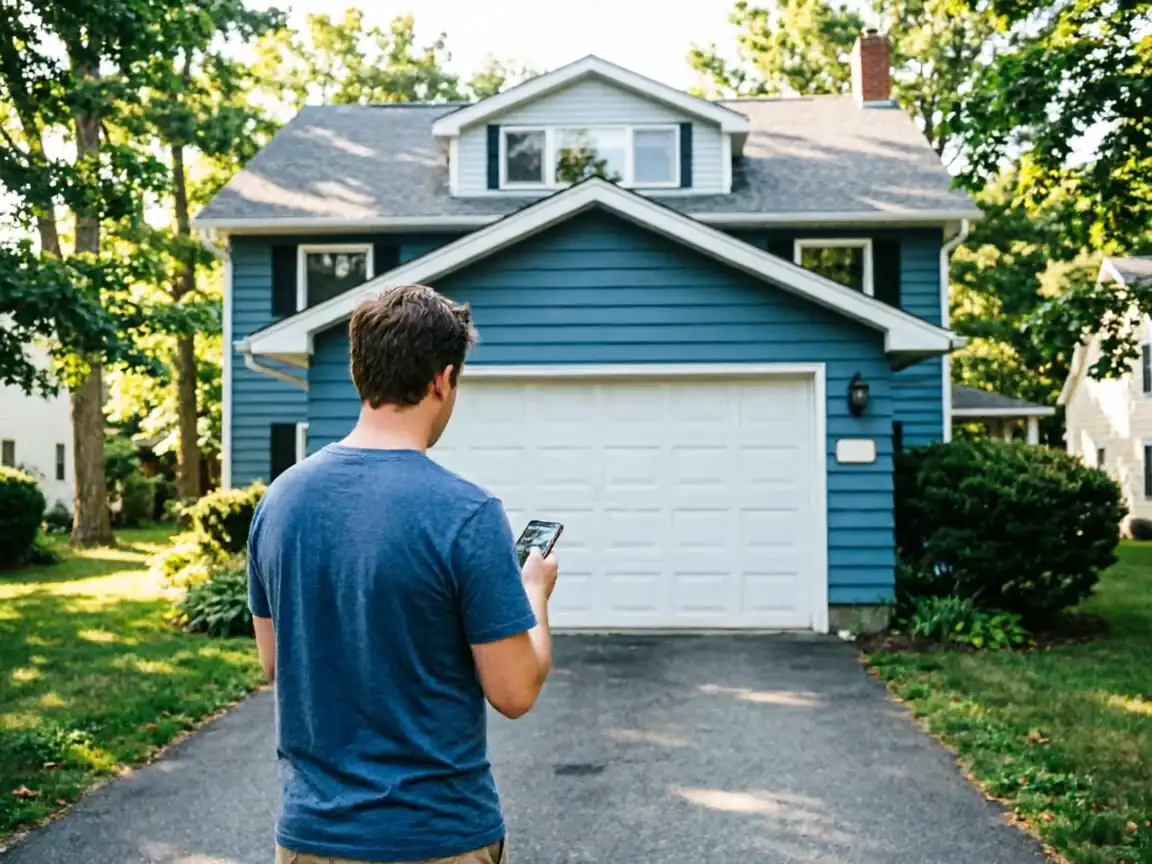
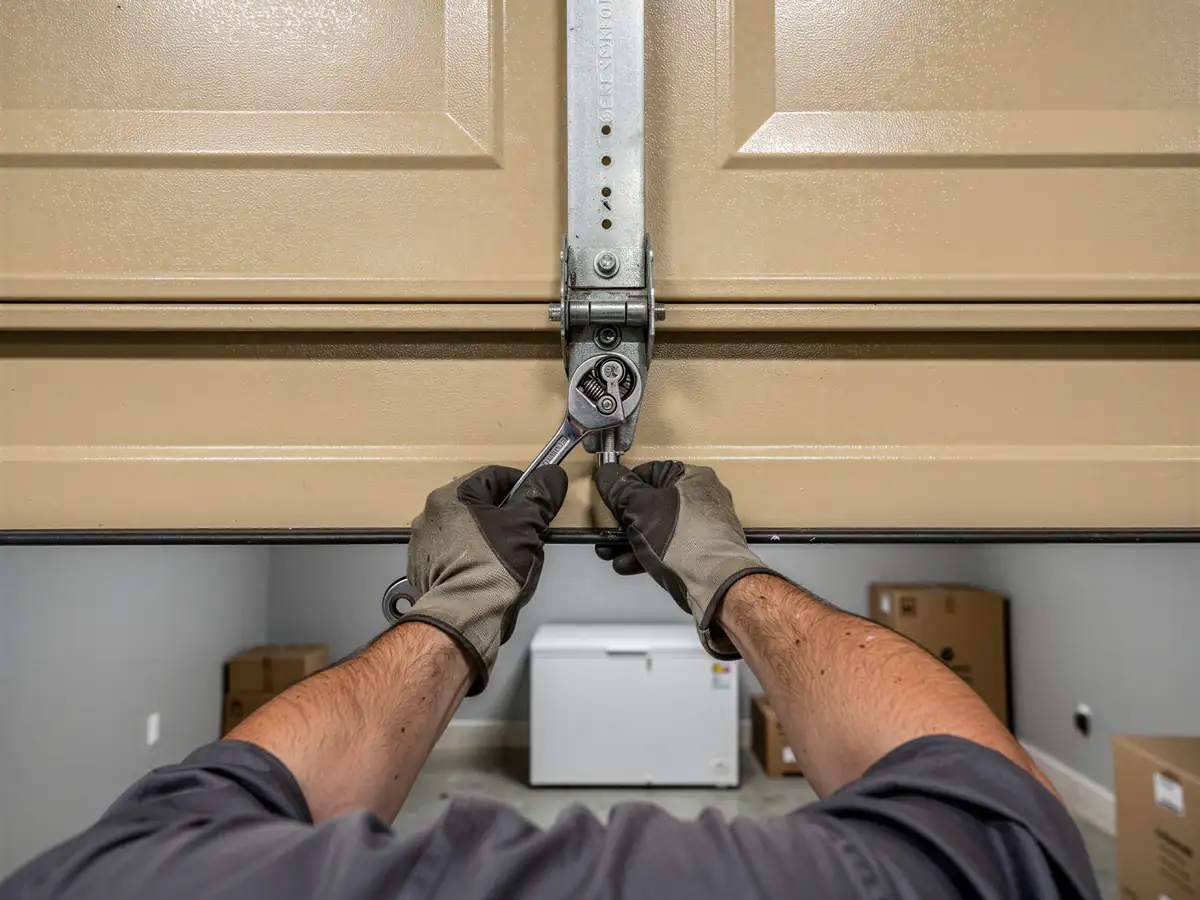
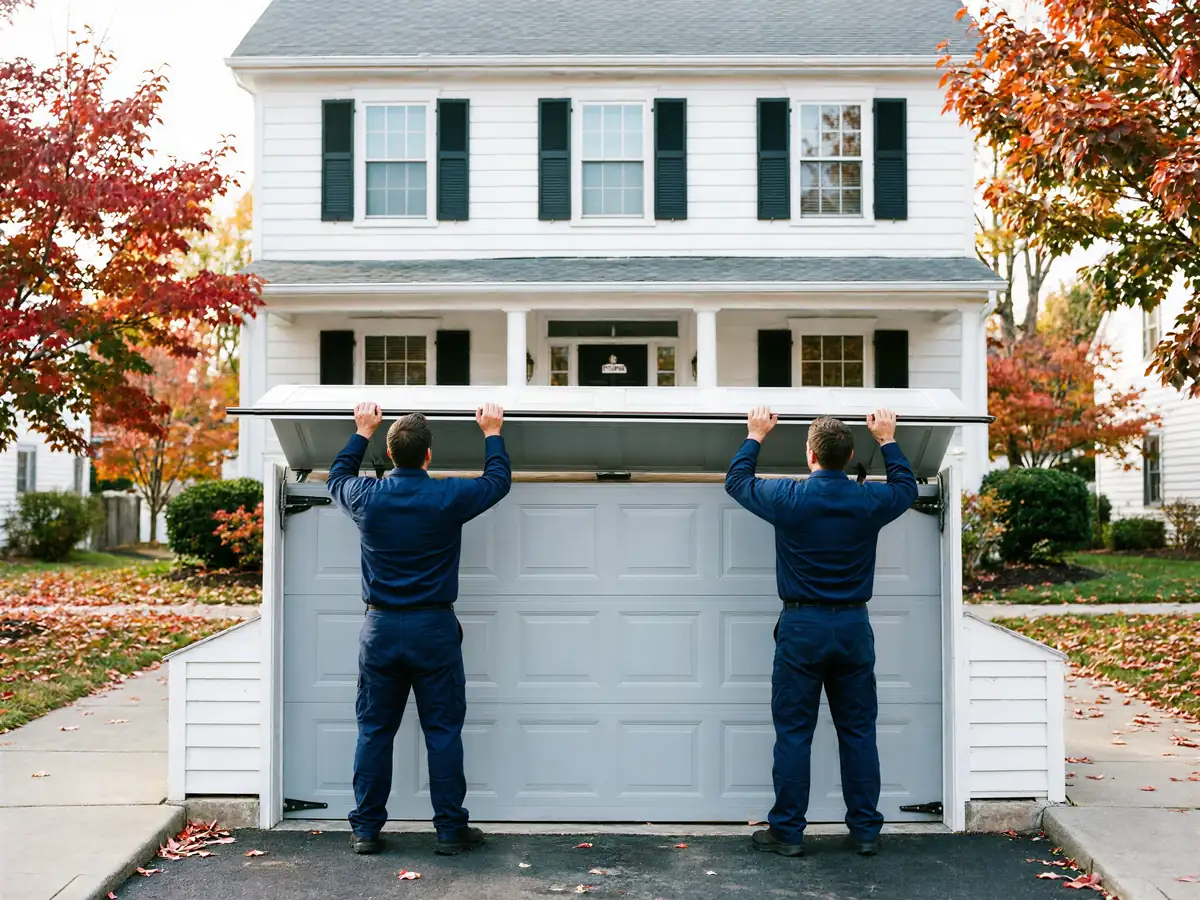
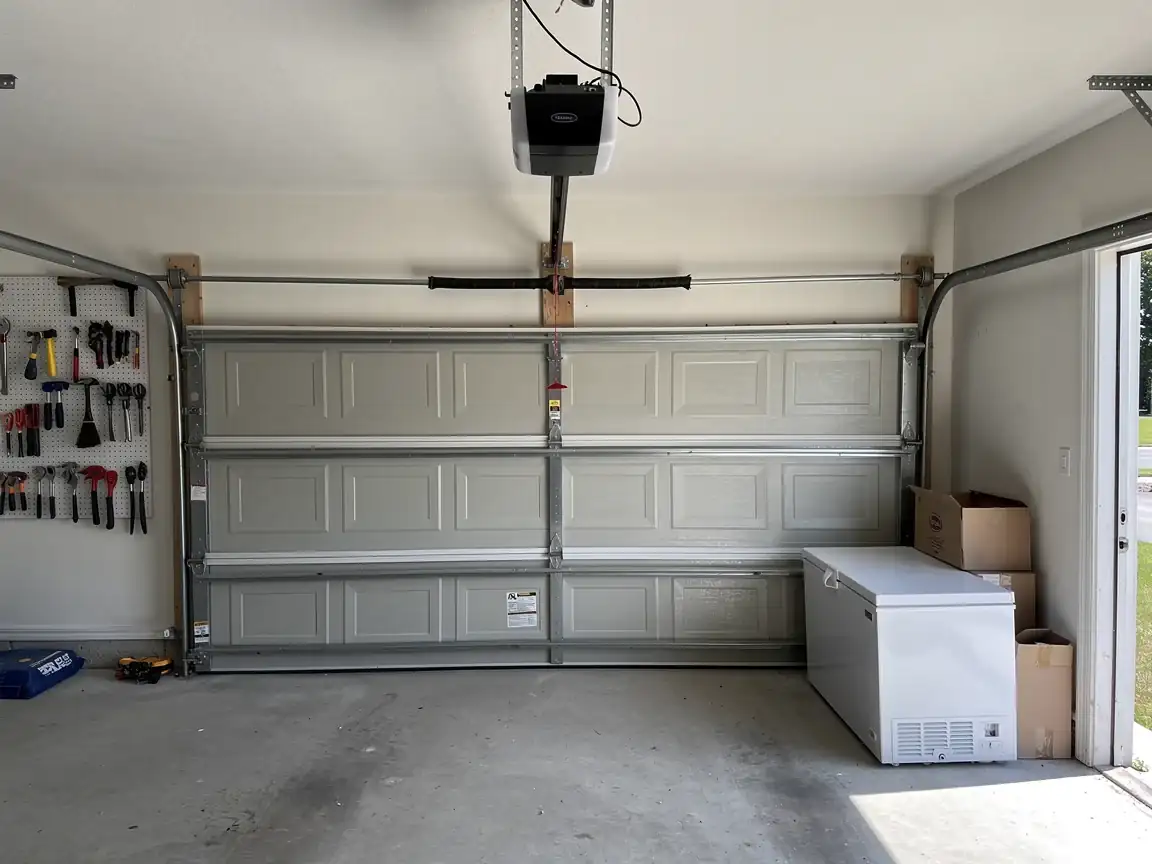
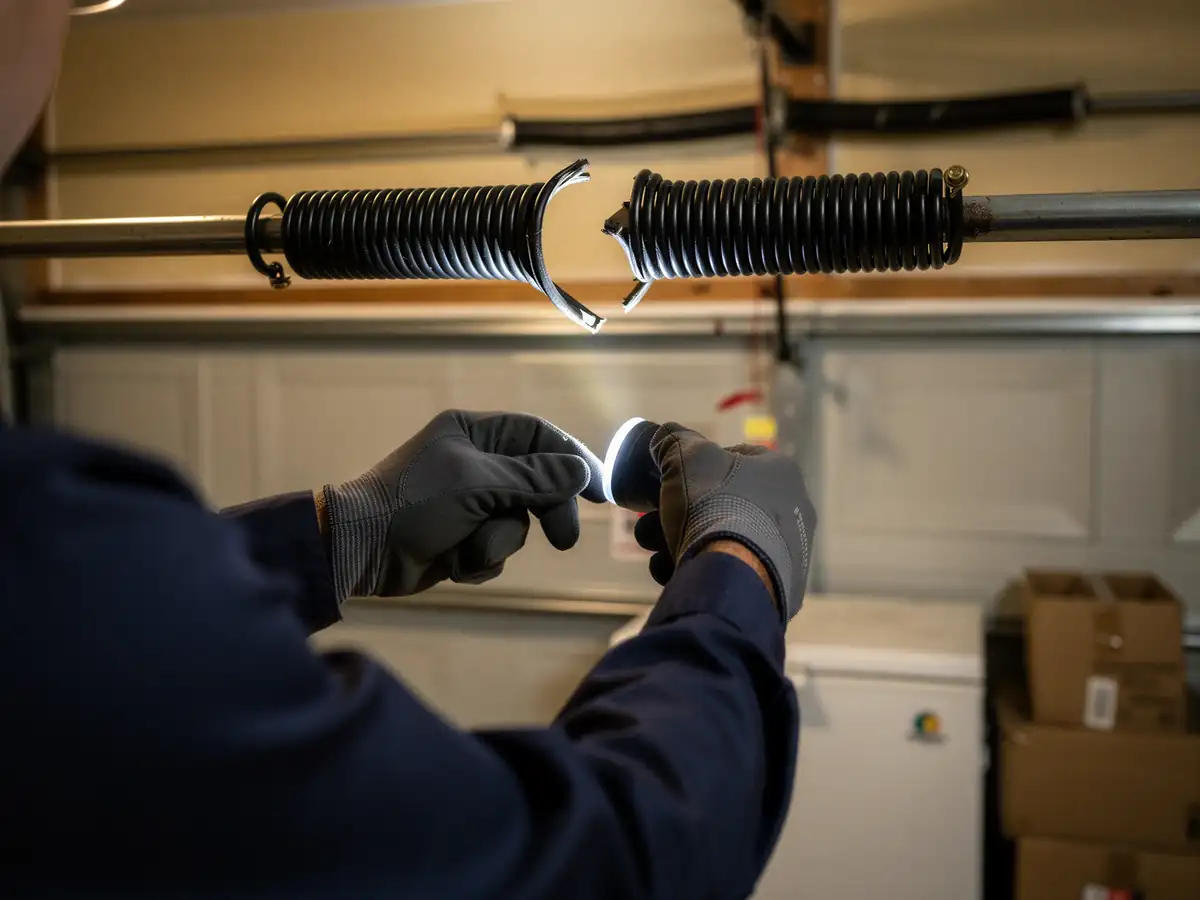
A door that won't budge, a loud bang followed by the door sticking halfway, or an opener that hums but goes nowhere - these are the calls that come in as emergencies. Most of the time it's a torsion spring that's let go, a cable that's frayed through, or a track that's pulled away from the jamb. The door itself is usually fine. It's the hardware doing the lifting that's failed.
If the door slammed down hard and won't move at all, don't force it with the opener - that strains the motor and can bend the track further. If one side of the door looks lower than the other, that's a cable or spring issue, not an opener issue, and it needs a torsion-rated fix, not a quick bolt tightened at the bracket.
Across the houses we work on, this pattern repeats because the housing stock here was mostly built between 1938 and 1993, with the median build year around 1966 - and a torsion spring from that era has had a long run by now. If your door is original to the house, the spring inside it is likely original too, and springs don't last forever regardless of how light the use has been.
Stocked Parts
We carry torsion springs sized for the single-spring setups that were standard in the 1960s and 70s building wave this area is full of
Along with the galvanized cable and steel rollers that go with them. Doors from that era commonly ran lighter gauge track than what's installed new today, so we keep both the older narrow track and the current wide-stance track on hand rather than special-ordering it mid-repair.
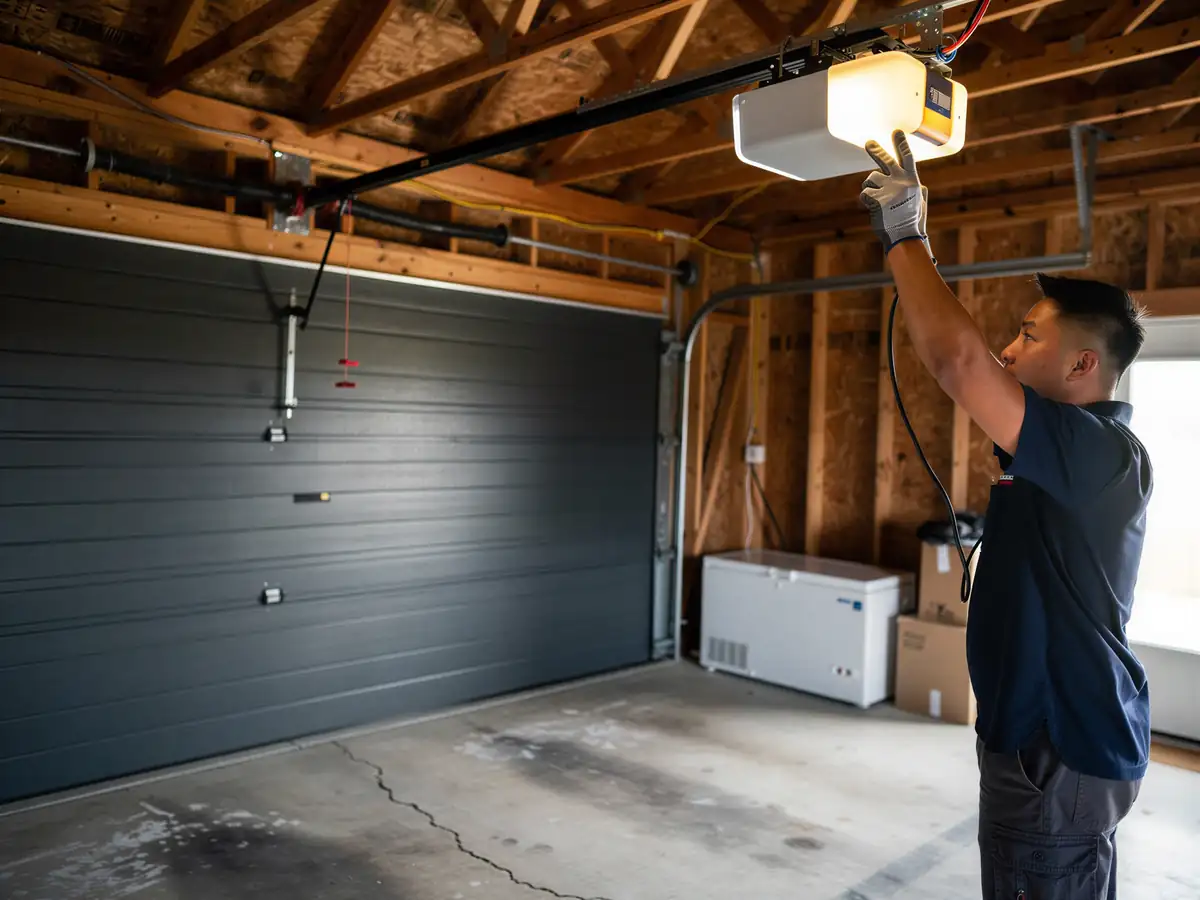
We also stock openers rated for cold starts
Chain and belt drive both - because a motor that struggles to turn over in a cold garage is as much a January problem here as a broken spring is.
What we don't carry on the truck is obsolete proprietary hardware from a handful of now-discontinued opener brands
If your unit falls into that category, we'll tell you straight that a full swap makes more sense than chasing a part that's three weeks out from a supplier, if it's even still made.
Why It Happens Here
This area's housing stock runs mostly 1938 to 1993, with a median build year of 1966, and that one fact explains most of the emergency calls we see. A torsion spring rated for 10,000 cycles doesn't know what decade it is - it just wears out, and on a house from the 1960s that clock has been running a long time, often with the original spring still installed.
The cold is the other half of it. This area sits in a cold climate band rated severe, and steel contracts in deep cold. A spring already near the end of its life, wound tight, sitting in an unheated garage on a night well below freezing, is exactly the setup for a sudden break rather than a slow fray. That's why emergency calls cluster hard in winter.
Across the service area there are 540,338 households and 243,594 owner-occupied houses, a large share of them built during that same mid-century run. With median household income here at $150,820, we see plenty of owners who'd rather replace the whole spring-and-track assembly once than keep patching a system from the 1960s piece by piece.
How We Fix It
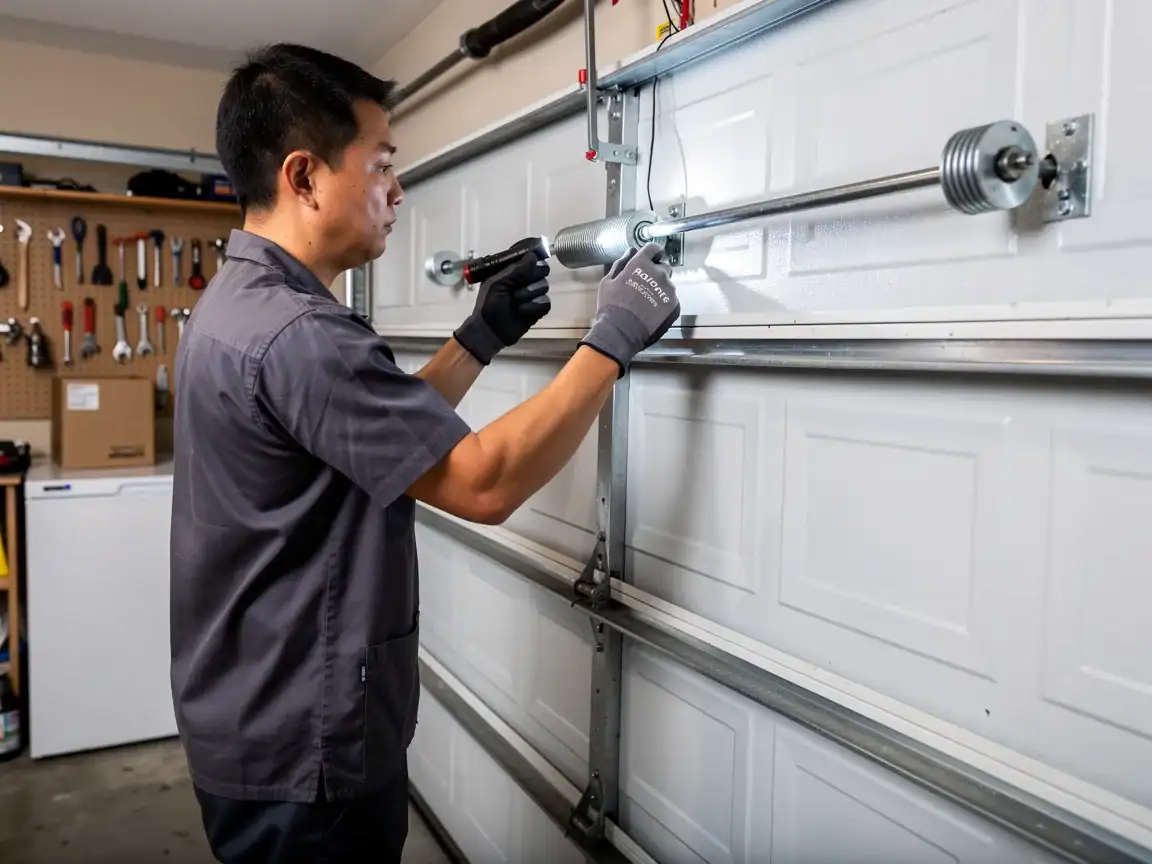
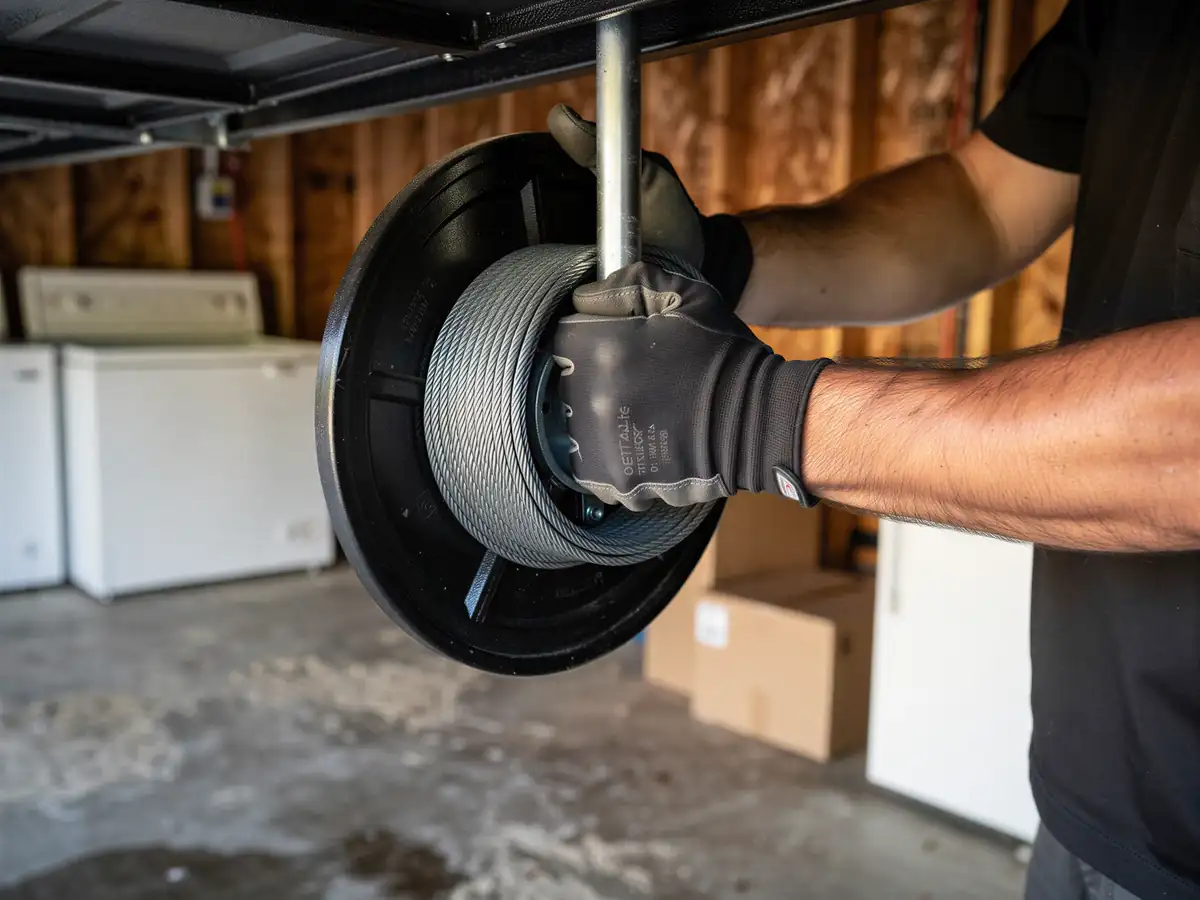
First call is to figure out whether it's a spring, a cable, or an opener failure - they look similar from inside the garage but need different fixes. A broken torsion spring gets replaced in pair if the door runs on two, matched to the door weight, not just swapped for whatever was in it before. A frayed cable gets replaced along with the drum it rides on, since cutting corners there just means a repeat call.
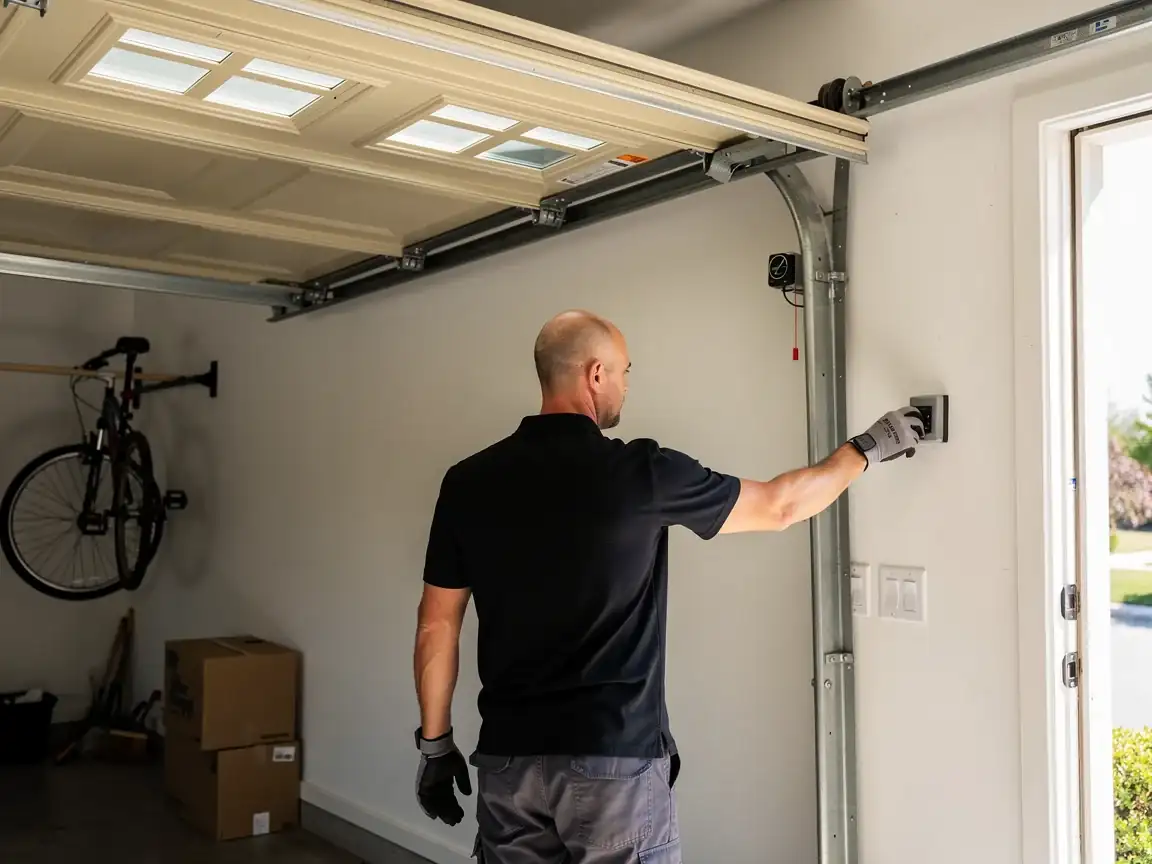
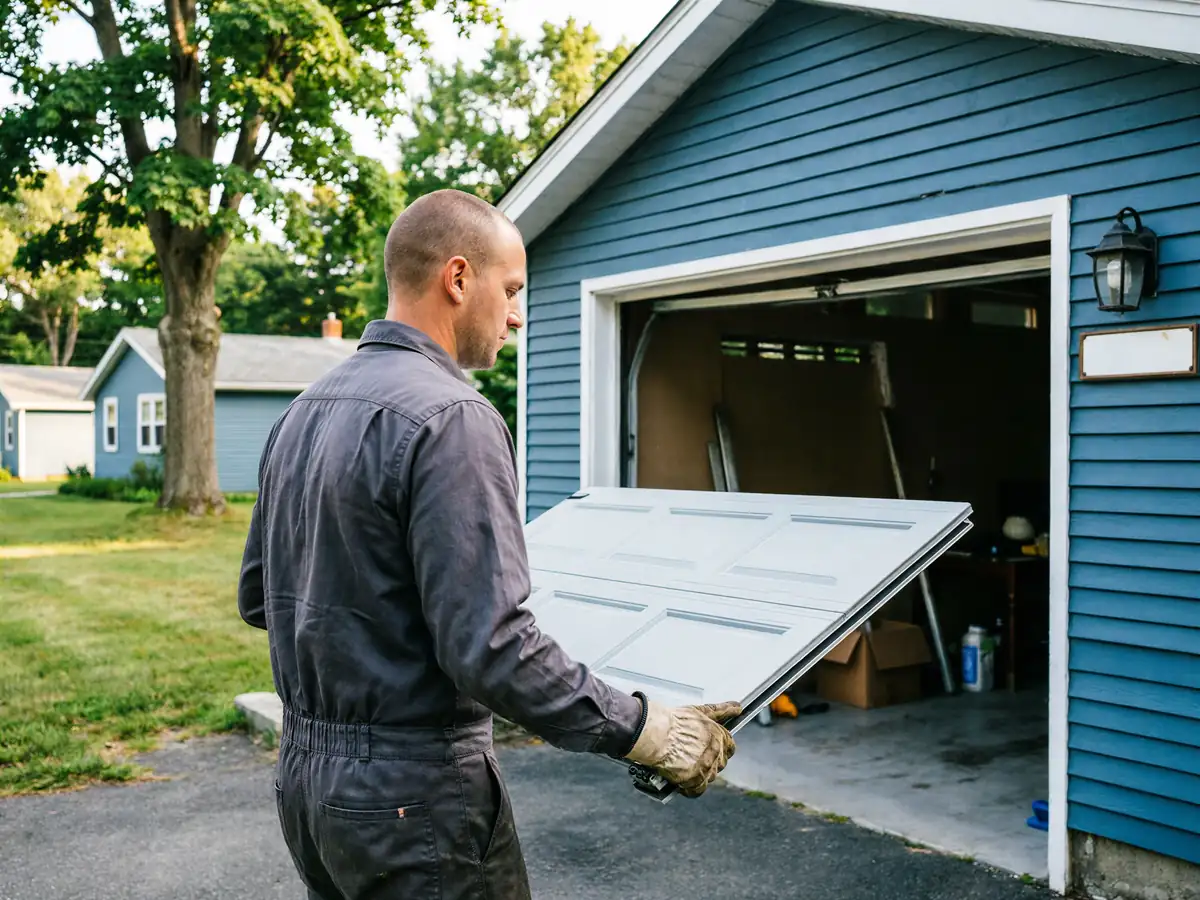
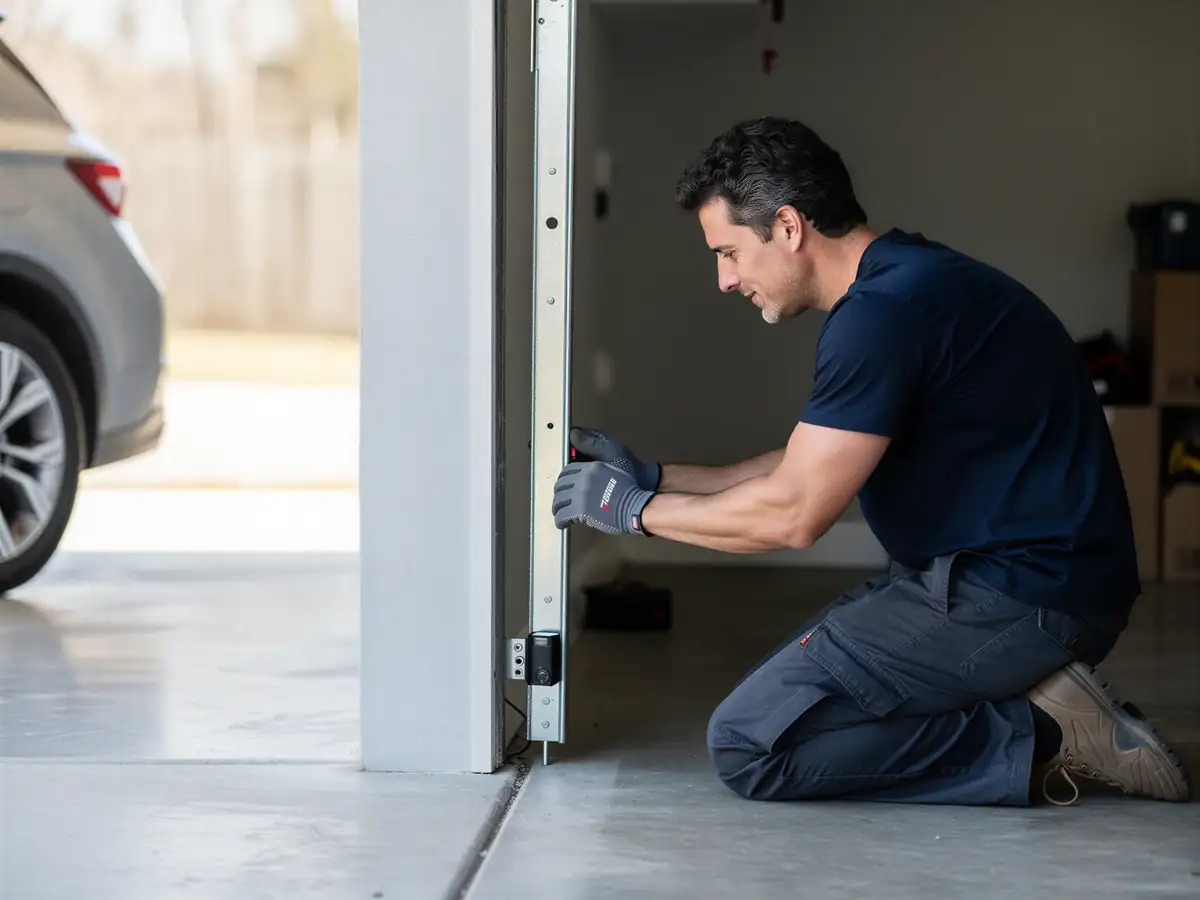
If the track is bent, we check whether it's a bracket that's worked loose - common on older jambs - or the track itself, which usually means replacement rather than trying to hammer it straight. A straightened track rarely sits true for long.
The honest limit here: if a door built in the 1960s has an opener and track that are both failing at once, replacing the opener alone and leaving the old track in place is a short-term patch, not a fix. We'll say so rather than bill you twice over six months.