What Is Going On
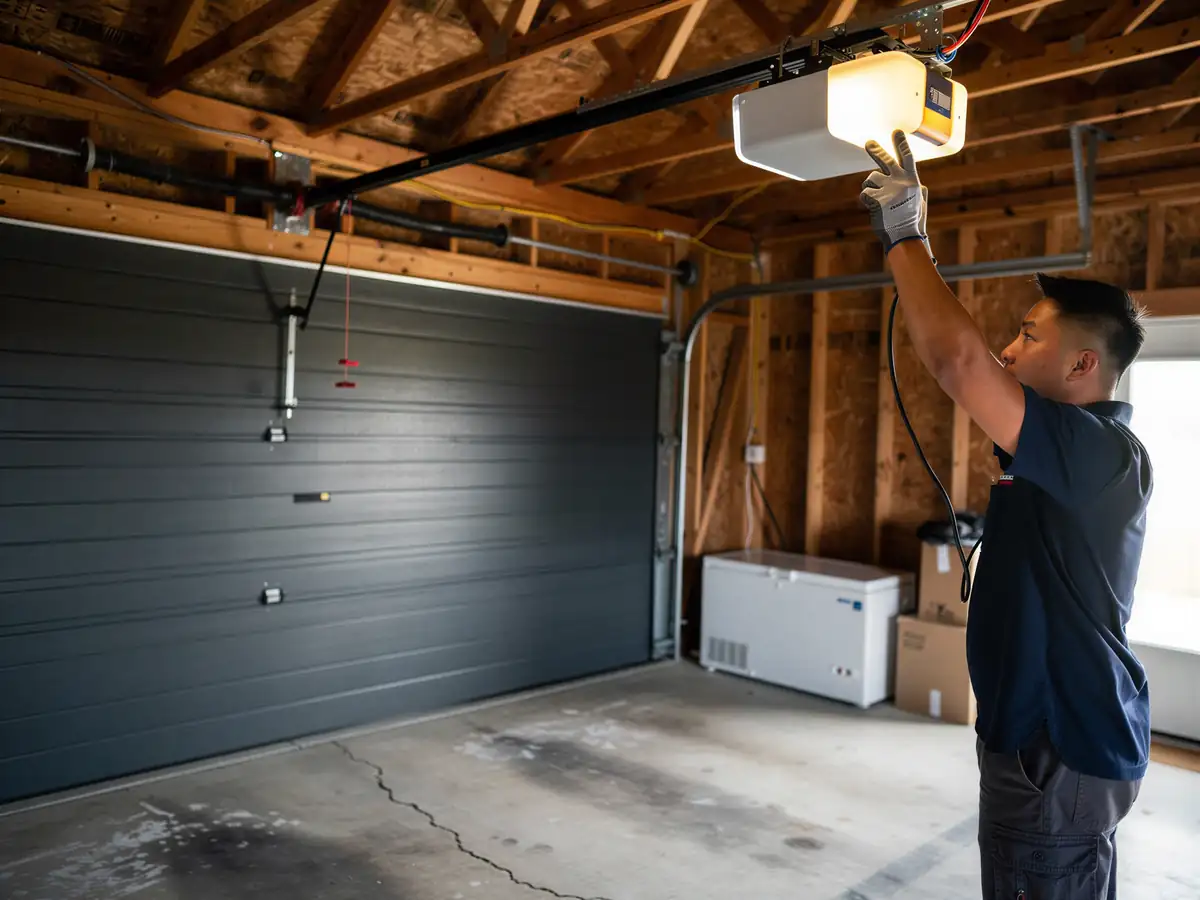
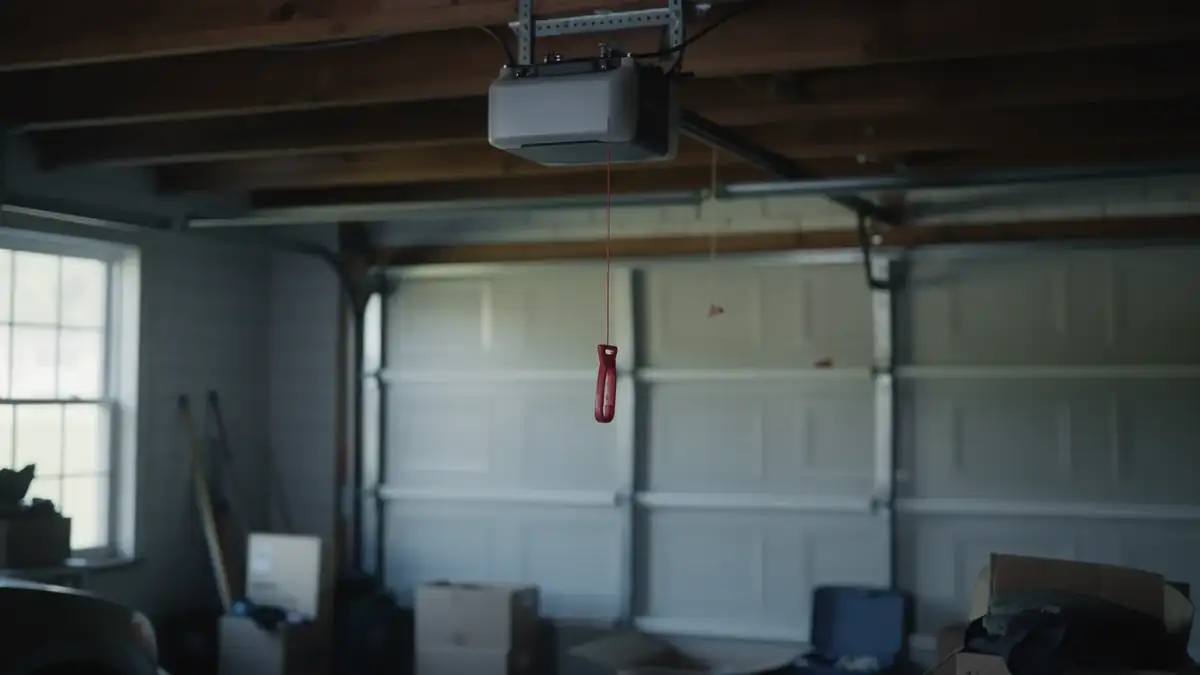
Most houses in Waltham went up between 1938 and 1993, with the median landing around 1966. That's the era of the original chain-drive opener wired straight into a wall outlet or a hardwired junction box, no battery backup, no smartphone app, just a motor and a rail. A lot of those units are still running. They're loud, they're slow, and when the power drops, the door stops wherever it is - open, closed, or half way, with the car trapped on one side or the other.
The newer belt-drive openers with built-in battery backup didn't become standard until well after most of this housing stock was built, so if your garage hasn't been touched since the house was renovated or sold, there's a good chance you've still got the original hardware or a direct swap-in replacement from a decade or two back that never got the backup feature. That's not a flaw in the house - it's just the age of the equipment matching the age of the build.
The practical issue is simple: an opener with no battery backup is a liability the moment the power cuts, and in this area, the power does cut.
What You Pay
We don't publish a flat number here because the job depends on what's already on your ceiling
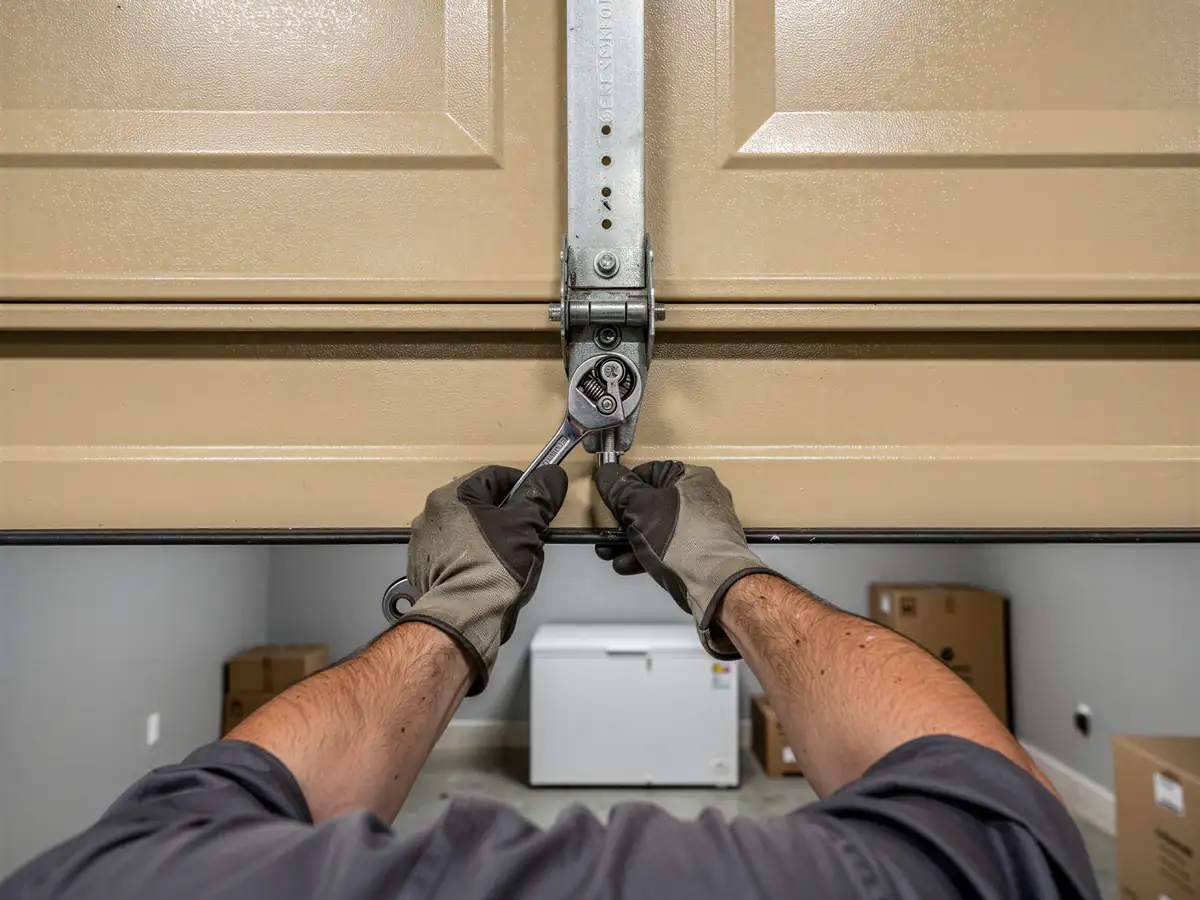
Swapping a dead chain-drive unit for a belt-drive with battery backup is a different job than adding a standalone backup module to an opener that's otherwise fine, and both are different from a full rail and opener replacement because the old bracket won't mount the new motor.
What we can tell you is that the decision usually comes down to age and whether the existing opener is worth keeping
If the motor's original to a house built in the 1960s or 70s, a backup retrofit on top of it is putting new wiring behind an old gearbox - sometimes it's worth it, sometimes it's throwing good money after bad. We'll look at what's actually mounted up there before we quote anything, because guessing a price over the phone on equipment we haven't seen isn't honest work.
The Seasonal Bit
Waltham sits in a cold climate band the federal data marks as severe, and that matters for openers in a specific way: cold makes grease stiffen, chains sag differently, and battery backup units lose capacity exactly when you need them most. A backup battery rated to run a door for a certain number of cycles in a warm garage will do fewer cycles in a cold one.
This isn't a once-a-year problem. It's a recurring one, because the cold comes back every winter and the equipment doesn't get newer on its own. If your opener dates to the same era as most of the housing stock in this service area - built out through the 60s and 70s, with a lot of original hardware still in place - winter is when the weak link in the chain, literally or electrically, tends to show itself.
What the Weather Here Does to It
A severe cold climate paired with power cuts is a specific combination, and it's the one that catches people off guard. The door isn't just slow in the cold - if the power goes out mid-cycle on an opener with no backup, it stays wherever it stopped until someone manually releases the trolley and lifts it by hand, which on an older, heavier door built for this housing stock is not a one-person job in the dark.
Across the service area - whether you're near Piety Corner a mile out, over toward or further out toward Lexington or Belmont - the houses share that same mid-century build pattern, and the openers inside them share the same exposure. With 243,594 owner-occupied houses in this area, this is not a rare combination of problems. It's a predictable one, tied directly to when the neighborhood was built and the weather it sits in every winter.