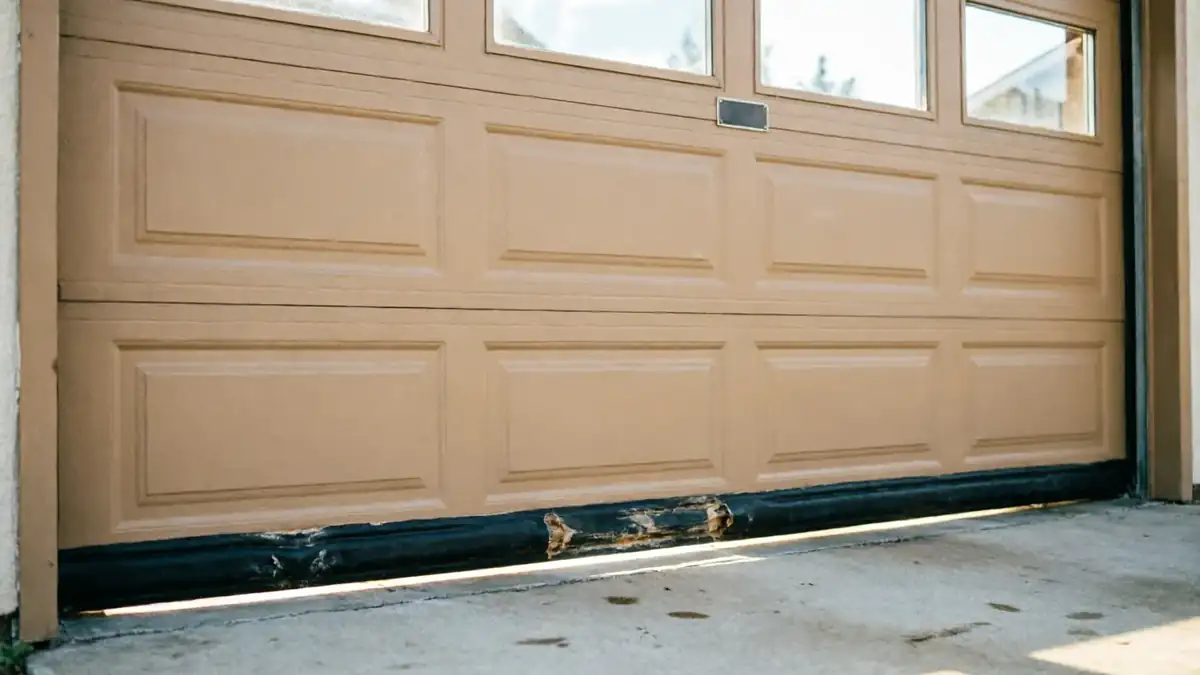
What Is Going On
Most garages in Waltham sit under a house built somewhere between 1938 and 1993, with the median landing around 1966. That matters because the bottom seal, the side weatherstripping, and the top vinyl astragal on a door from that era were never built to last six decades. They were built to last maybe ten or fifteen years, and a lot of them are still the original gasket, cracked and flattened, doing nothing.
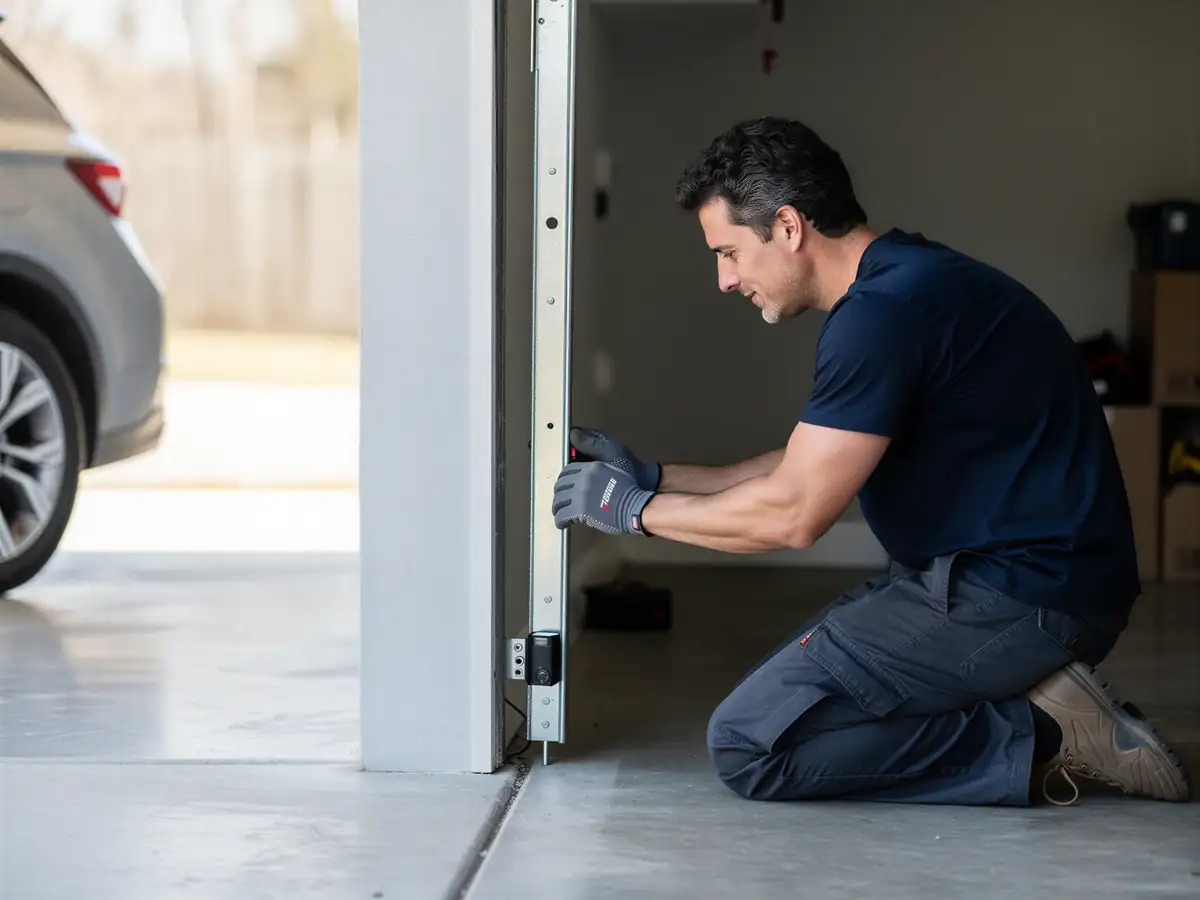
What you're feeling as a cold draft along the garage floor, or a line of frost on the inside of the door in January, is usually one of three things: a bottom seal that's gone flat and no longer compresses against the slab, side seals that have pulled away from the track jamb, or a top seal that's missing entirely because nobody replaces it until the door itself gets replaced. On the older end of Waltham's housing stock - the pre-1970 builds that make up a lot of the 71 named areas in this part of the state - it's common to find all three at once, because the door has simply never been touched.
This isn't a dramatic failure. The door still opens and closes fine. It's a slow one: heat leaks out, cold air pools on the garage floor, and if there's a room above or beside the garage, that room runs colder than it should all winter.
What You Pay
We don't have a flat number to put here that would hold up across every door width and seal type in Waltham
So we're not going to invent one. What we can tell you is how the decision usually gets made. A straight seal replacement - bottom, sides, or top - is a small job next to a spring replacement or a full door swap, and it's the kind of fix that pays for itself in a single heating season on an older, uninsulated door.
With median household income in this service area sitting at $150,820
Most homeowners we talk to aren't agonizing over whether to fix a seal - they're asking whether it's worth doing now or waiting until the door itself needs work. Our answer is usually: do the seal now, because it's cheap insurance against the cold getting into the house, and it doesn't make sense to let a $20 part cost you a winter's worth of heat.
The Seasonal Bit
Seals don't fail in summer. They fail in the first real cold snap, when the rubber that was pliable in August turns stiff and brittle in a severe cold climate like ours and stops closing the gap. That's the pattern we see every year in Waltham: calls start coming in once the temperature drops and stays down, not because the seal just broke, but because the cold finally exposed a seal that had already quit months earlier.
If you're going to check one thing before winter sets in, check the bottom seal. Close the door and look along the base from inside the garage - if you can see daylight, or feel air moving across your hand, it's done. On a door built or installed decades ago, that's not a maintenance item anymore, it's just worn out hardware that needs replacing before the cold really sets in.
What the Weather Here Does to It
This area sits in a cold-severe climate band, which means the seals on a Waltham garage door are doing real work for a good chunk of the year, not just sitting there for show. Repeated freeze and thaw cycles are hard on vinyl and rubber seals specifically - they contract in the cold, then take on moisture as things warm up, and over years that cycle is what cracks a seal rather than any one bad night.
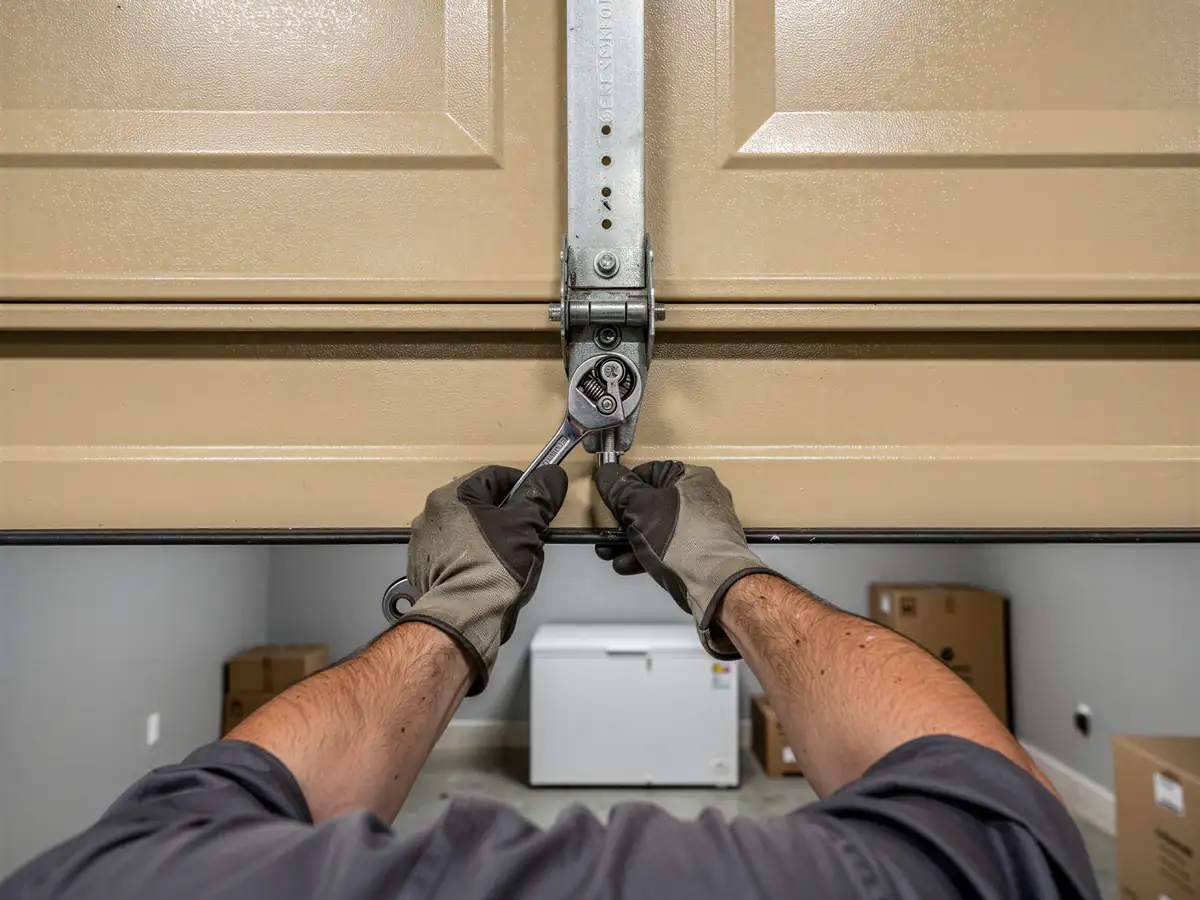
On the older housing stock common here - doors and frames dating to the 1960s and 70s that make up most of the neighborhoods in this part of the state - the wood jamb the seal presses against has often shifted slightly over the decades too, so even a brand-new seal sometimes needs a shim or a slight track adjustment to seat properly. We'll tell you straight if that's the case rather than just handing you a strip of rubber and calling it fixed. One limitation worth saying plainly: a seal replacement won't fix a door that's out of square or a track that's bent - that's a separate repair, and we'll flag it before we start.