What You Are Seeing
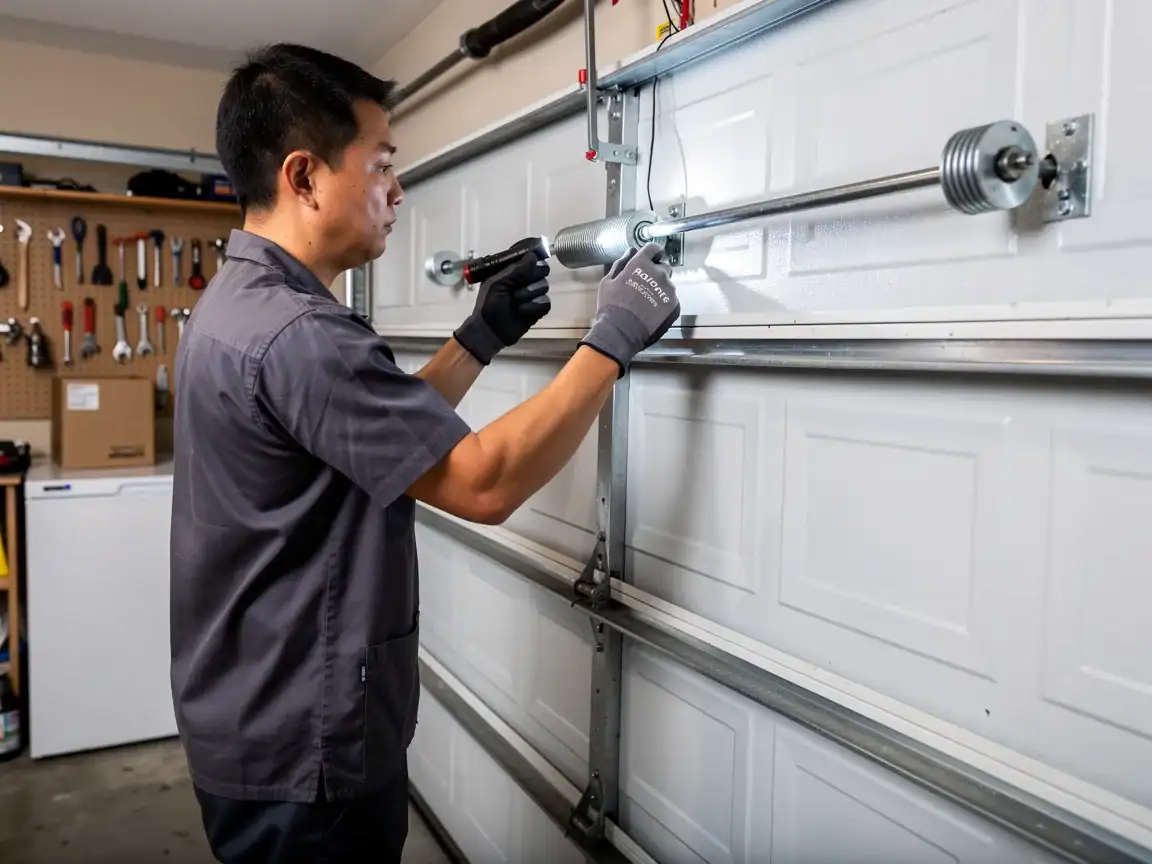
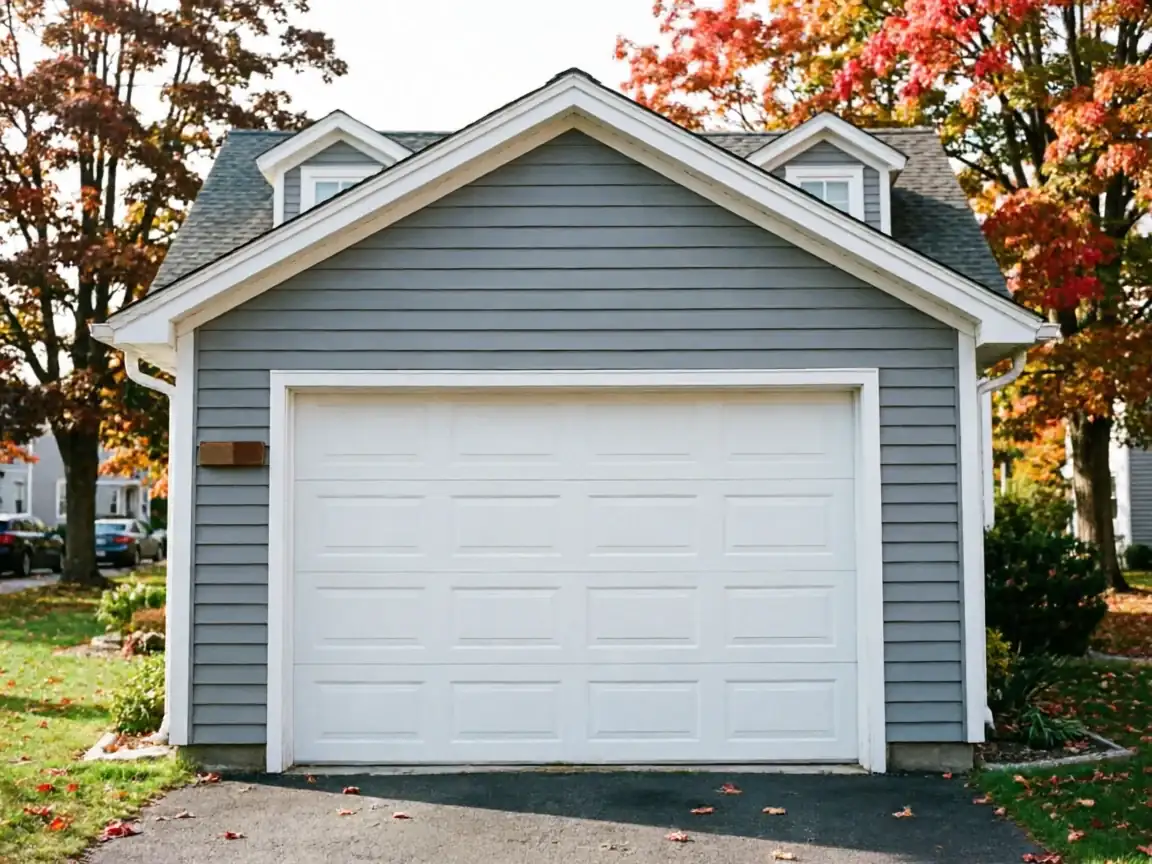
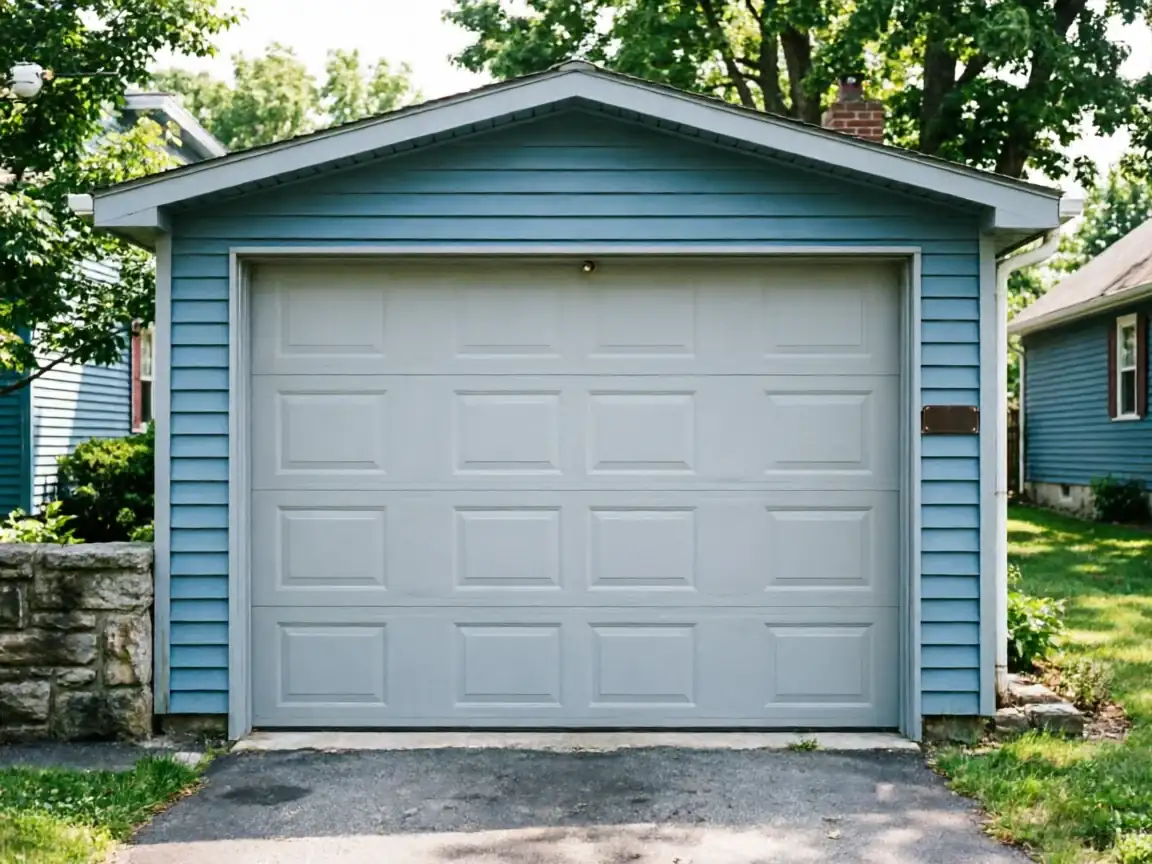
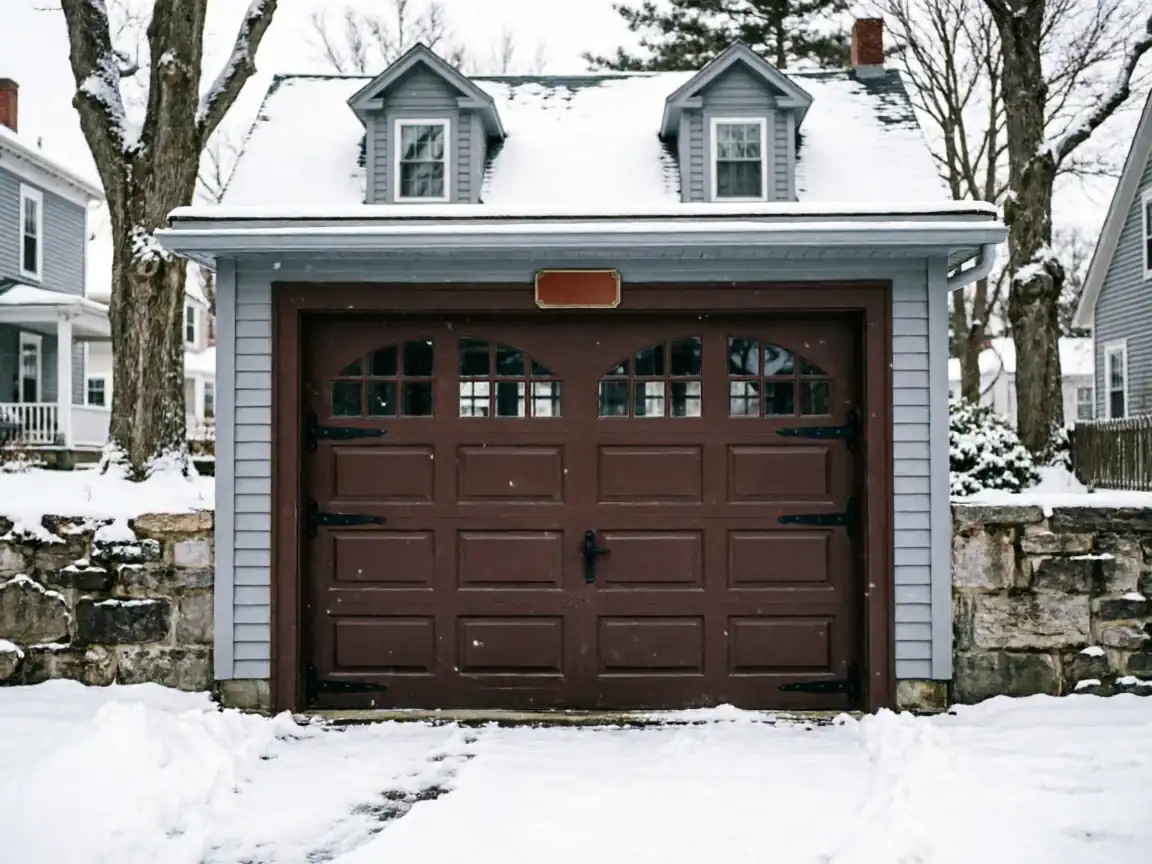
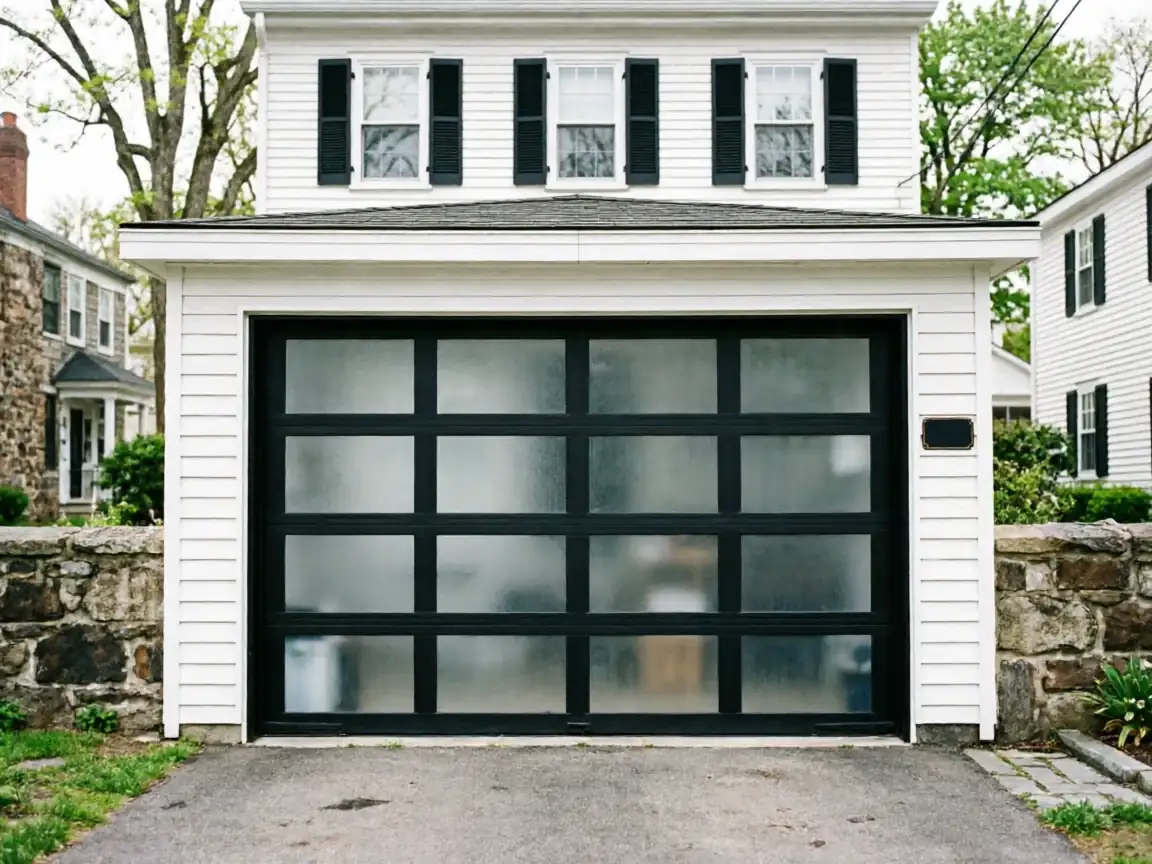
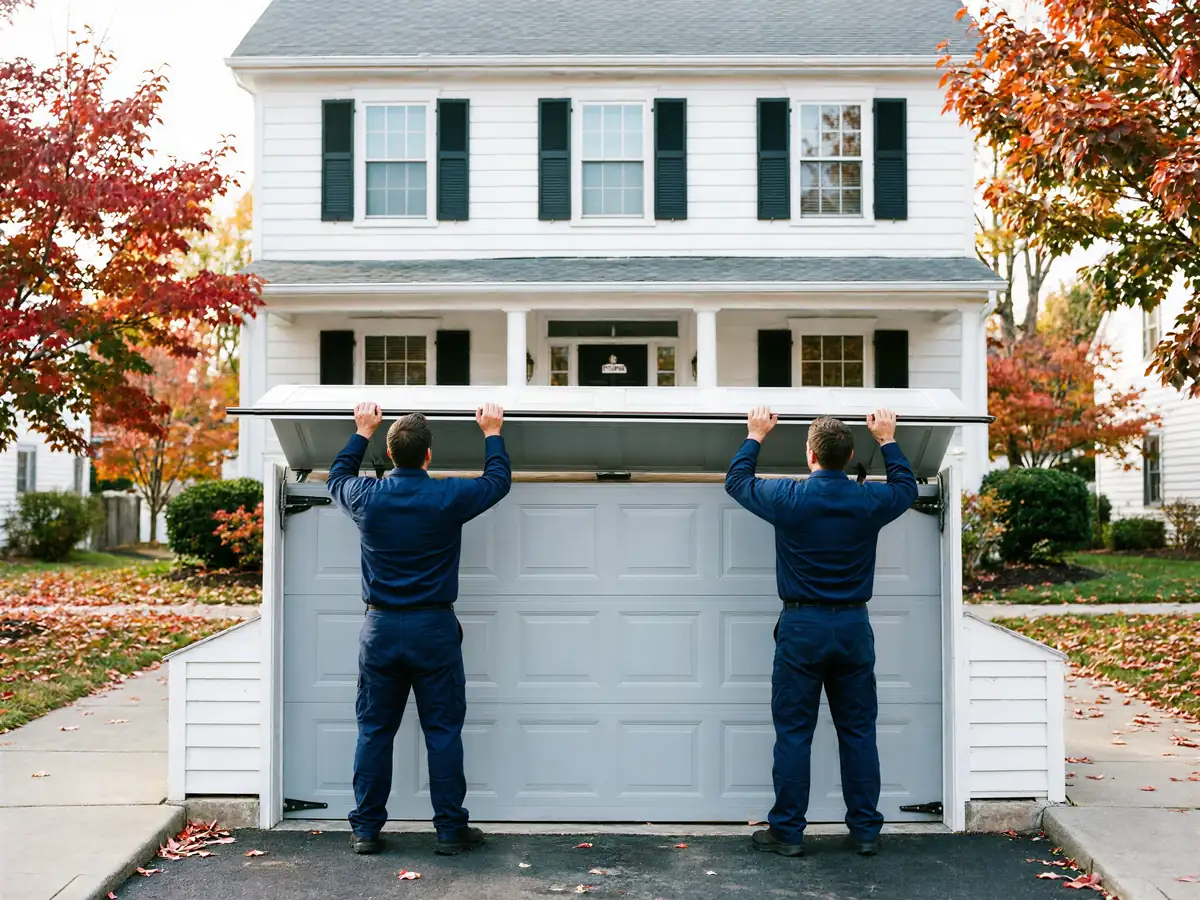
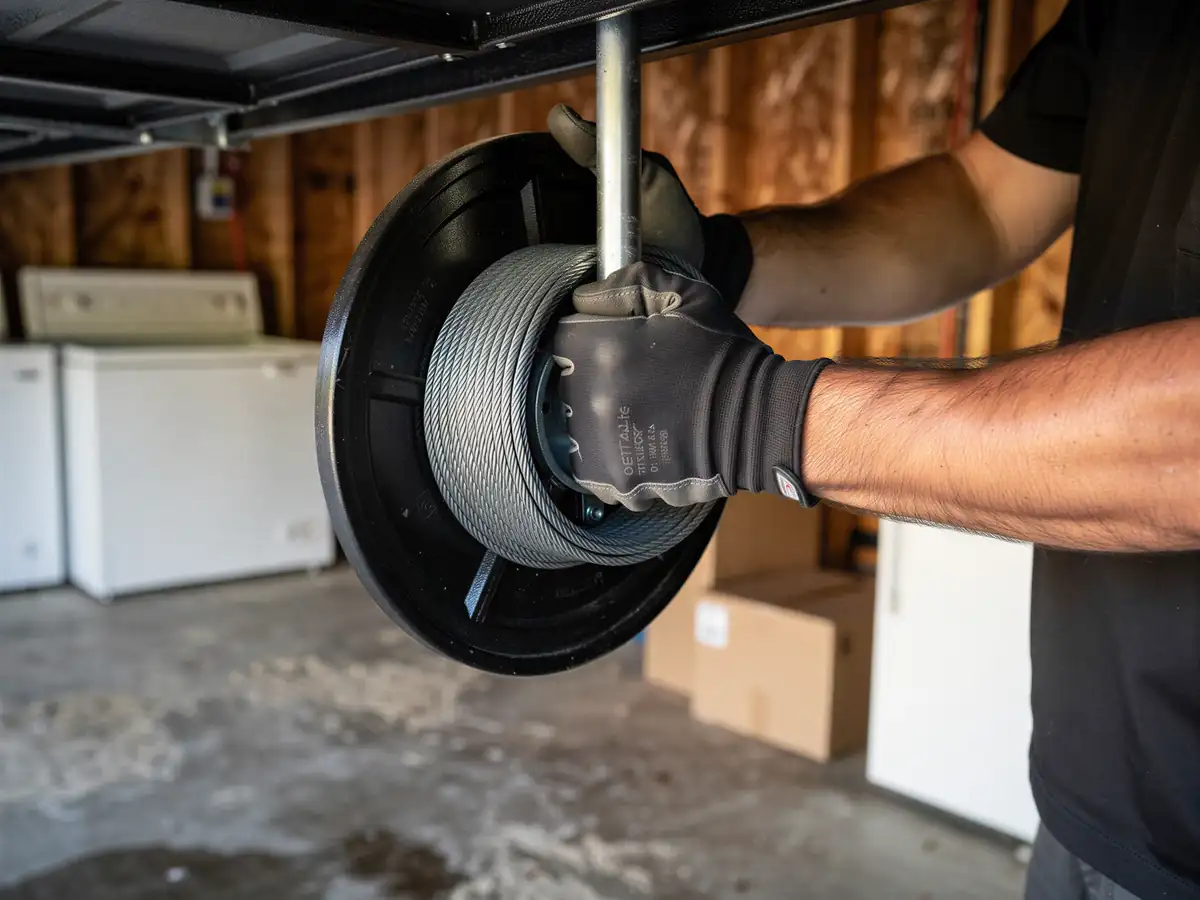
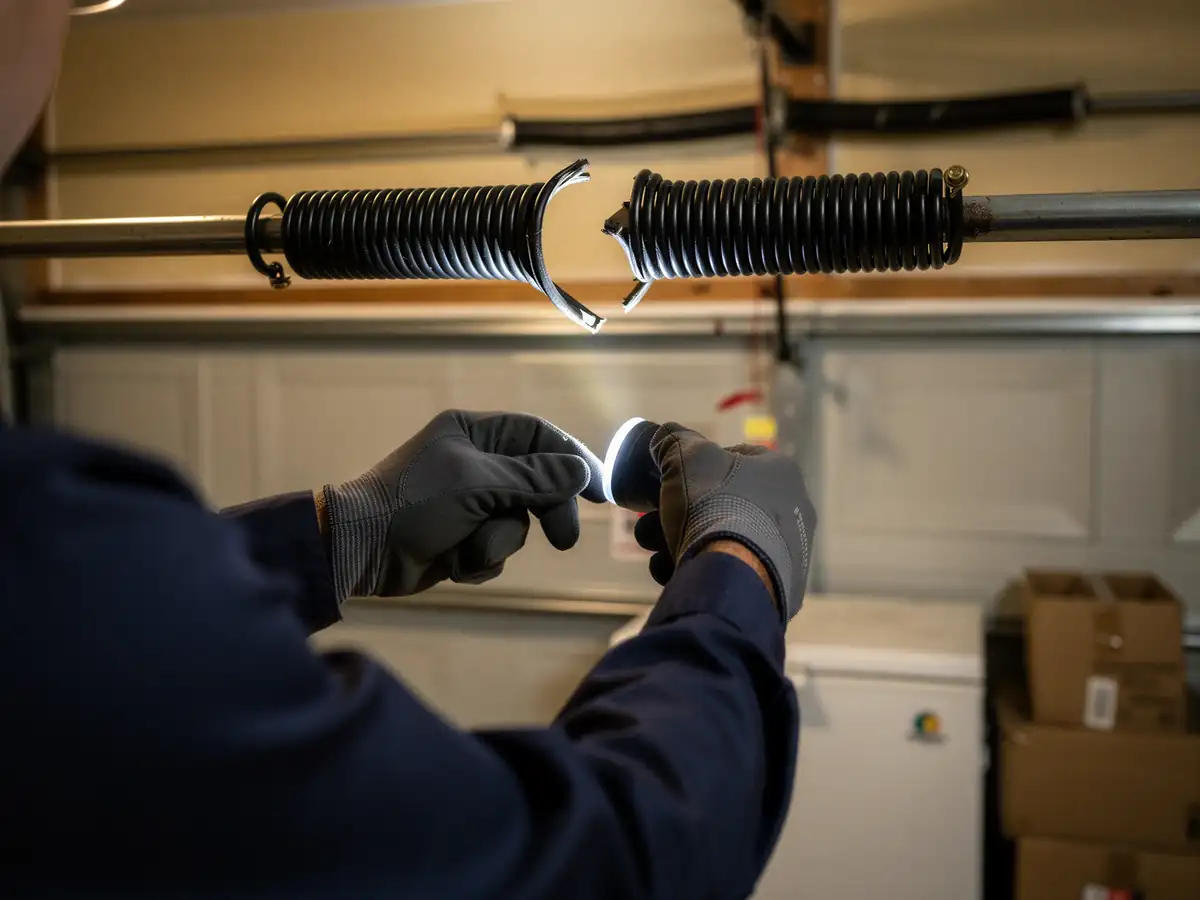
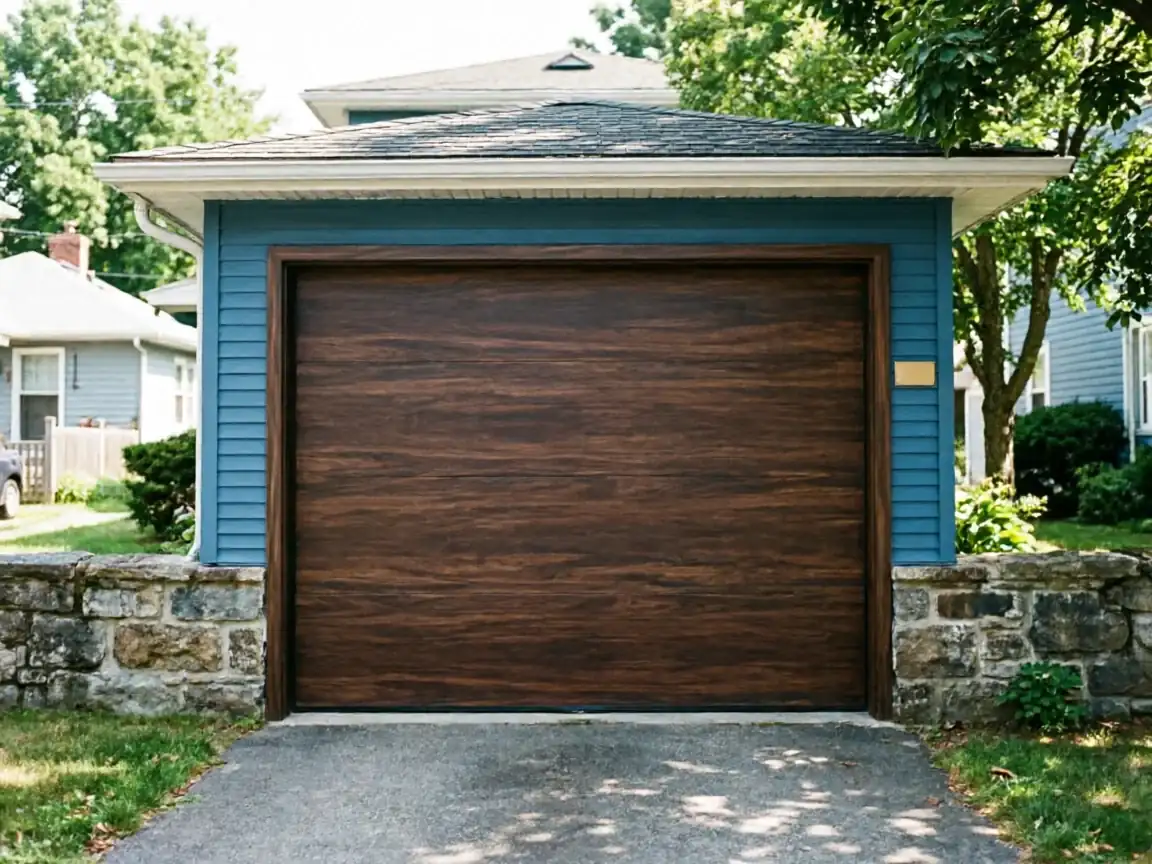
Chelmsford's housing mostly went up around 1967, squarely inside the 1938-1993 build wave that shaped this whole part of the service area. A house from that year almost always got a builder-grade steel sectional door, two panels wide on a two-car garage, hung on light steel track with a torsion spring sized for a bare steel panel - no foam, no vinyl backing, nothing to add weight. Some of the older single-bay garages in town still run on extension springs instead of torsion, strung along the horizontal track rather than over the header. Either way, the hardware was built for a lighter door than what's sold today, which matters the first time someone swaps in a heavier insulated replacement and the old springs can't lift it anymore. The region sits in a cold, severe climate band, and that shows up here as rust on cable ends, stiff rollers in January, and galvanized spring coils that corrode faster once the zinc coating wears through at the stress points near the cone. None of this is dramatic. It's just what fifty-plus-year-old steel and springs do under New England winters, and it's the starting point for almost every call we get from this part of town.
How Long It Takes
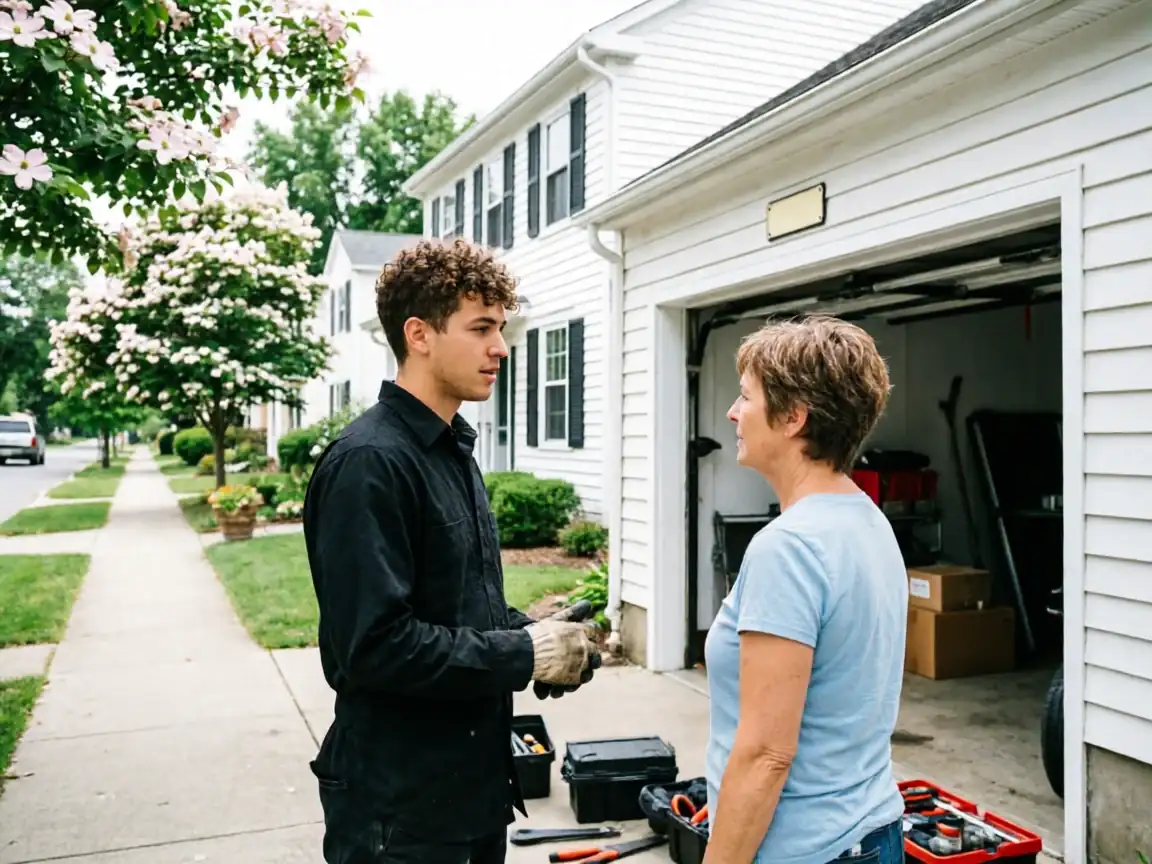
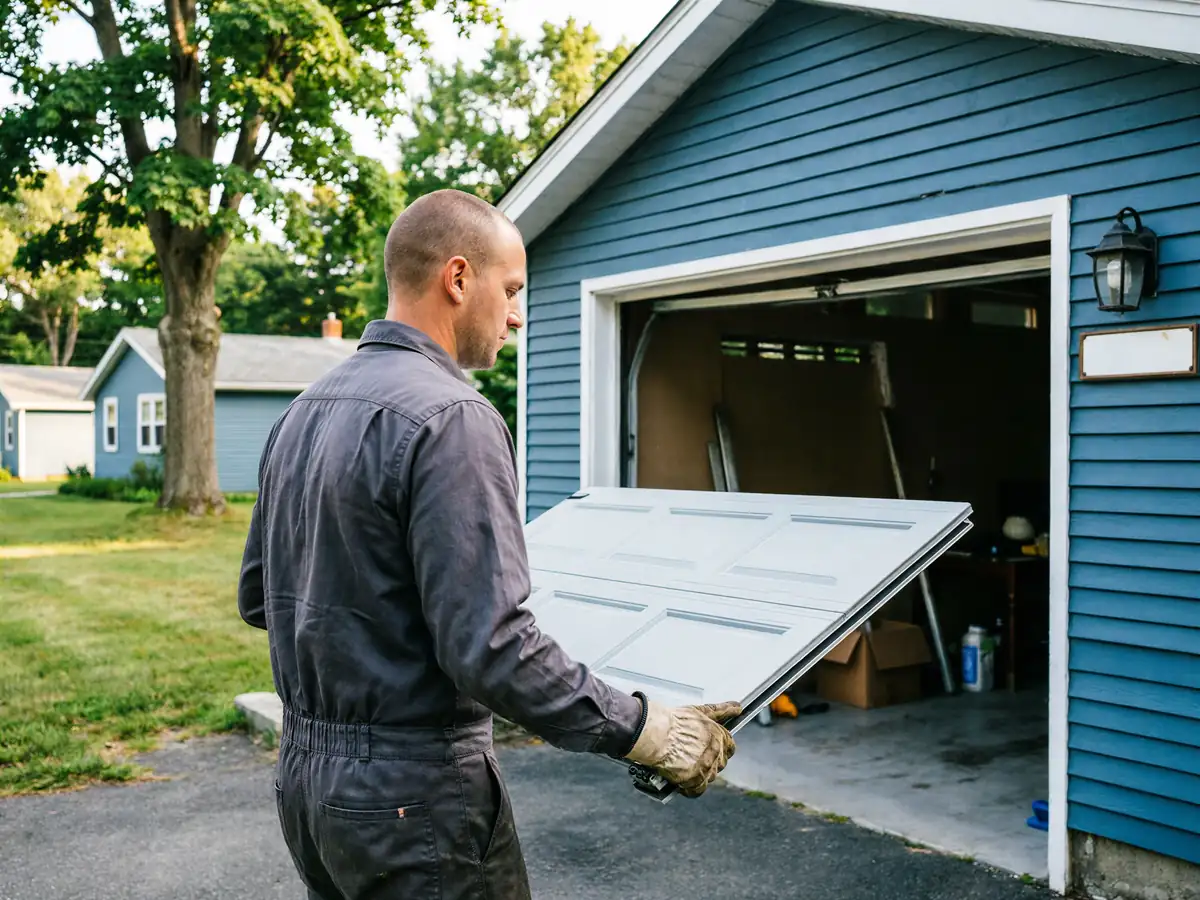
Chelmsford sits sixteen miles out from our base in Waltham, which is on the far edge of where our trucks run day to day - that's a real stretch of road, not a five-minute hop, and we're not going to promise a response window we can't back up from that distance. Once a tech is actually at the house, most spring and cable jobs on a standard two-car door wrap up in under two hours. A full door swap, especially if the opening needs any reframing because the original 1967 jamb has shifted, takes longer and sometimes needs a second trip if a part has to be ordered. Older single-bay doors on extension springs can go faster since there's less track to adjust. The honest answer is that the drive is the variable we can't shrink, and the repair itself is usually the easy part once we're standing in front of the door.
Can You Do This Yourself
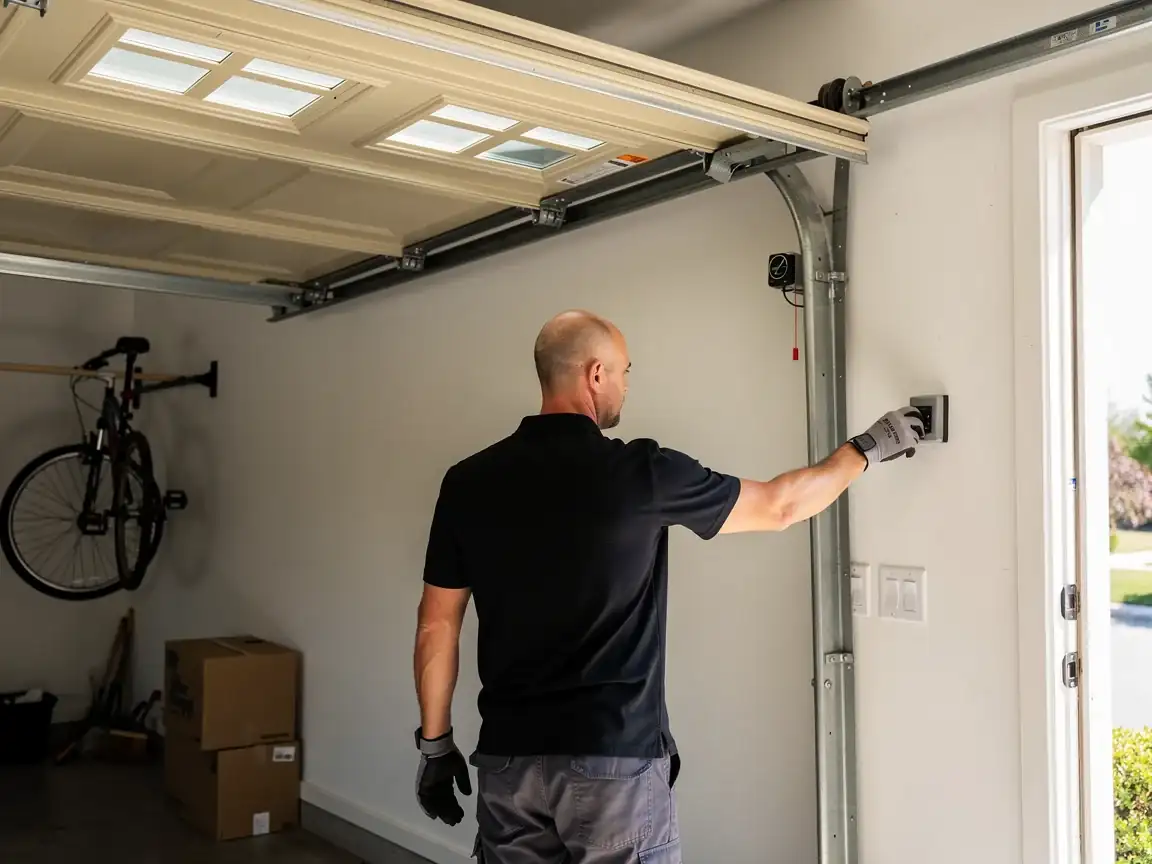
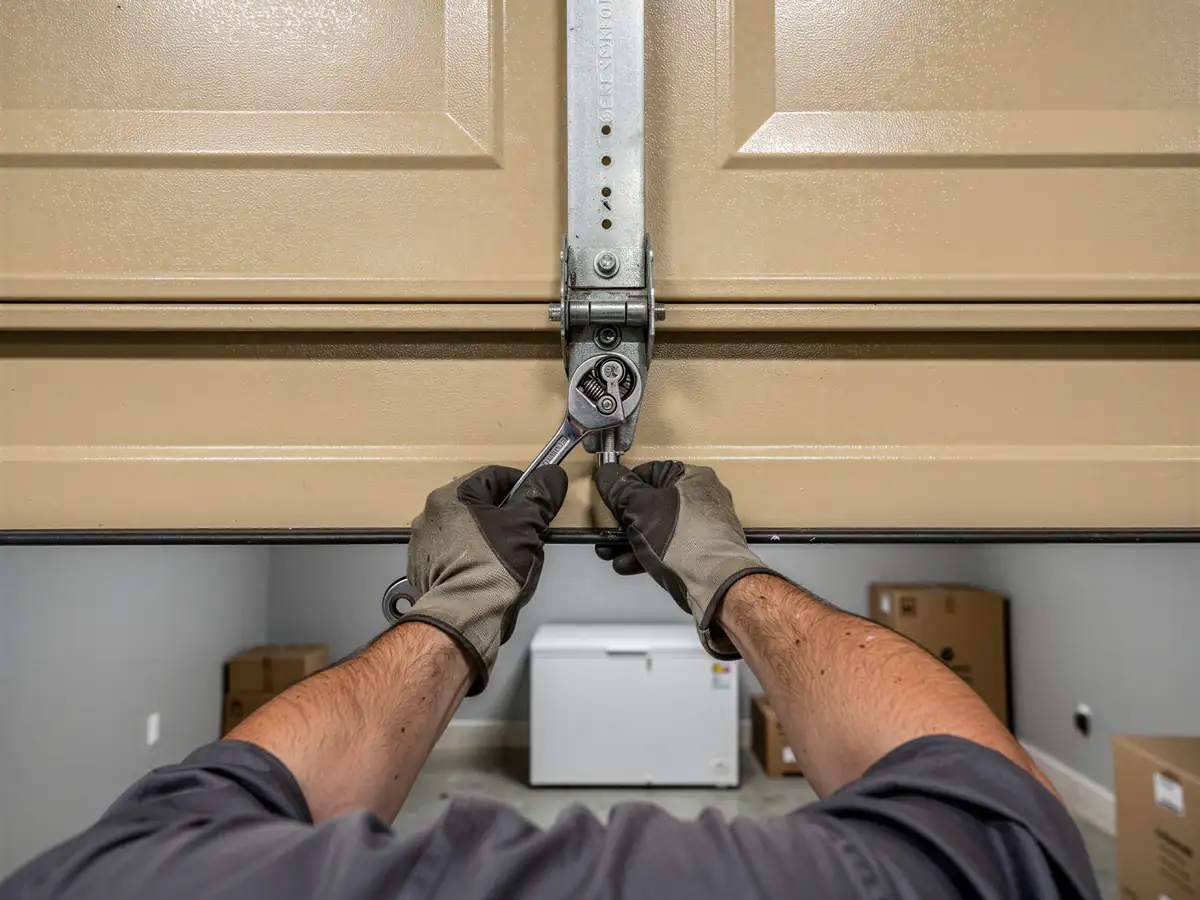
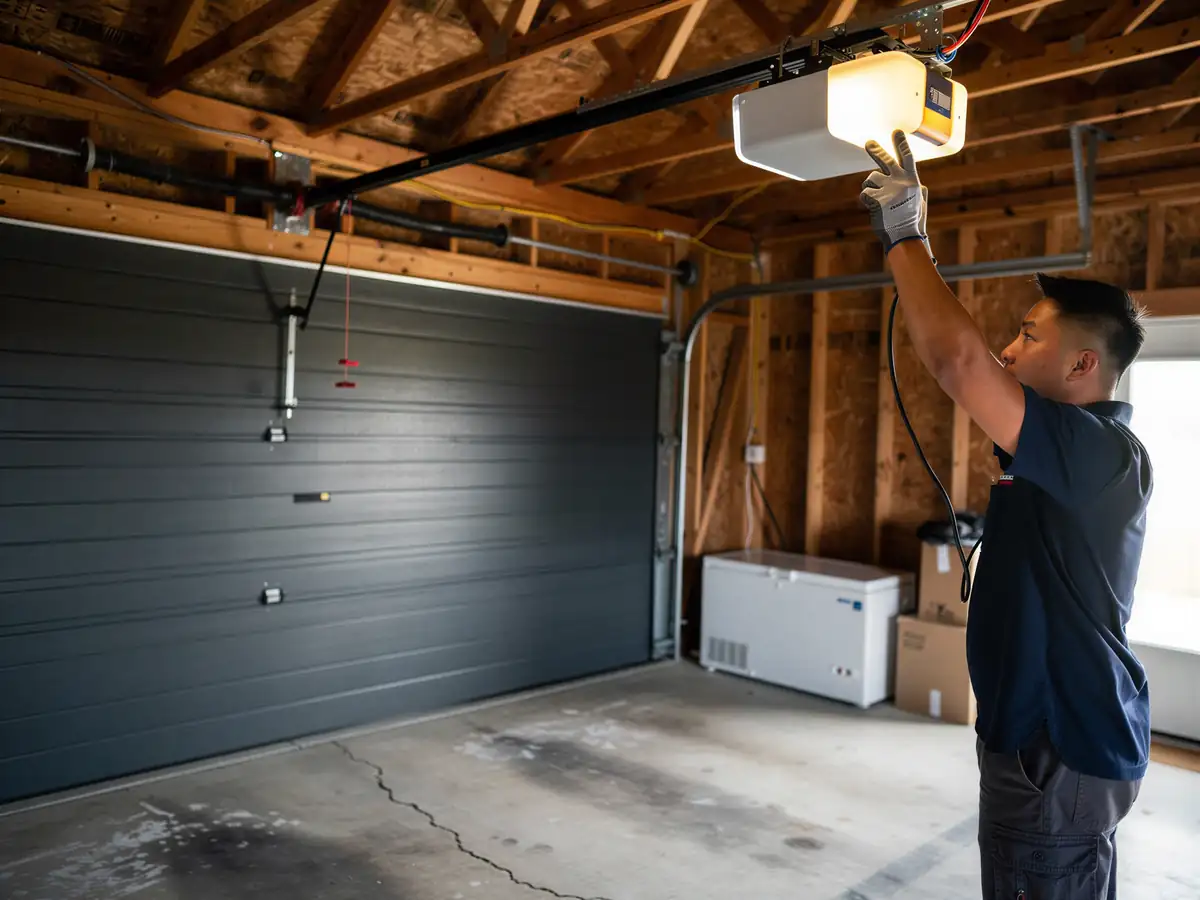
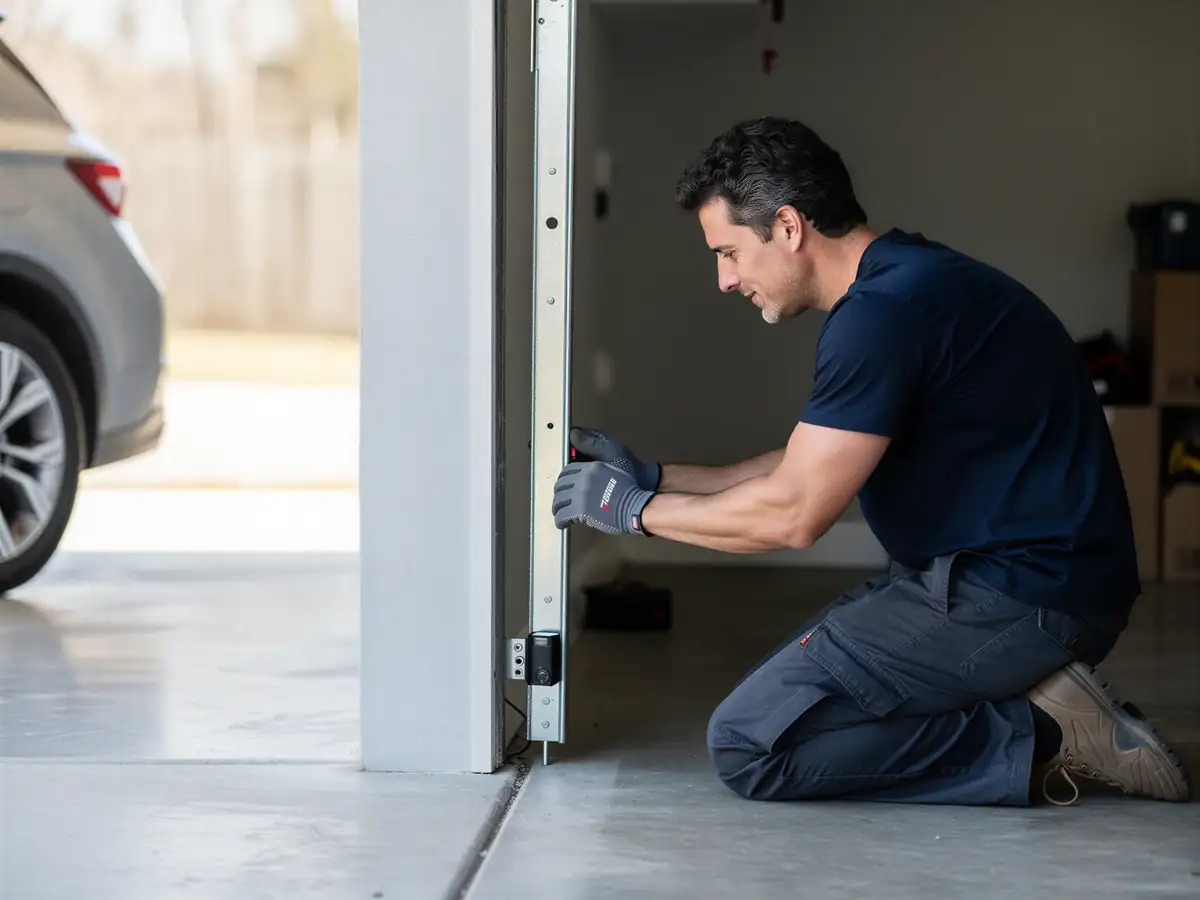
Tightening a loose track bracket or lubricating rollers is fair game for most homeowners, and it's worth doing regardless of who eventually works on the door. Torsion springs are a different matter - they're wound under enough tension to break a bone or worse if the winding bars slip, and that doesn't change whether the door is five years old or built the same year as the house. If a cable has frayed or a spring has already let go, leave it alone and don't try to force the door up on the opener motor, which isn't built to lift a door with no spring assist and will burn out trying. Swapping a remote battery, cleaning track grease off the floor, or resetting photo-eye sensors after they've been bumped - those are reasonable DIY jobs. Anything involving the spring, the cable under tension, or the torsion bar itself isn't a place to save money by guessing. That's the one limitation worth saying plainly: we'd rather you call before a weekend project turns into a trip to urgent care.