What You Pay
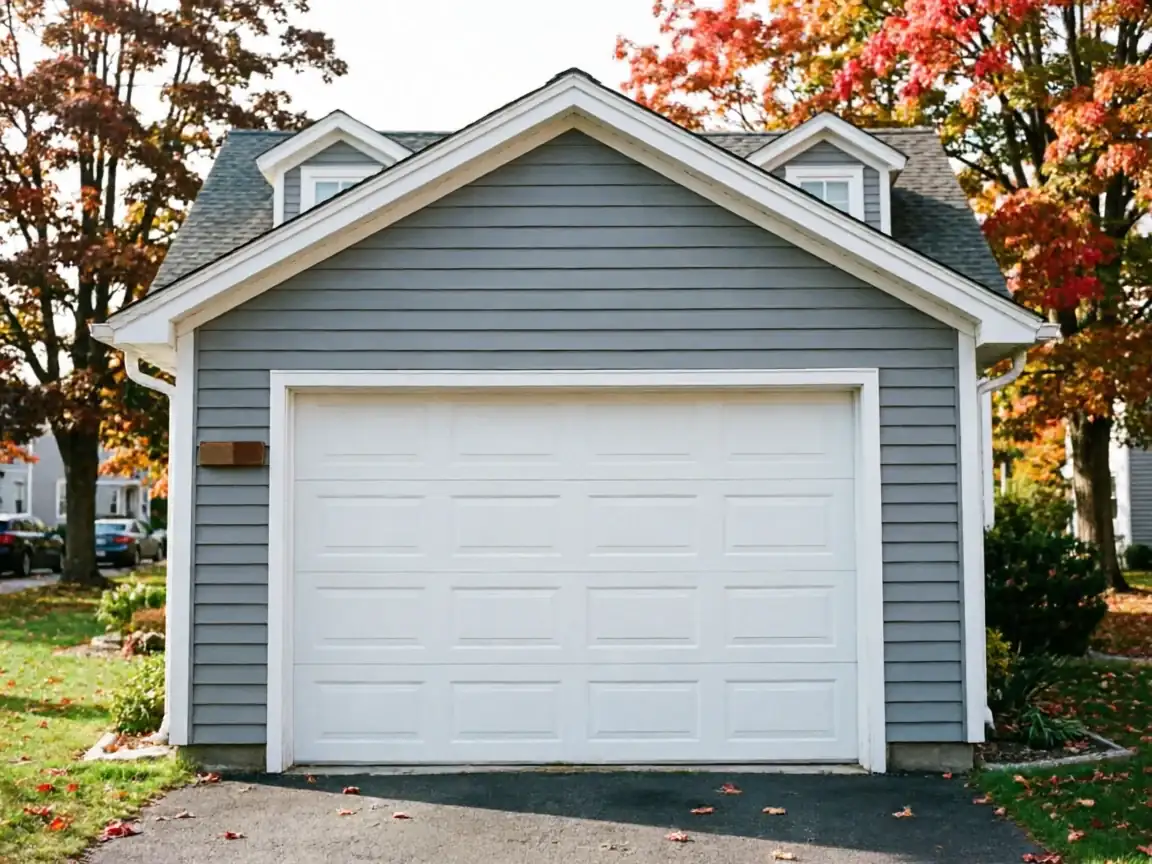
Billerica sits about 12 miles out from our Waltham shop, further than most of the towns we cover day to day. That distance doesn't change what a spring or opener repair costs you, but it does mean we build the drive into how we schedule the day rather than squeezing the job in between closer calls. Most of the original garage hardware in Billerica dates to construction around 1973, which puts it toward the newer end of the stock we see across the wider service area - the area overall runs from 1938 to 1993 with a median closer to 1966. That one gap matters: a door built in the early-to-mid 70s is old enough that the original springs and cables are long overdue, but new enough that it's less likely to carry the oldest one-piece slab doors we find in towns with earlier median build years. Billerica's median household income, around $139,706, runs a bit below the roughly $150,820 median across the full service area, which is worth knowing only because it shapes what we recommend first: fix the failed part before we talk about a full door swap, unless the door itself is the actual problem.
We don't price sight unseen over the phone, and we're not going to pretend otherwise here.
Stocked Parts
A house built around 1973 in a cold-climate town like this usually has one of two spring setups
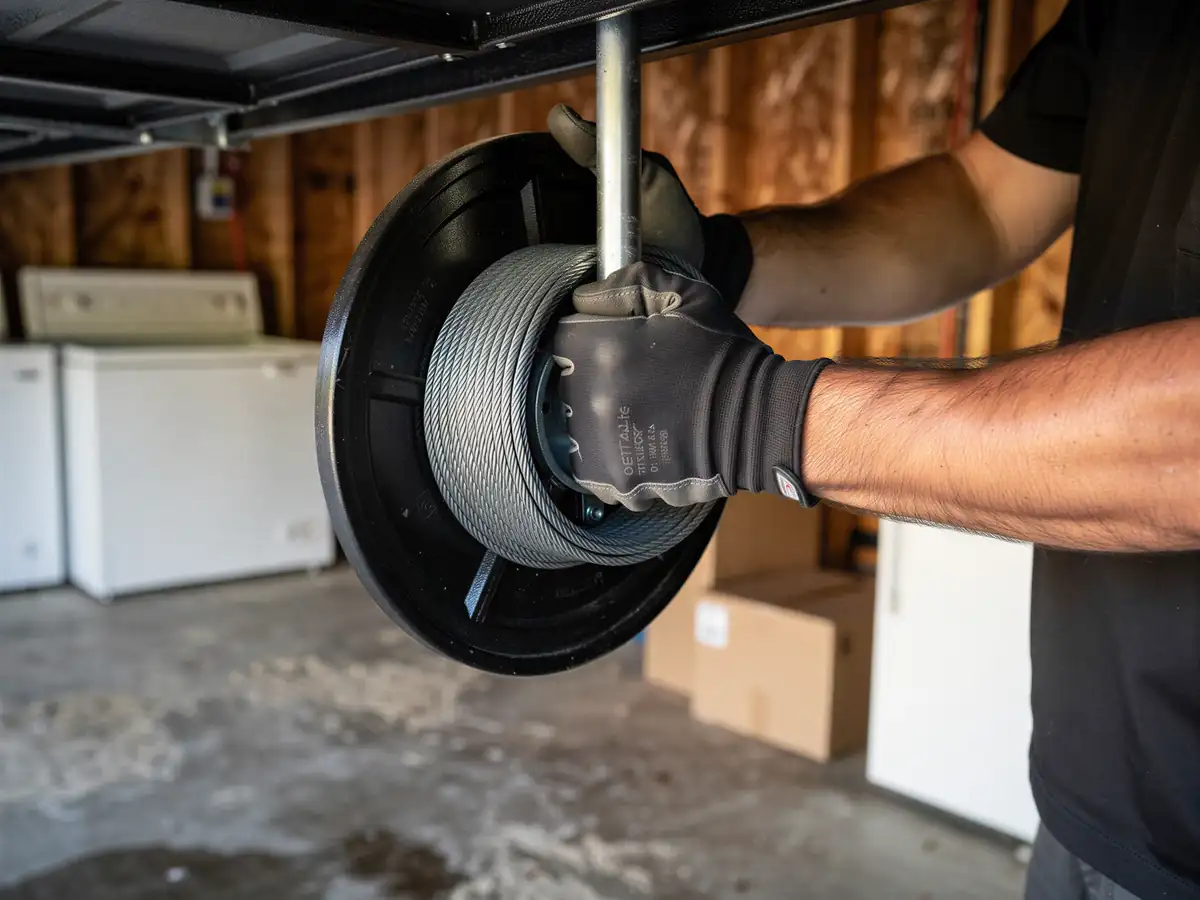
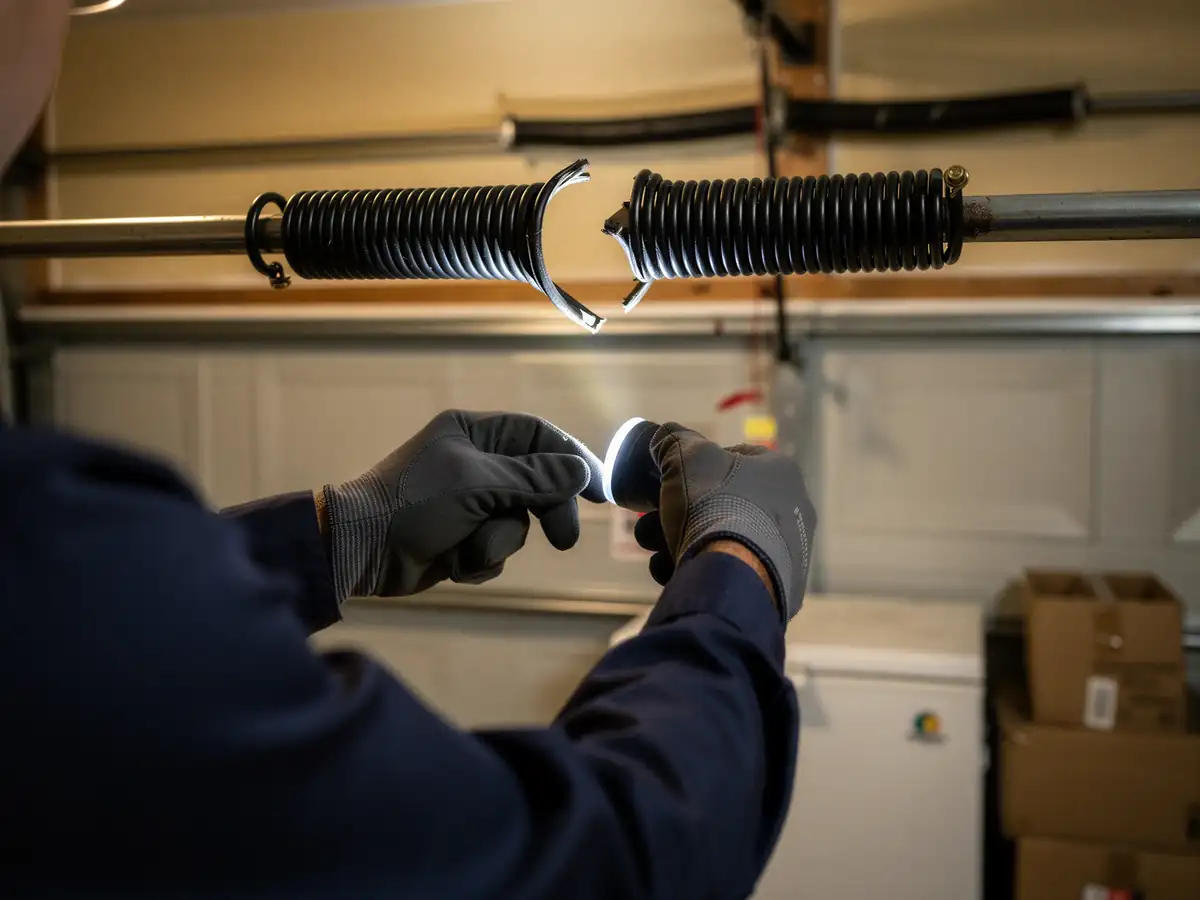
Torsion springs mounted above the door, or the older extension spring arrangement running along the horizontal tracks. Extension springs from that era commonly lack the safety containment cables that became standard later, and we carry both styles plus the retrofit cables to bring an old setup up to a safer standard without replacing the whole system. Rollers and hinges from a 1973 install are steel, not the sealed nylon kind, and after fifty-plus winters of cold-band temperature swings they're usually pitted or bent rather than just noisy.
We stock standard torsion spring sizes, extension spring kits, steel and nylon rollers, and common relay boards for openers from that build era
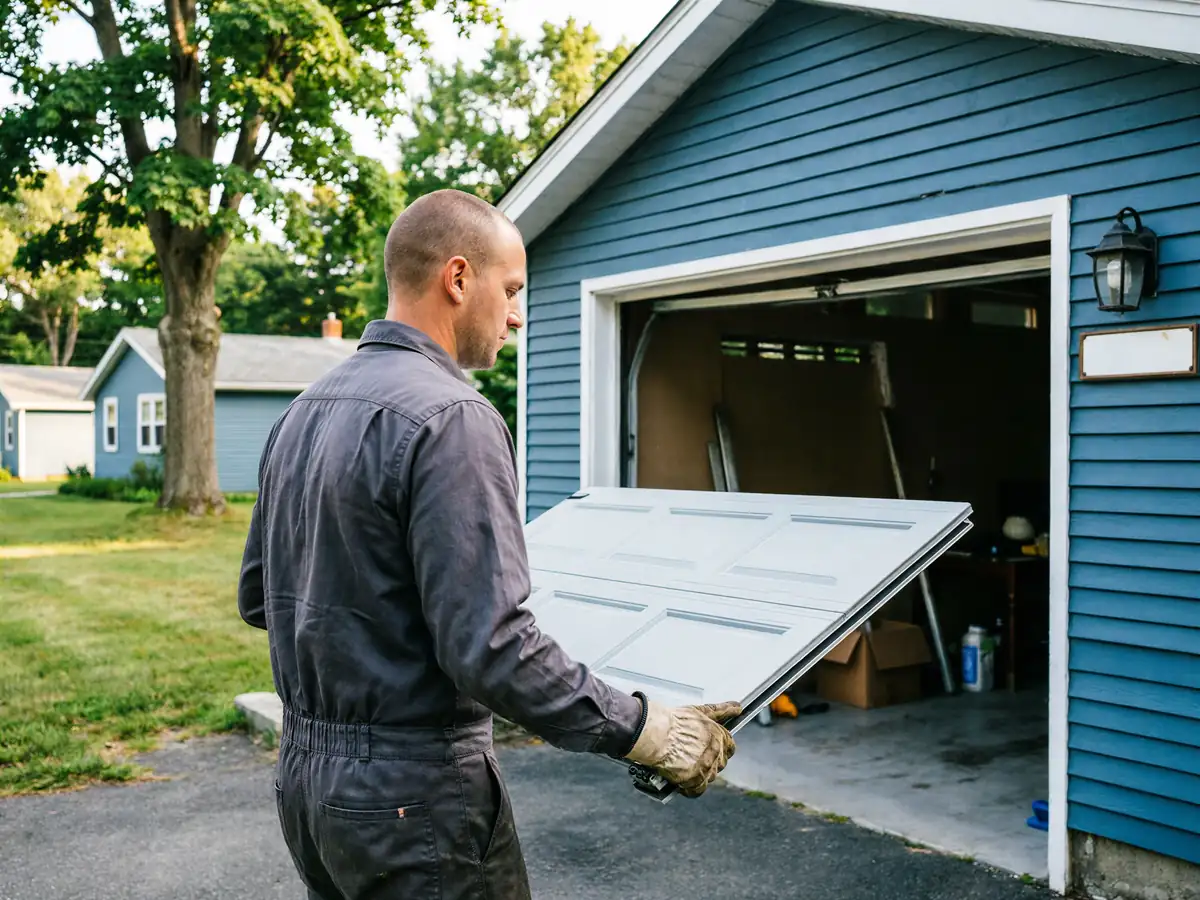
What we don't always have on the truck is an exact replacement panel for a discontinued door model - those sometimes take a special order, which we'll tell you up front rather than promise same-day.
What You Are Seeing
With roughly 15,653 households in Billerica and a housing stock centered on the early 1970s, the pattern we see most is original hardware finally giving out: a torsion spring that's done its last cycle, an extension spring that's stretched and sagging on one side, or a steel roller that's worn its track groove uneven over the decades. The region sits in a cold, severe winter climate band, and that cycling between frozen and thawed ground shifts the slab under the door frame slightly year to year - enough that a door that closed square in October starts binding on one side by February.
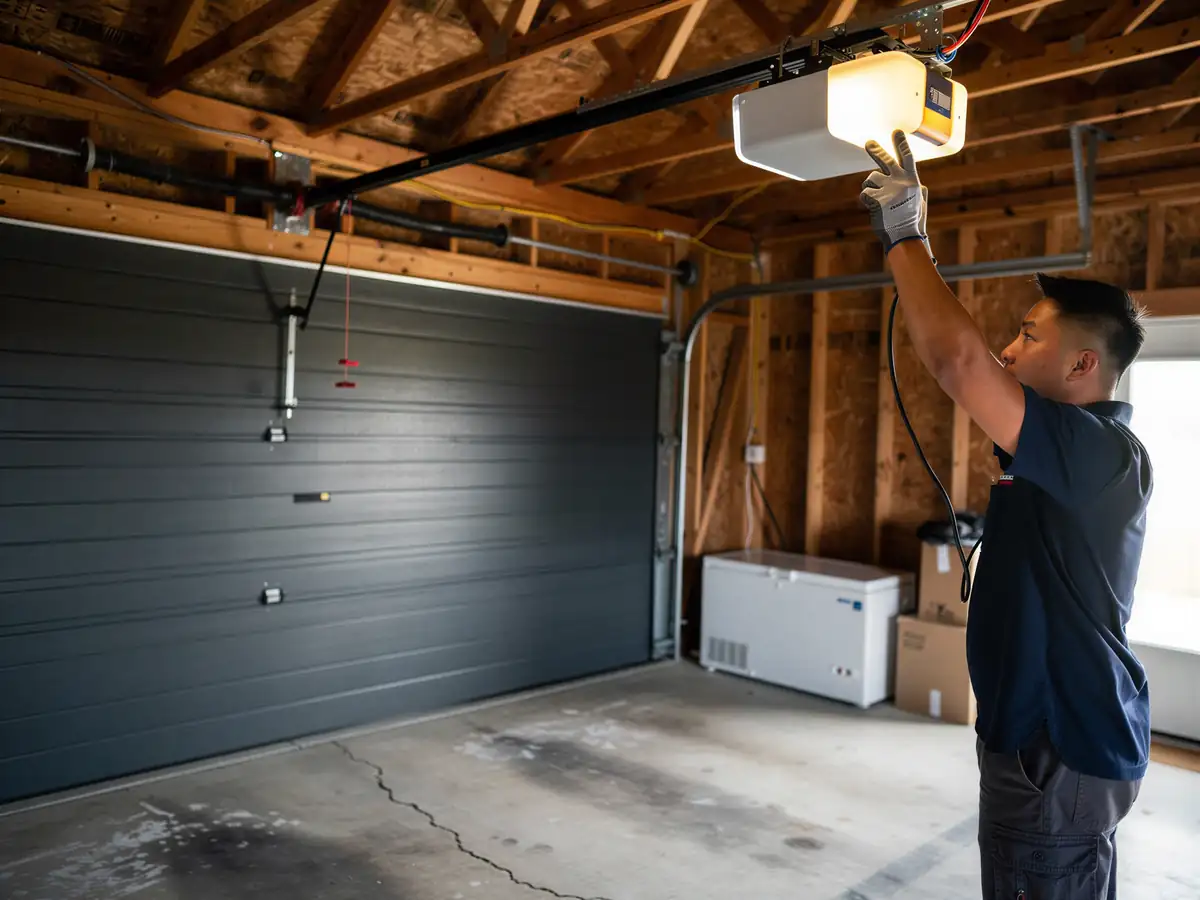
Openers from a 1973-era install, if they've survived this long, are usually long past their second or third replacement already, so what you're seeing is more likely a newer opener paired with original track and spring hardware than a fully original system. That mismatch is its own source of trouble - a stronger modern opener forcing a tired spring to do more work than it has left in it.
How We Fix It
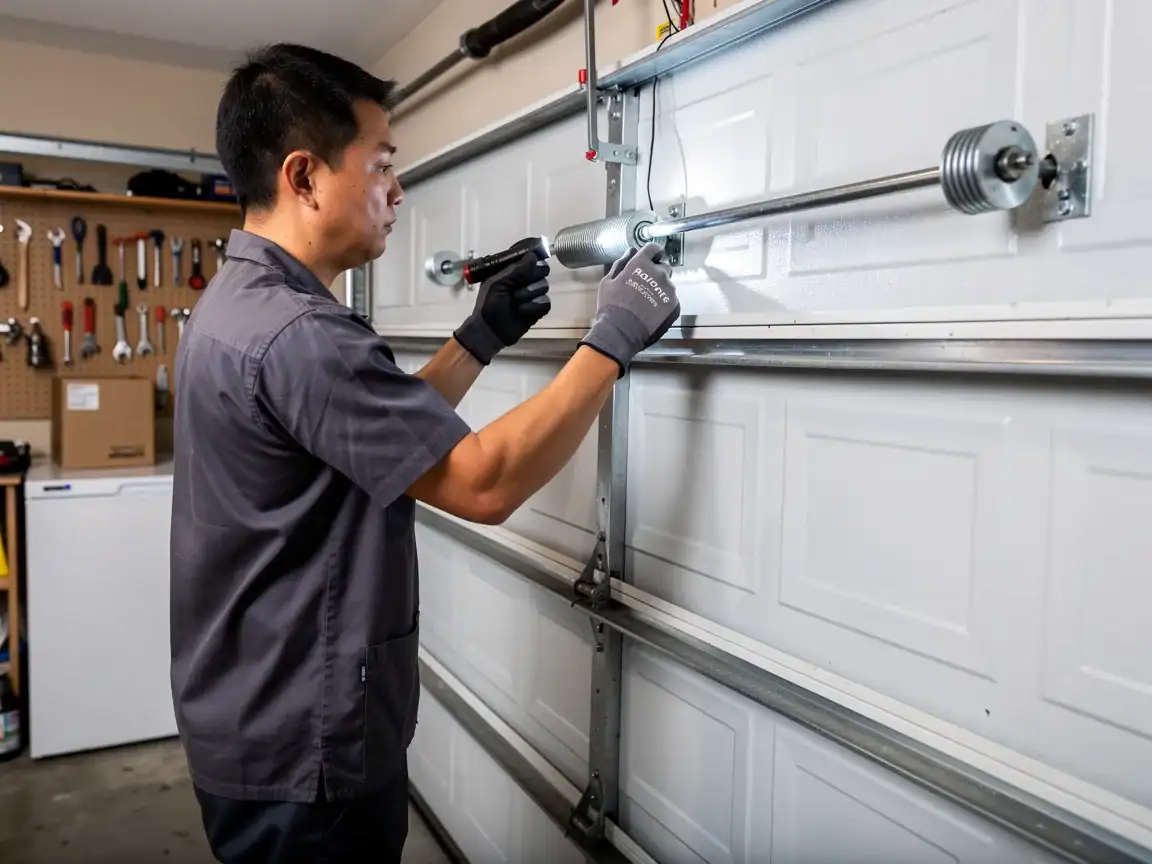
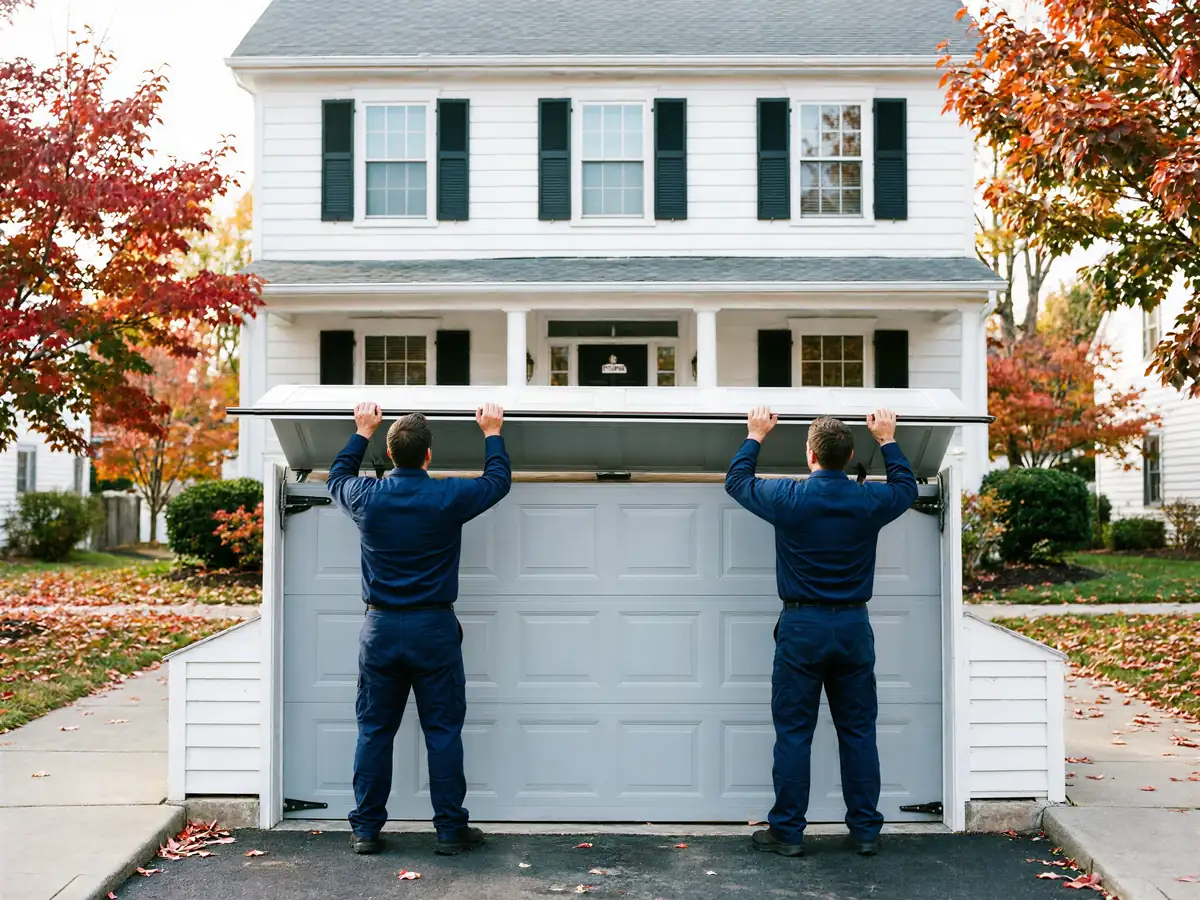
We start at the hardware, not the opener, because in a house this age the opener has usually been swapped at least once already while the spring, track, and cable assembly haven't. If a torsion spring has broken, we replace it under tension with the correct wire gauge for your door weight - guessing on spring size is how you get a door that slams or won't stay open. If it's an extension spring setup without containment cables, we add them as part of the repair; it's a small cost that keeps a snapped spring from becoming a projectile across the garage.
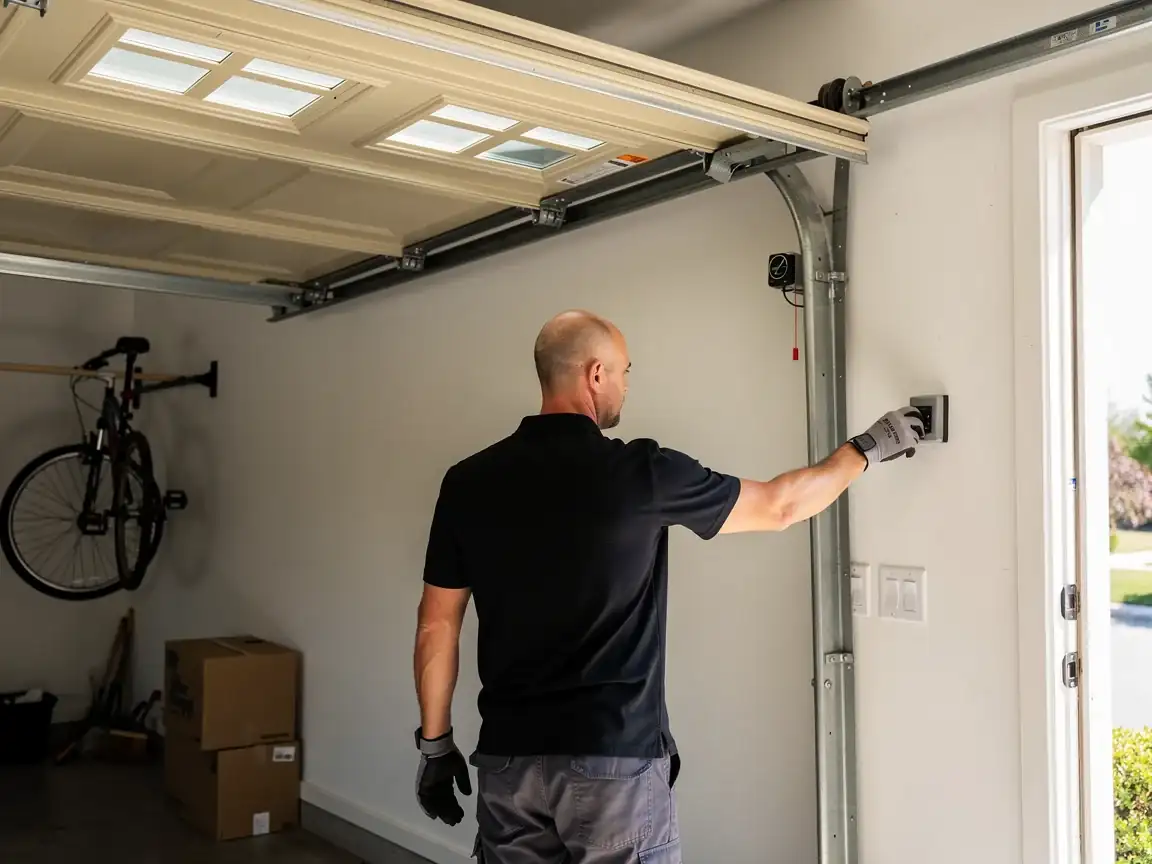
Worn rollers and bent track get addressed together, since a bent track is often what wore the rollers unevenly in the first place. We check opener force settings last, after the mechanical side is sound, because a door that's hard to lift by hand will always come back to haunt a freshly adjusted opener.
Where This Job Goes Sideways
The job gets harder when the door itself
Not just the hardware - has been replaced at some point without matching the original track width or spring mounting, which happens more than you'd think in houses this age after a few decades of piecemeal repairs. When that's the case, stocked parts don't always fit clean and we end up custom-fitting instead of swapping like-for-like.
We'll also tell you plainly when a repair isn't worth it
If the door panels themselves are rusted through or warped from decades of cold-climate freeze-thaw cycling, putting new springs and rollers on a dying door just delays the real cost. In that situation we'd rather say so than sell you a repair that buys six months.