What You Pay
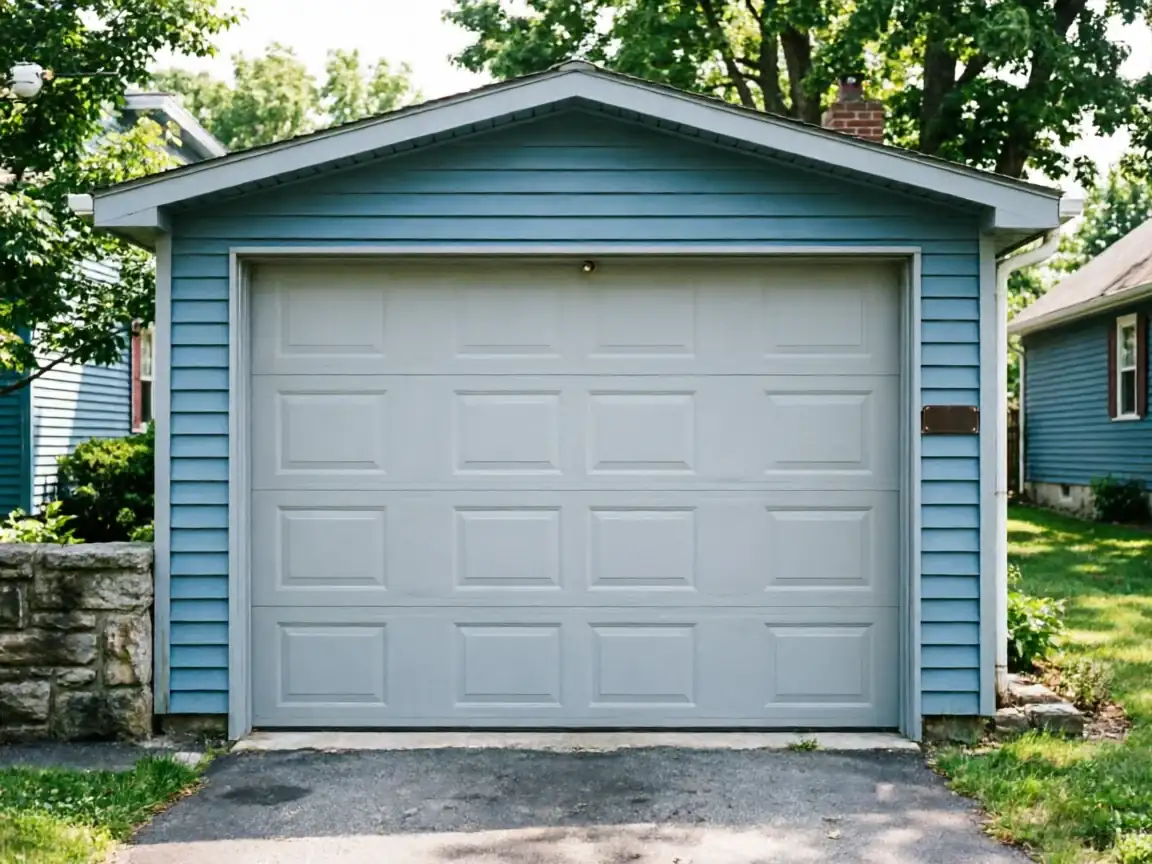
Most garages in Billerica went up around 1973, the tail end of a building wave that ran from the late 1930s into the 1990s across this part of the service area. That matters more than it sounds like it should: a door from that stretch is usually a steel sectional, 16 feet wide for a two-car bay, hung on an extension-spring system with side pulleys rather than a torsion bar overhead. We don't quote a flat number for a job sight unseen, because what a 1973 door needs depends on whether the original hardware is still in there or whether someone converted it to torsion at some point in the last fifty years. What we can tell you is that extension-spring repairs and torsion-spring repairs price differently, and the first thing we do on site is identify which one you've got before we say a number out loud. Billerica sits about 12 miles out from our shop in Waltham, so a truck roll here is a planned visit, not a drop-by - we'll give you a window, not a guess.
What You Are Seeing
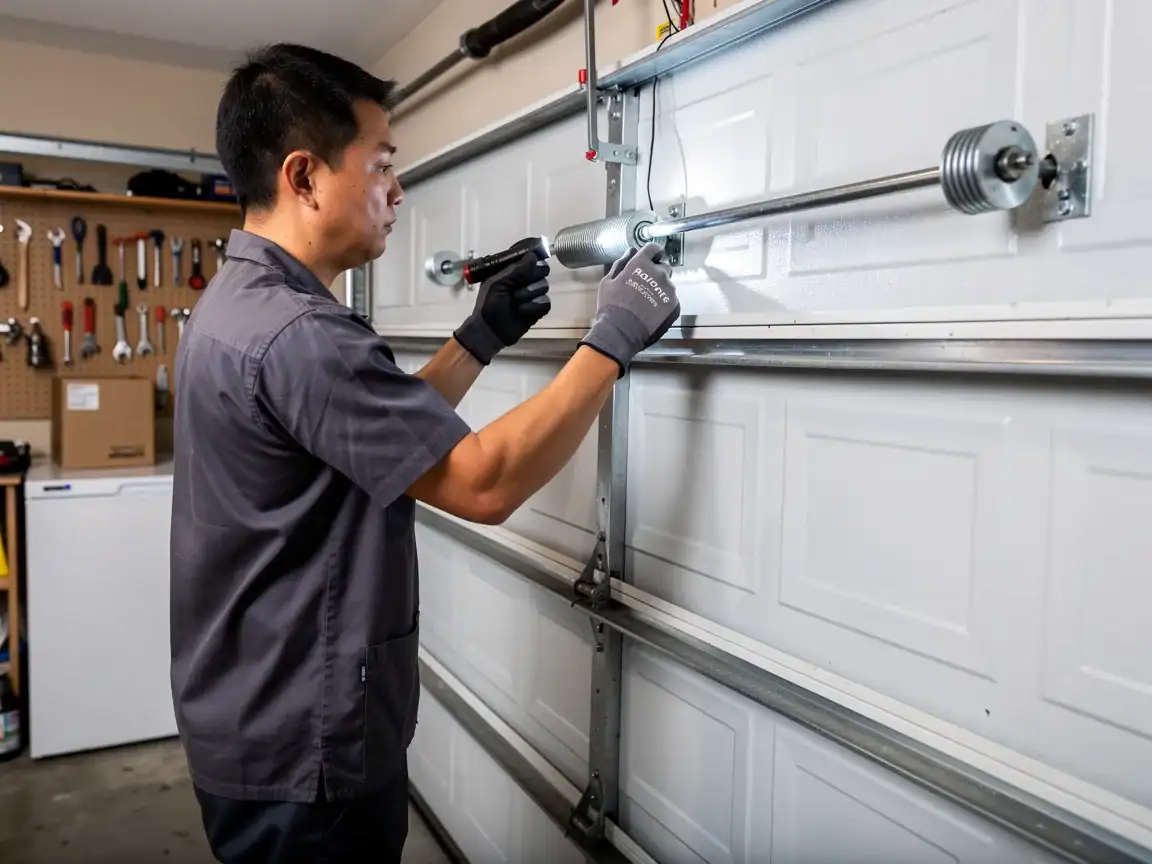
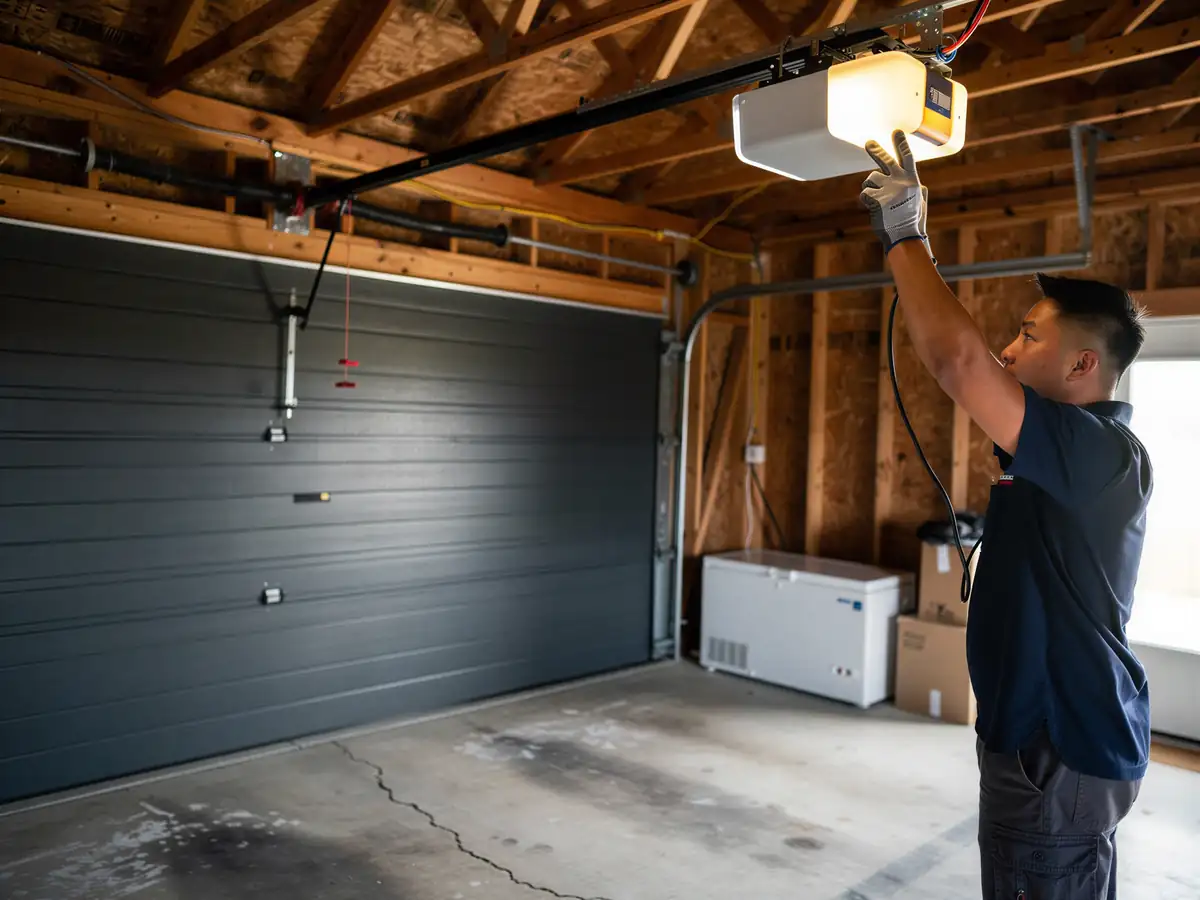
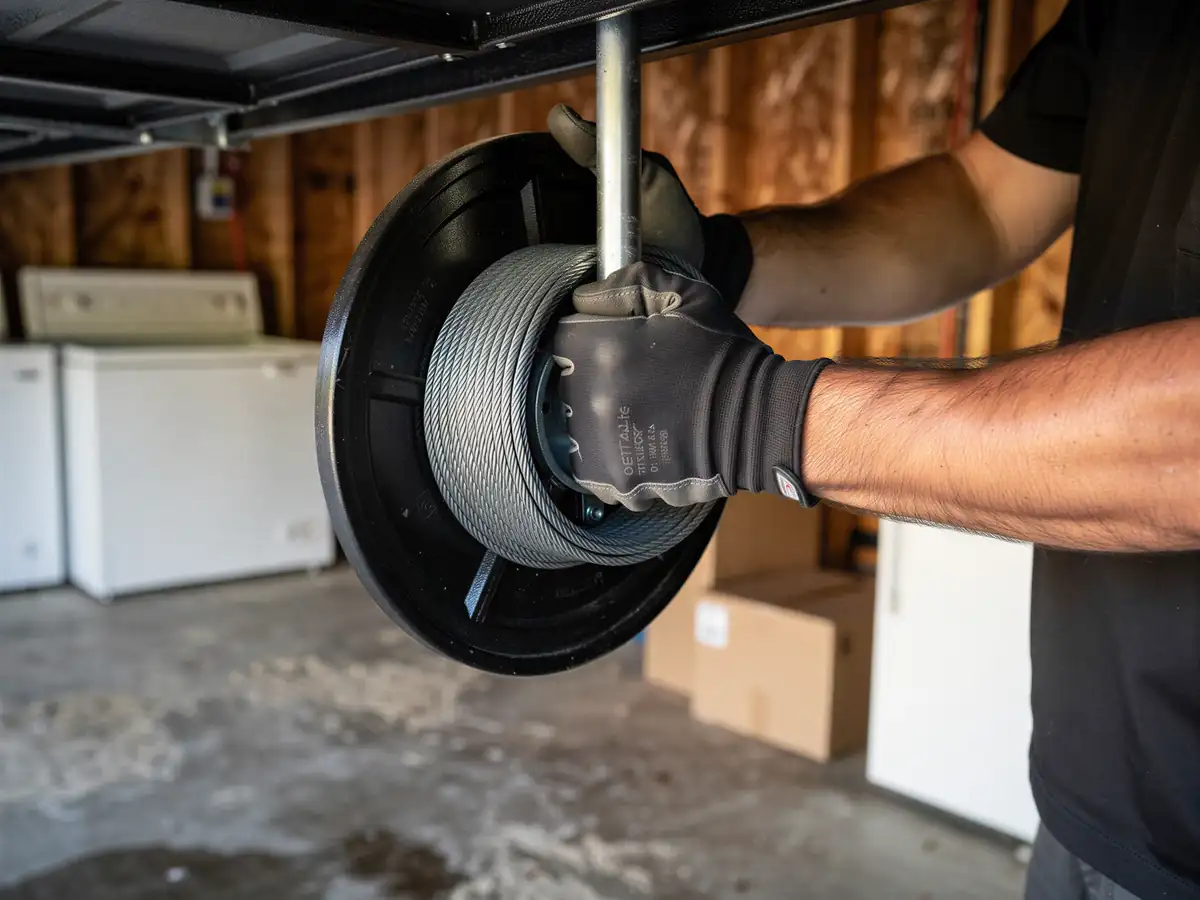
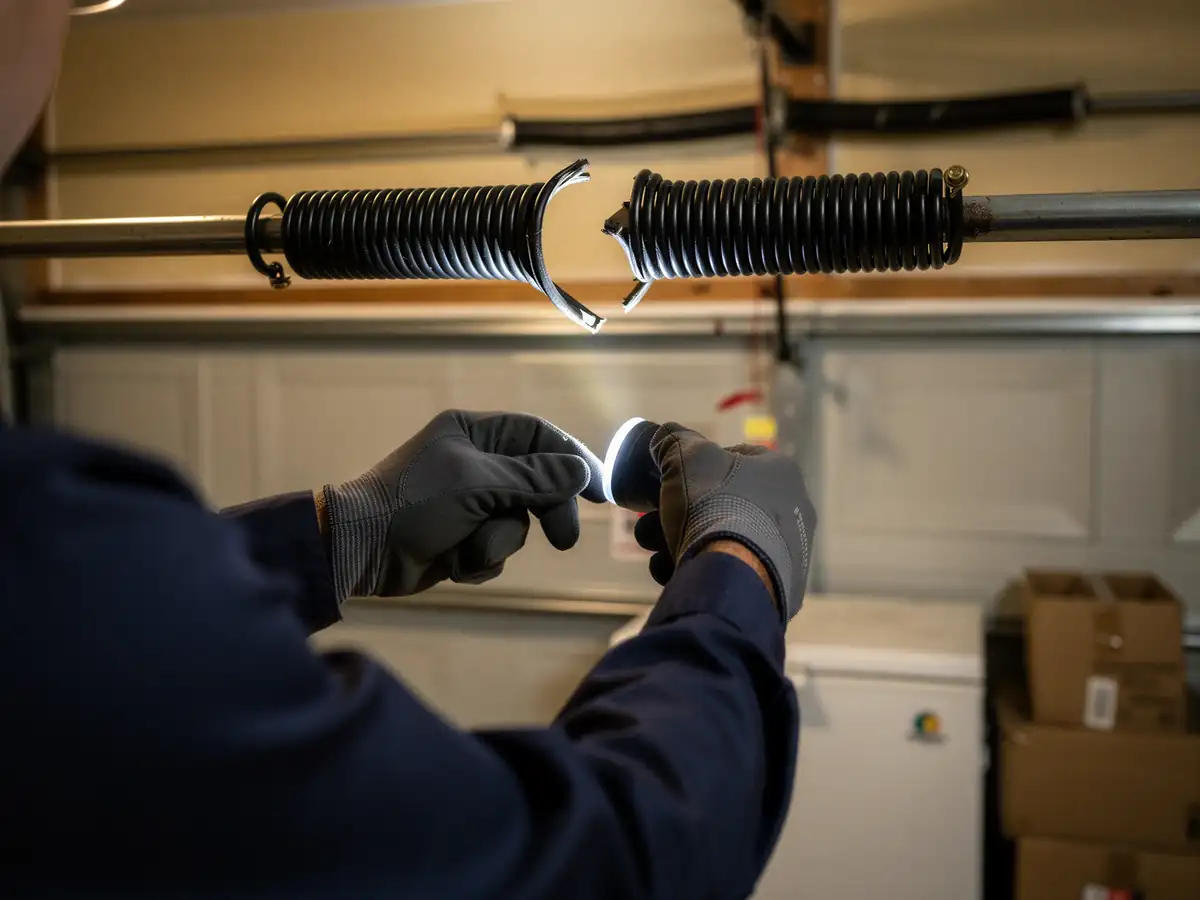
On a door built around 1973 that's never been touched, the extension springs run along the horizontal track and connect to the door through a pulley and cable system. After decades of cold-weather cycling - this region gets real winters, the kind that stress steel coatings - those springs lose tension unevenly, and you'll notice the door drifting open on one side or slamming the last foot of travel instead of settling. Cables on this hardware fray at the drum where they wrap, and a frayed cable on one side while the other's fine is a classic sign of original 1970s-era rigging rather than a newer torsion failure. Panels from this period are steel over a thin foam or no insulation at all, so rust at the bottom panel seams is common, especially where the door's been sitting low to a driveway apron for fifty years. If your opener is newer than the door itself, which is common, the opener will keep trying and straining against bad springs until the motor itself gives out.
How We Fix It
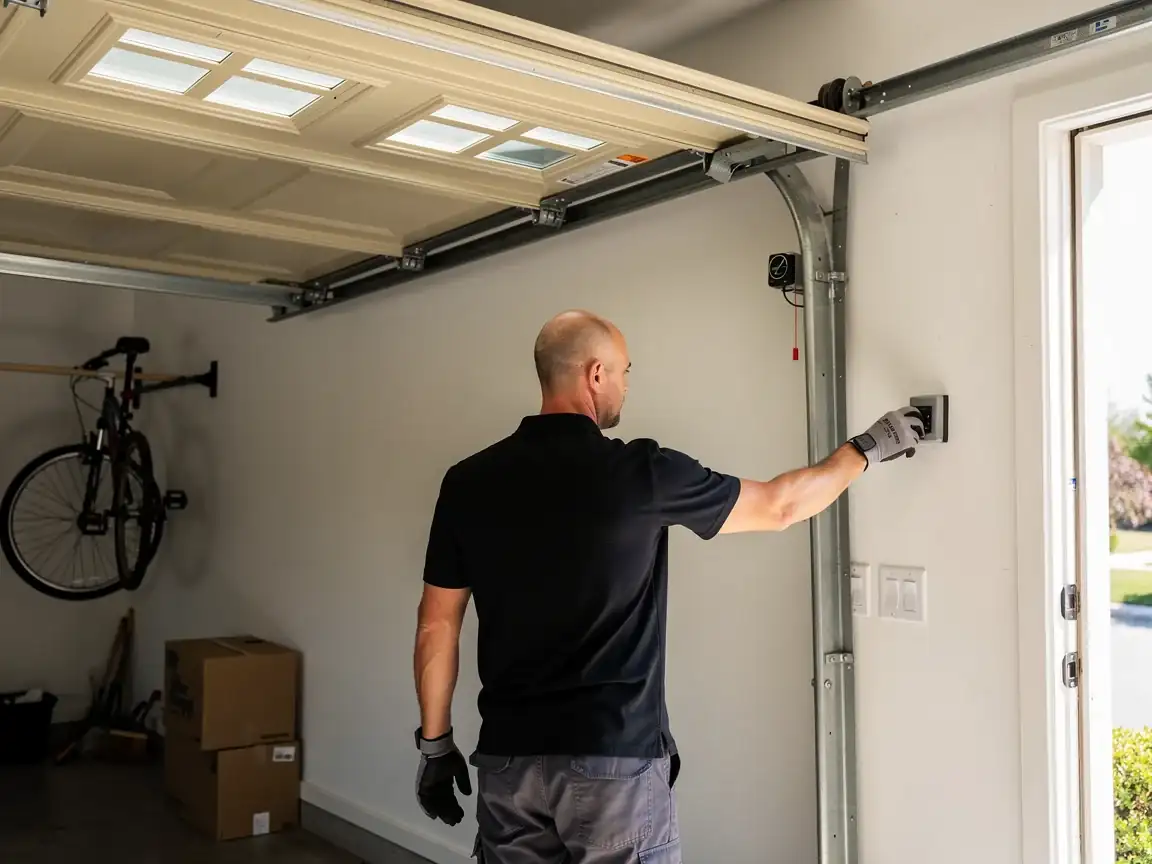
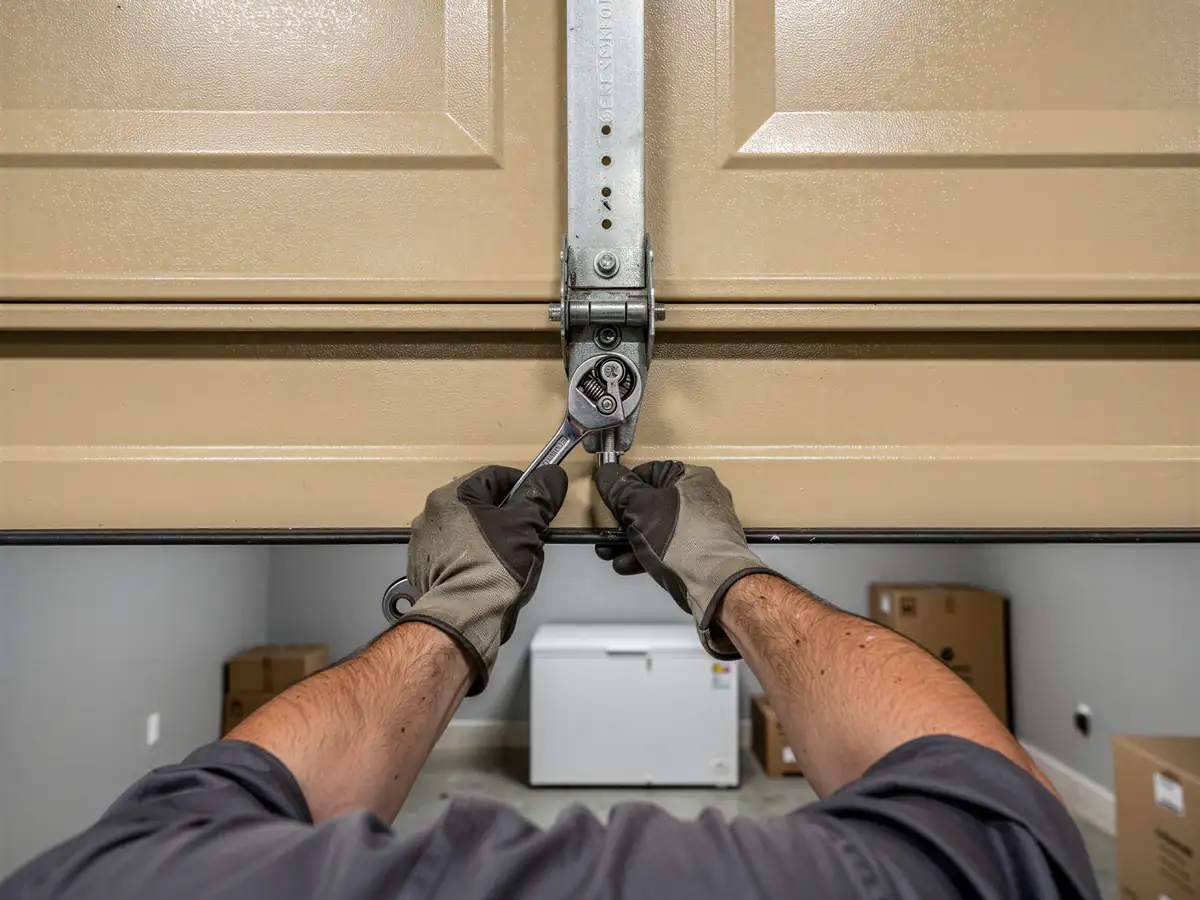
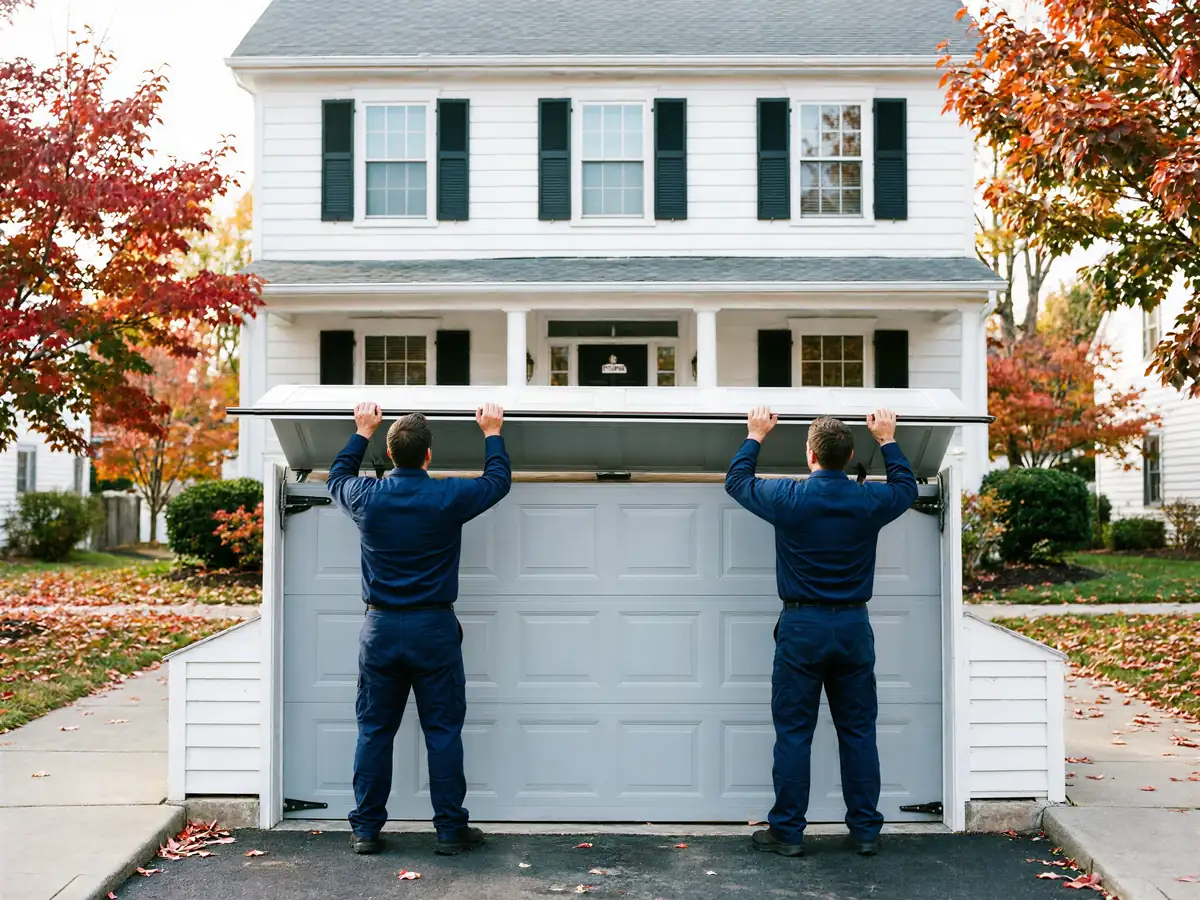
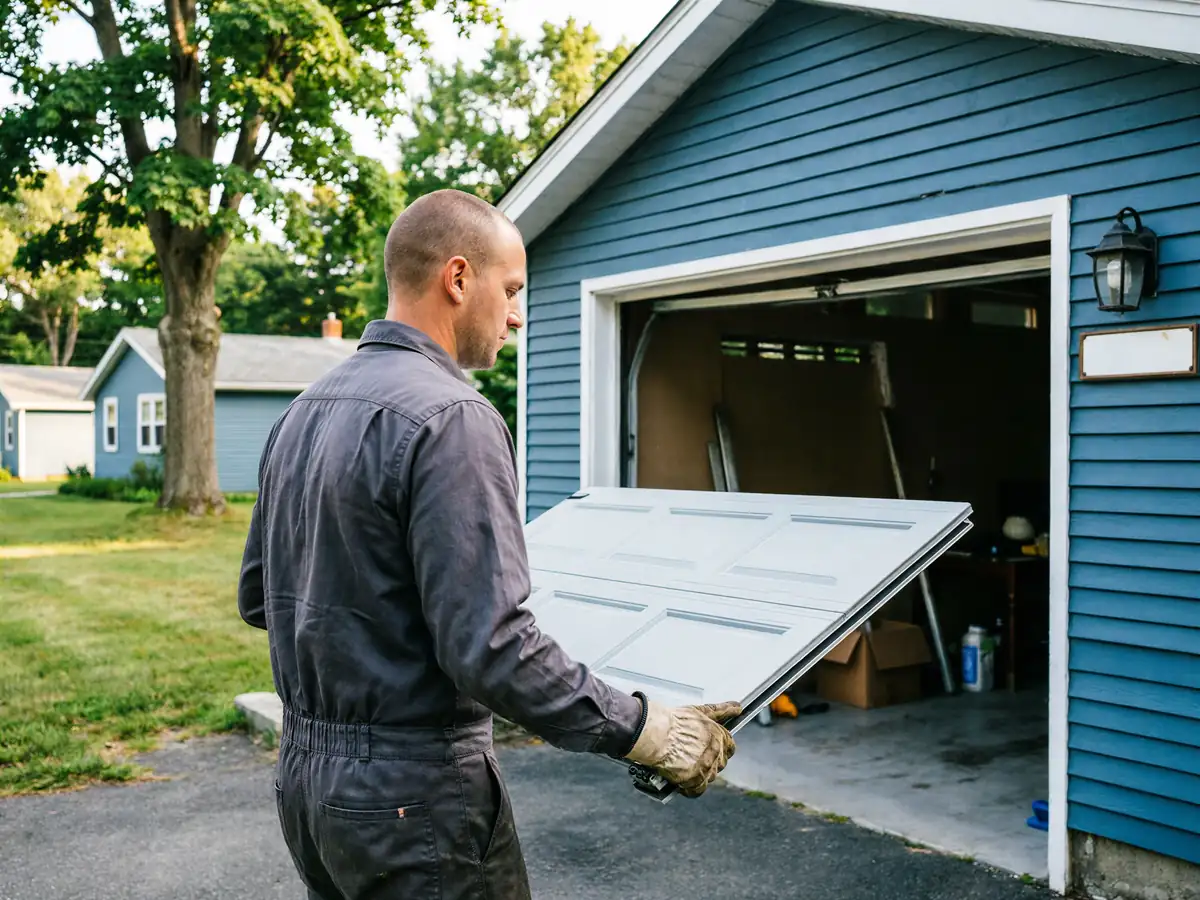
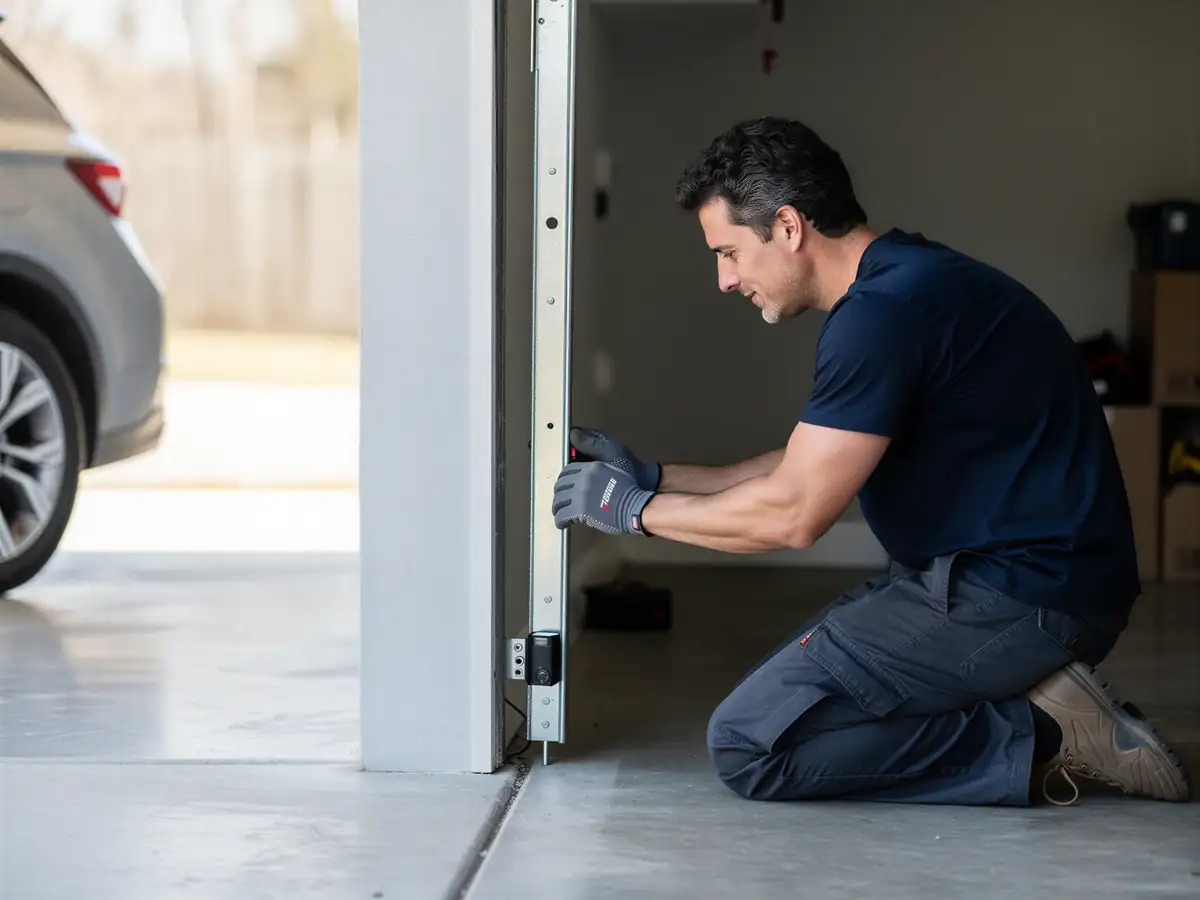
For extension-spring doors from this era, the repair is usually a matched pair of springs sized to the door's weight, new cables, and a check of every pulley bracket, since the brackets corrode from the inside out and a cracked one under load is how people get hurt. We'll also check the track alignment - after fifty years, slab settling is common enough in this housing stock that a track bolted straight in 1973 isn't straight now. If a homeowner wants to convert from extension to torsion while we're in there, that's a bigger job - new header bracket, torsion tube, winding cones - but it's a reasonable upgrade on a door this age if the panels themselves are still sound. We'll tell you honestly when the panels aren't: rust-through at the bottom section on a steel door from this period usually means panel replacement, not spring work, and patching it is a short-term fix at best.