Stocked Parts
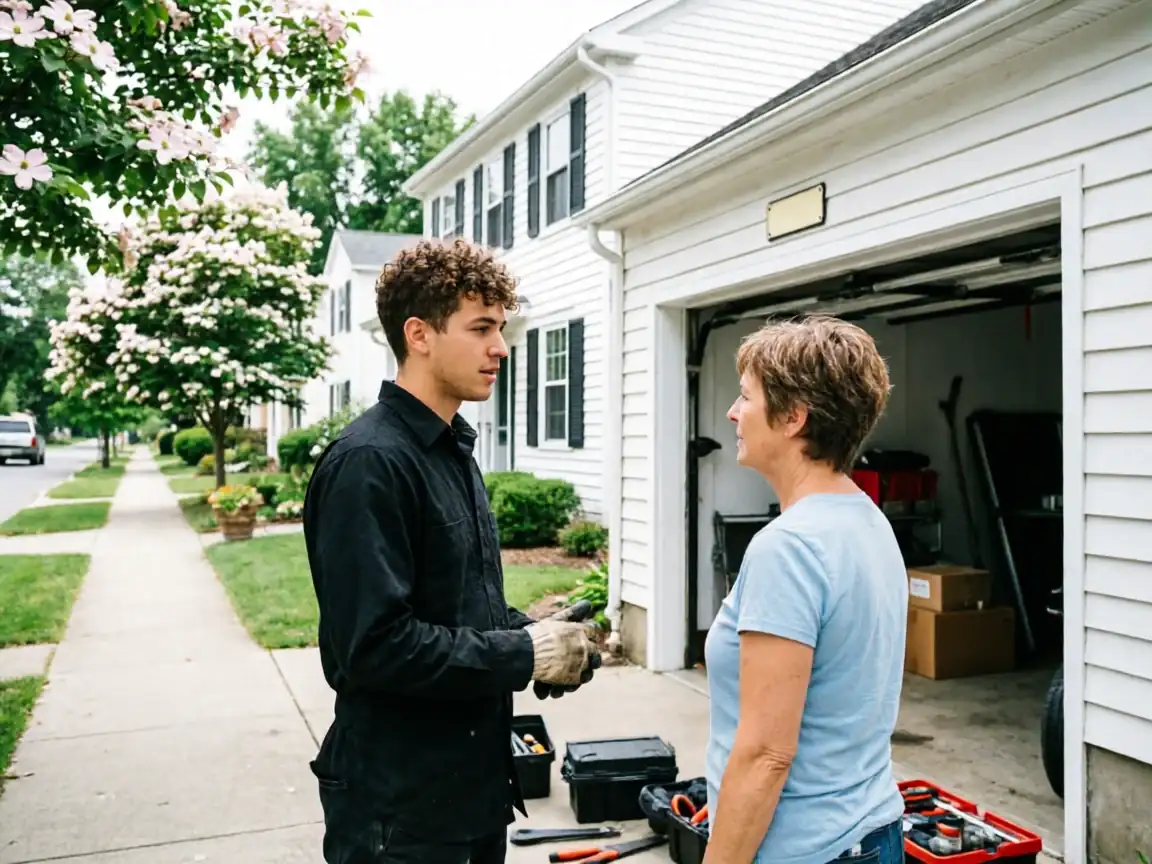
Belmont is a short run for us, about 3 miles from the Waltham shop, which matters more for parts than for speed. The truck gets loaded before we know which door we're looking at, so what's on it has to match what's actually on the street. Belmont's housing stock runs older than a lot of what we see elsewhere in the service area - the median year built here is 1938, well ahead of the 1966 median across the towns we cover. That means torsion springs sized for older single-car and narrow double bays, steel panel sections in older widths, and extension spring kits for the garages that never got converted to torsion when the rest of the area did in the 60s and 70s.
What we don't carry is original hardware from the 1930s and 40s itself - hinges, rollers, and track brackets cast the way they used to cast them. If a Belmont door still has its original track and the bracket has cracked, we can usually adapt a modern part to fit, but matching it exactly sometimes means a special order and a wait. We'll tell you straight if that's where your job is headed before we start cutting anything.
What You Pay
We don't have a Belmont-specific price list to hand you, and we're not going to make one up
What drives the number on an older door is usually the spring size (older torsion springs were wound differently than what's standard now) and whether the track or drum needs replacing alongside the spring. A straightforward spring swap on a door that's otherwise sound costs less than a job where the opener, track, and springs are all original to a 1938-built structure and none of them match current stock sizes.
The honest limitation
If your door and opener are both original to the house, we may need to quote the job in two parts - what we can fix today off the truck, and what needs a part ordered first. We'd rather tell you that up front than give you a number that falls apart once we're under the door.
How Long It Takes
Three miles from Waltham is close enough that drive time isn't the variable - what the door needs is. On newer stock across the service area, most repairs are a single visit: diagnose, pull the part off the truck, swap it, test it. Belmont's older housing changes that math more often than other towns on our list, because a 1938 build is more likely to have a spring size, track gauge, or opener mount that isn't a direct swap.
We're not going to promise a same-day window here, because we can't know until we see the door whether it's a standard job or a special-order one. What we can tell you is that the distance from Waltham isn't what slows a Belmont job down - the age of the hardware is.
Why It Happens Here
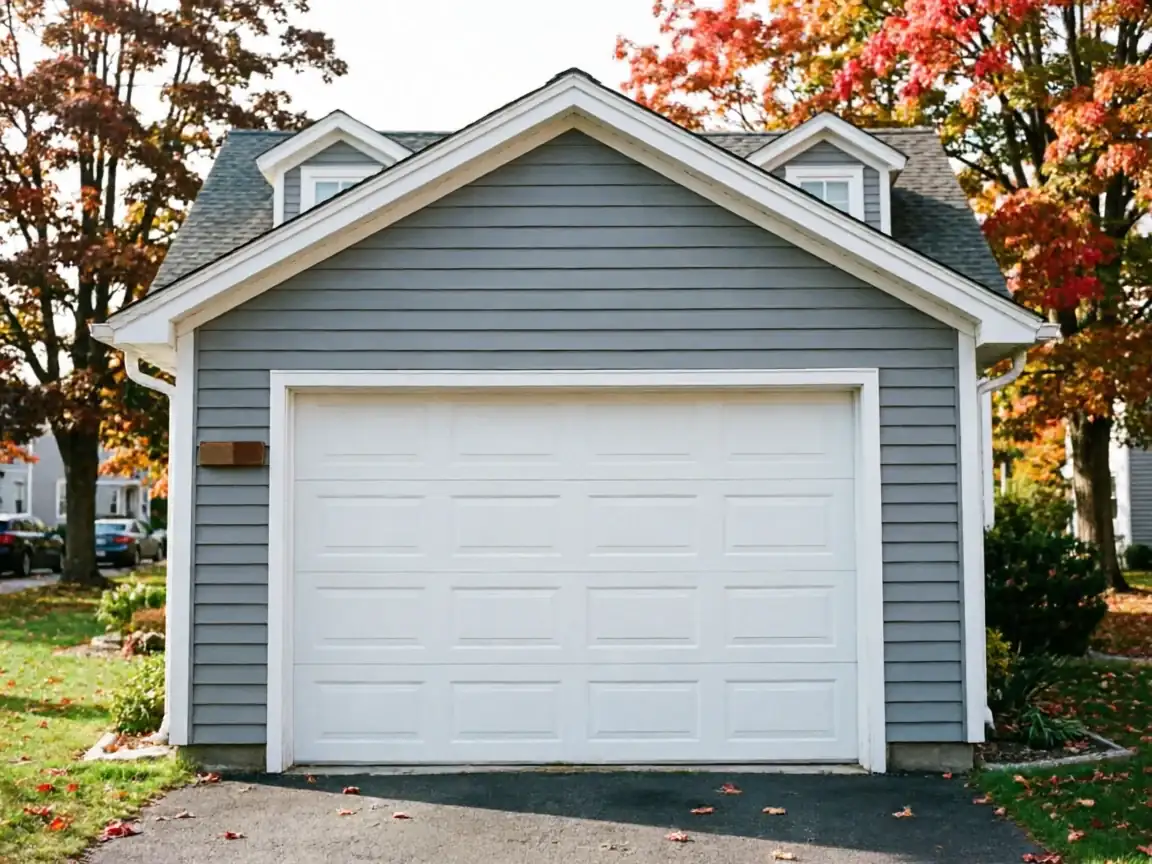
Belmont's median year built is 1938, a full generation ahead of the 1966 median across the rest of the towns we serve. Doors on houses that old have usually been through at least one opener replacement and maybe one door replacement, but the original track, header bracket, or spring anchor sometimes survives underneath newer parts bolted on top of it. That mismatch is where failures start - a modern torsion spring under too much tension on an old anchor plate, or a newer opener pulling against a track that's slightly out of the gauge it was designed for.
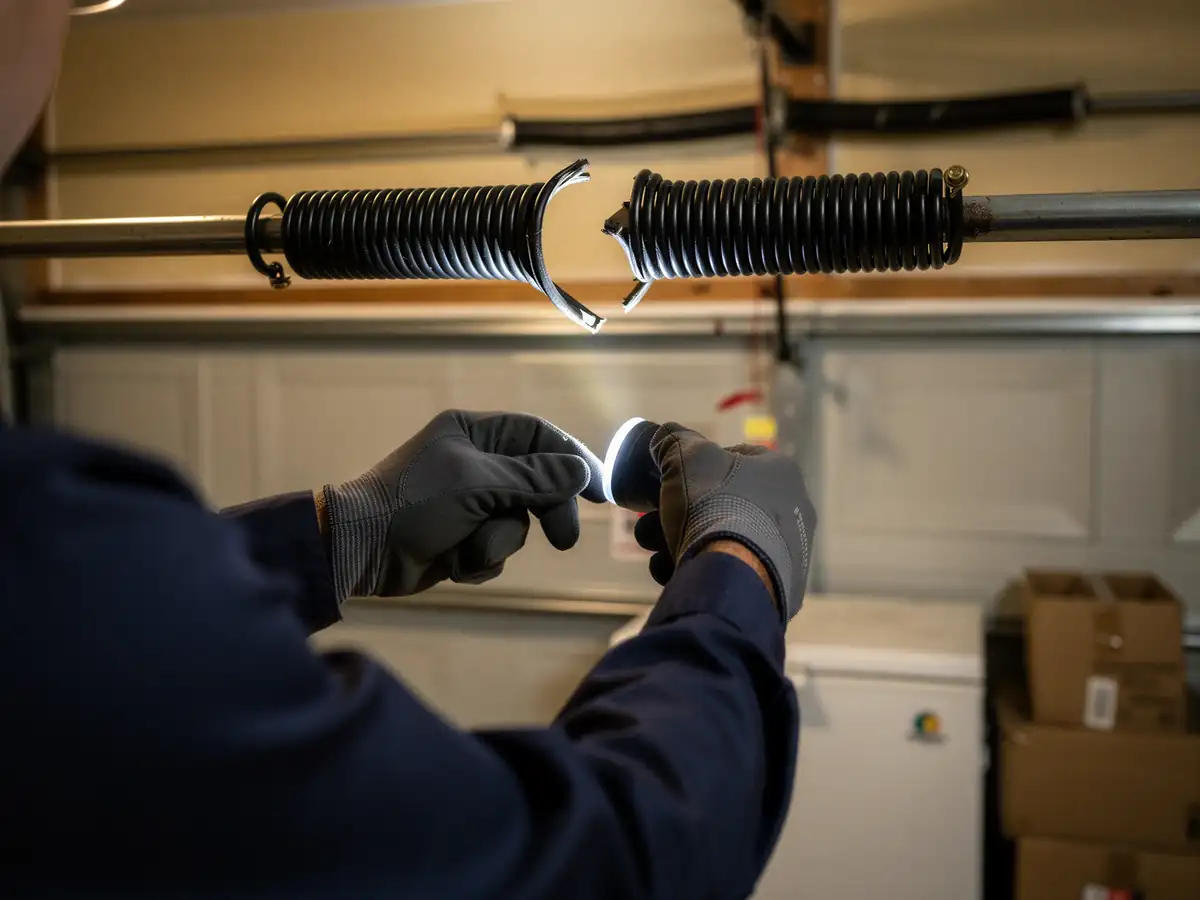
The cold is the other half of it. This part of Massachusetts sits in a climate band the federal data marks as cold with severe winters, and on an older door that cold reaches hardware that's already fatigued. Grease that's decades of reapplication thick stiffens up, cables that have stretched a little over the years go brittle at the fittings, and a spring that was fine in October snaps on the first hard freeze. We see this pattern on Belmont calls more than on calls from the newer-built towns nearby.
How We Fix It
On a Belmont call, the first thing we check isn't the broken part - it's what's underneath it
If a door has layers of repair history, as a lot of the 1938-era houses do, we want to know what's original before we start replacing anything, because that tells us whether the fix is a straight swap or needs an adapter bracket.
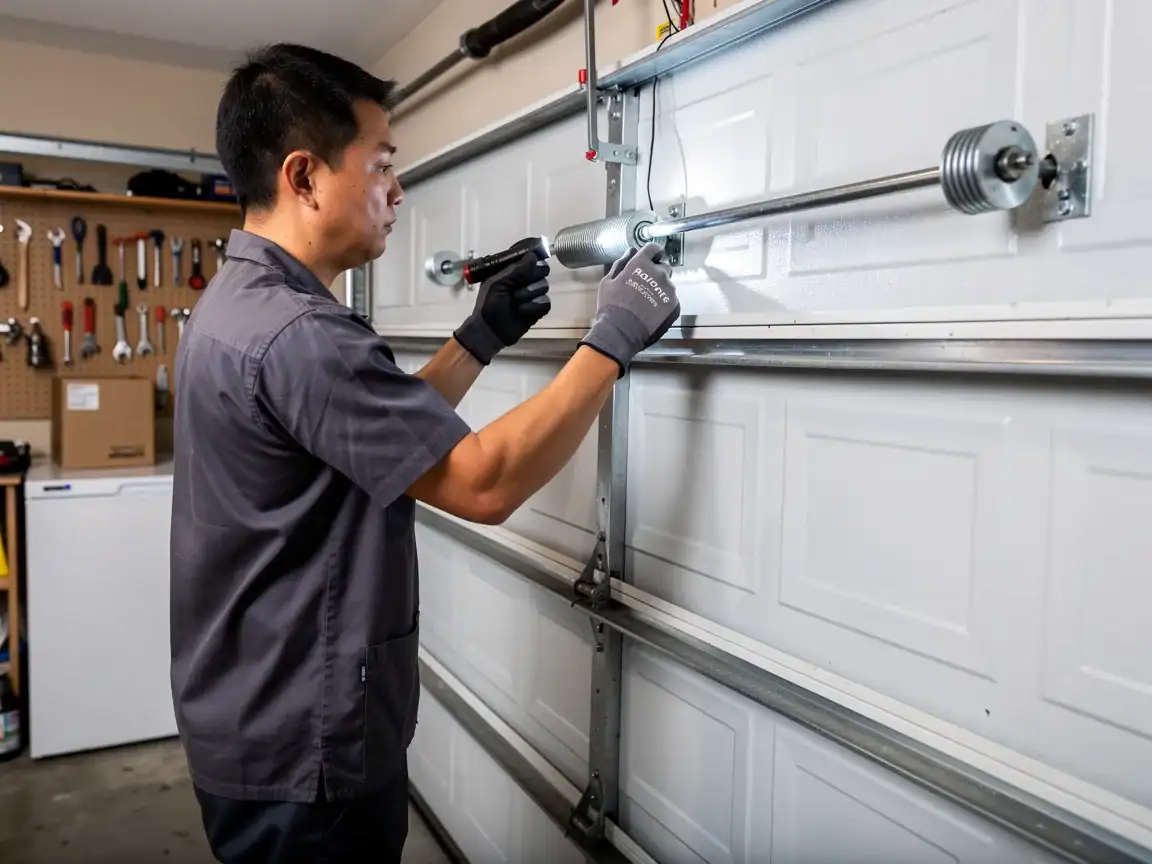
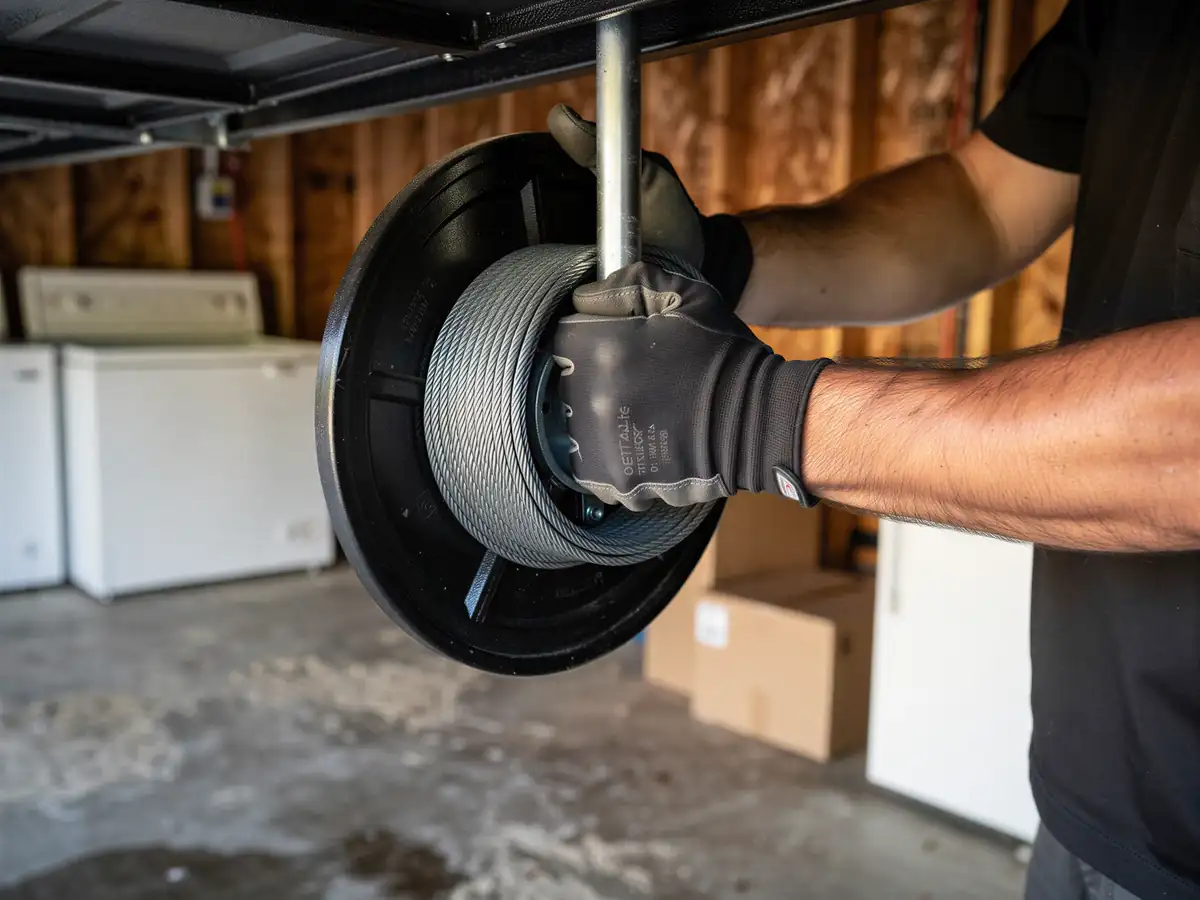
For a snapped torsion spring, that means matching the wire gauge and wind to what's actually on the shaft
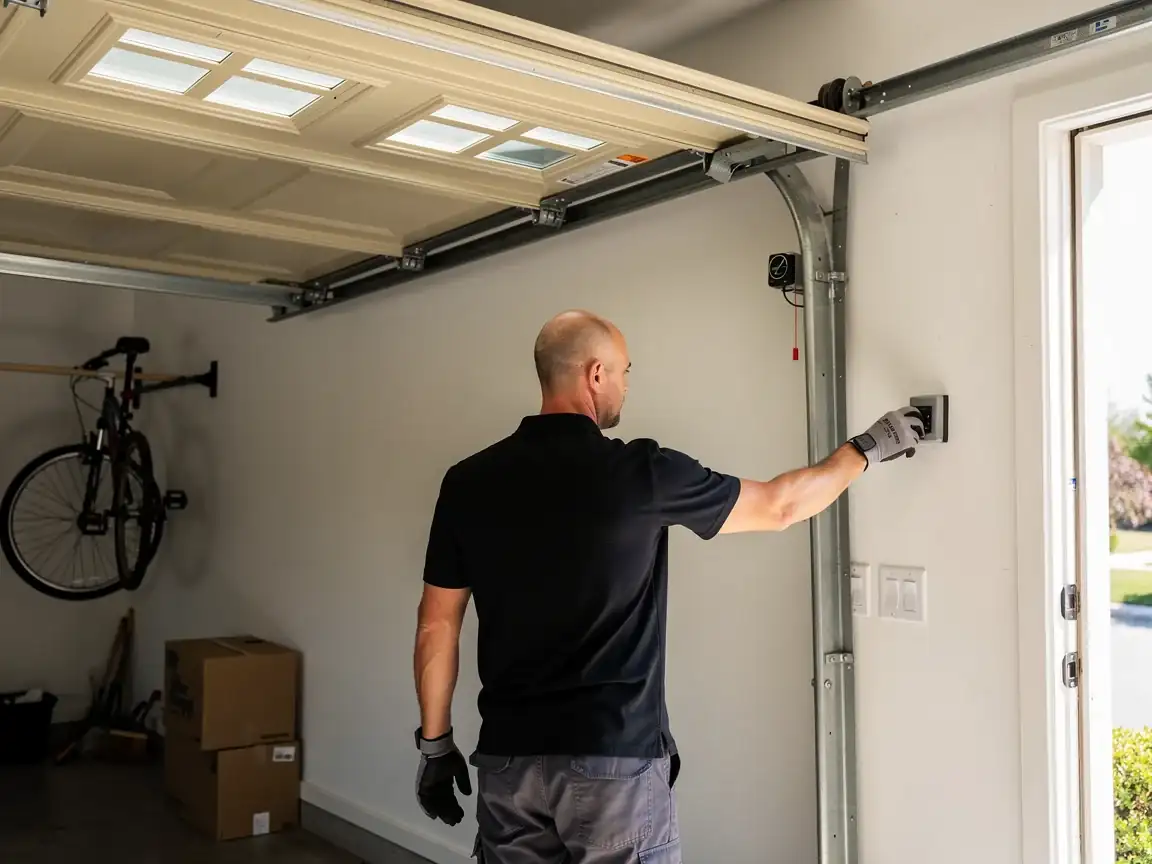
Not just the size listed for the door's current width. For a cable or roller job, it means checking the track gauge against the roller stem before we put a new one in, since older track sometimes runs a hair narrower than today's standard. We test the balance and the opener's force setting before we leave, because an opener fighting a door that's out of balance is how the next spring fails early. If the door's original hardware is too far gone to adapt safely, we'll say so and talk through replacement instead of forcing a patch that won't hold through another Massachusetts winter.