Where This Job Goes Sideways
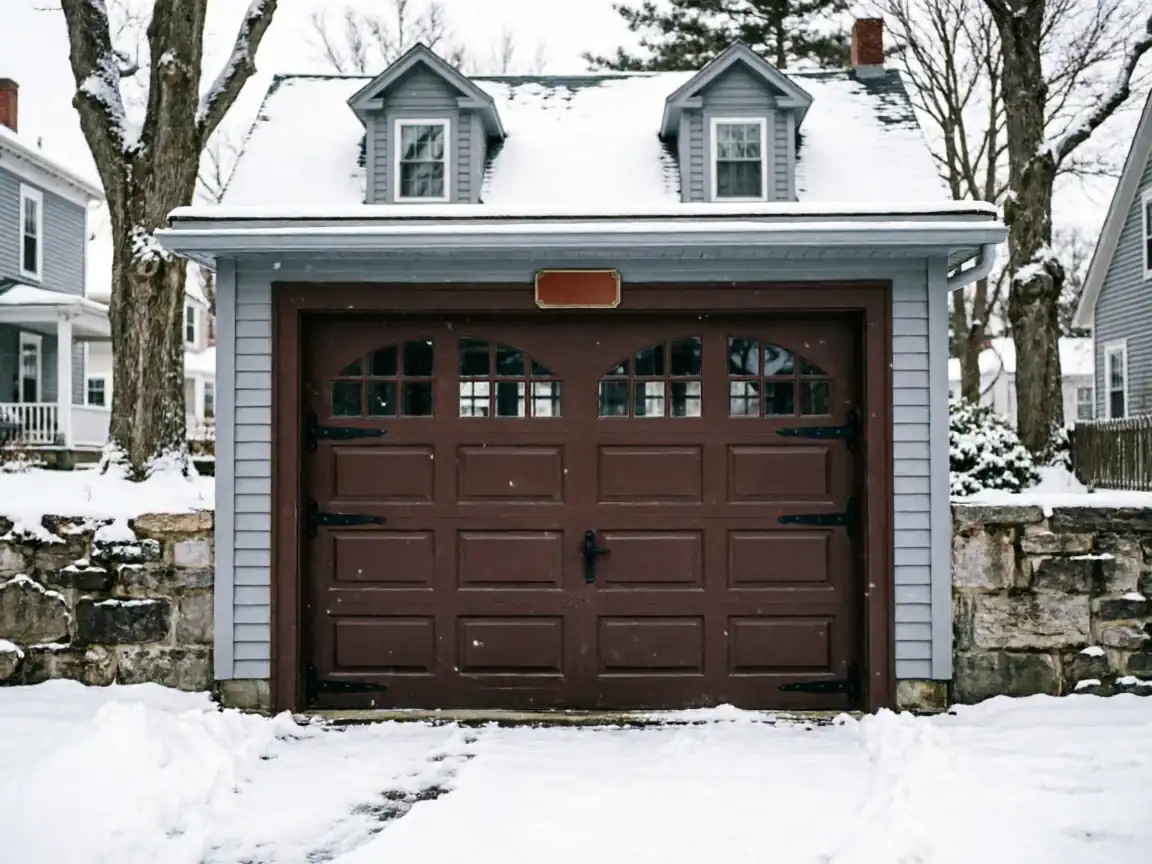
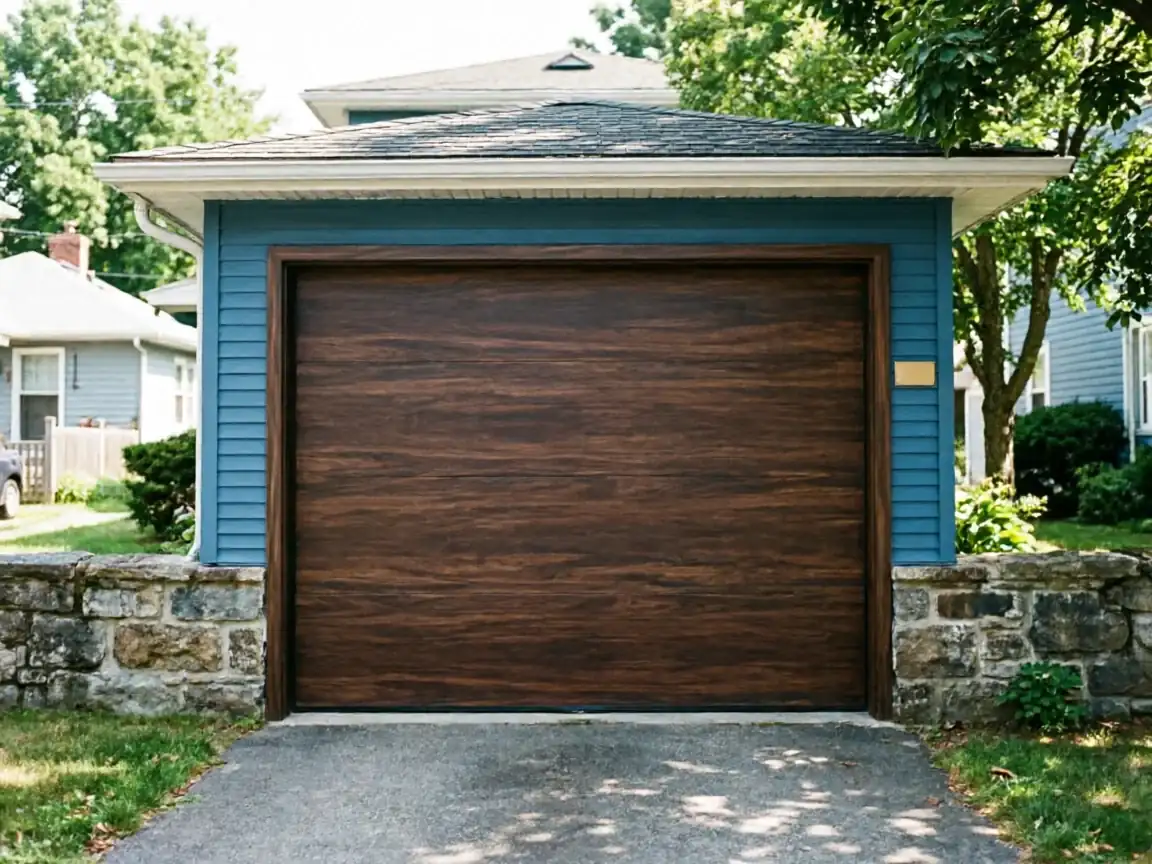
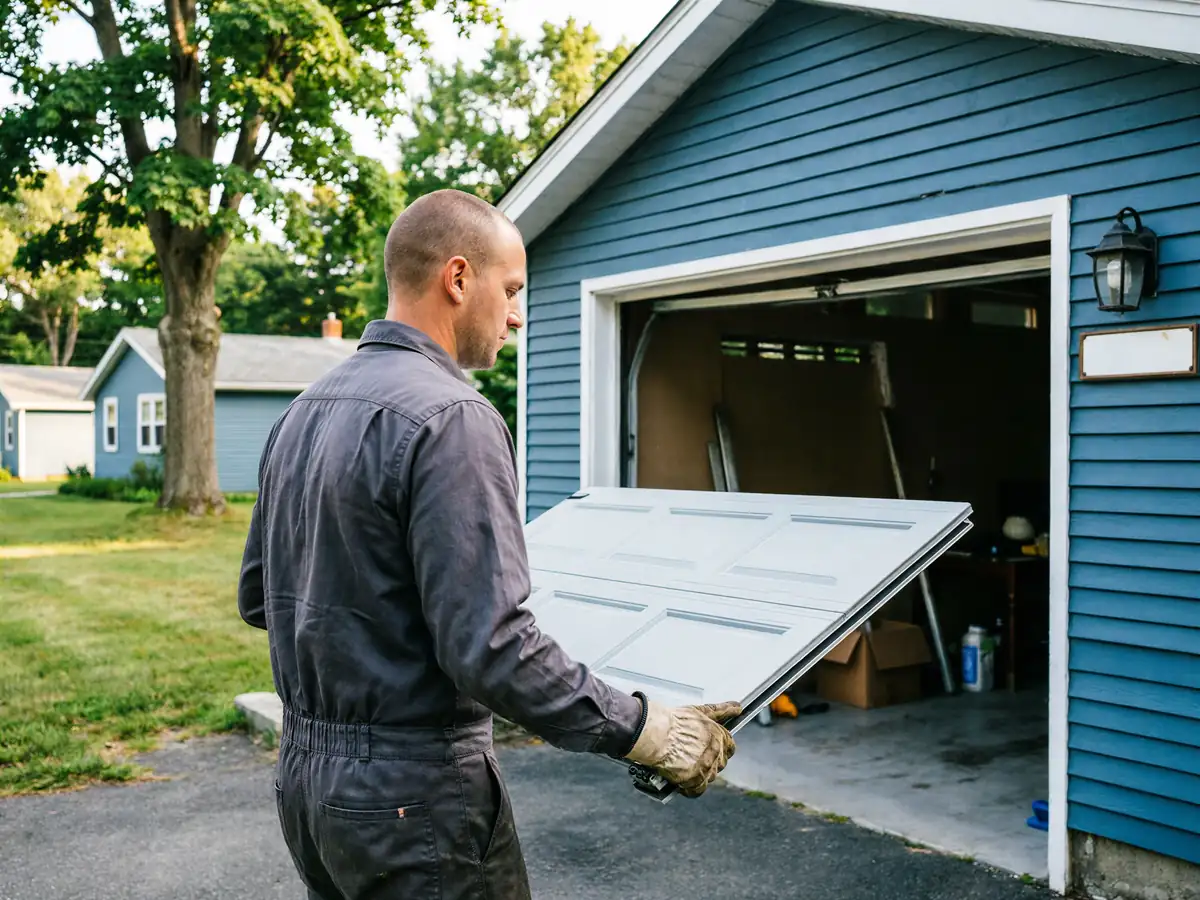
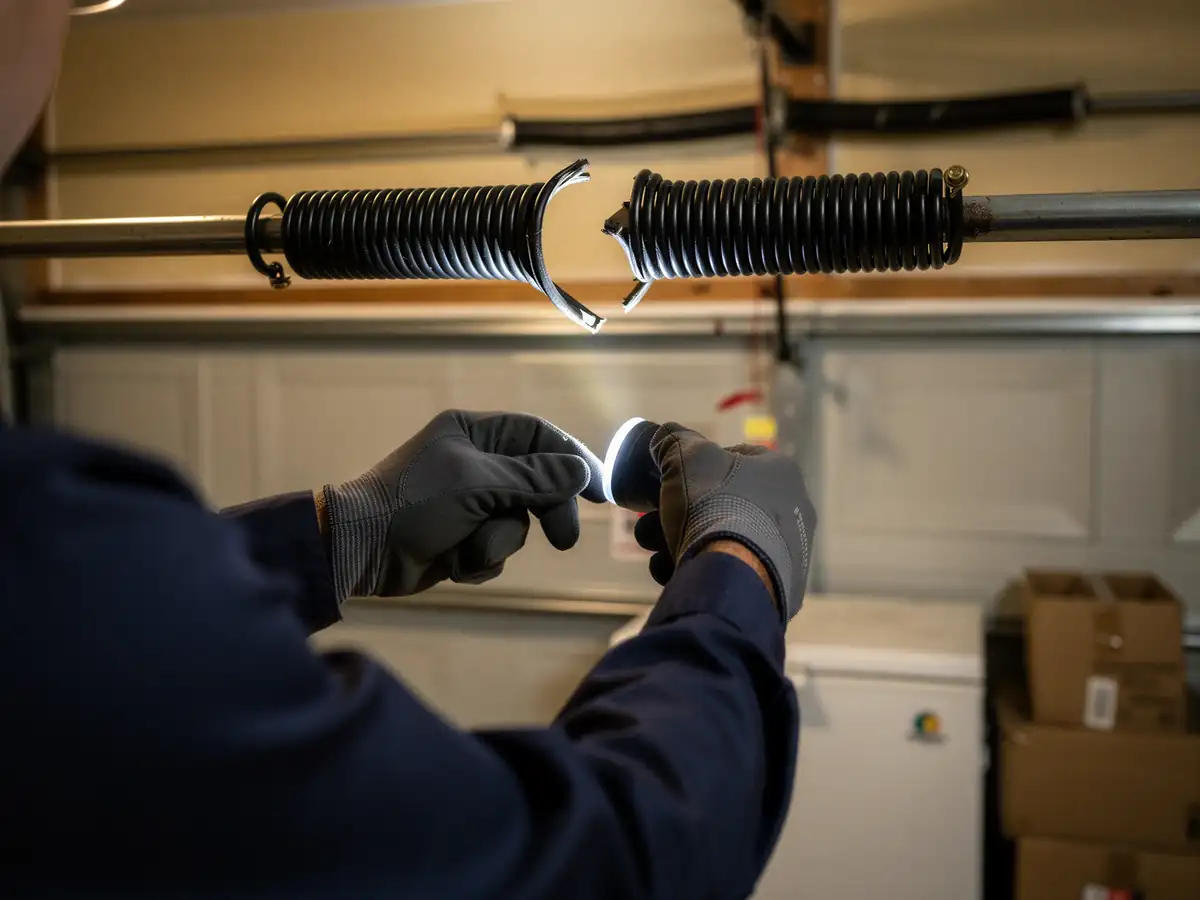
Most of Wellesley went up around 1954, which puts a lot of these garages a decade or more ahead of the insulated steel door that's now the default replacement. What's actually hanging in the opening is often a single-layer wood panel door, sized for a single bay, hung on hardware nobody has made new in years. That's where an emergency call goes sideways fast - the spring that let go isn't a standard stock size, the track is bent in a way that only fits the original door, and the fix isn't a five-minute swap.
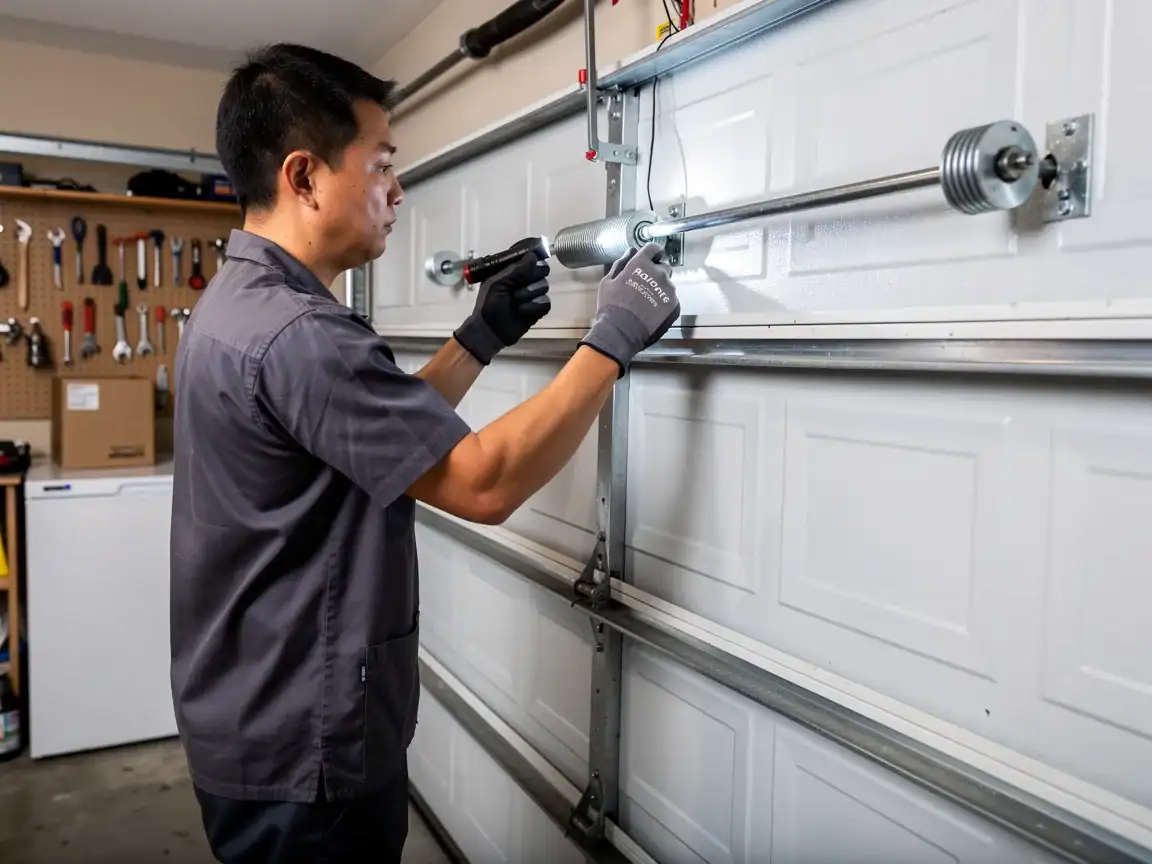
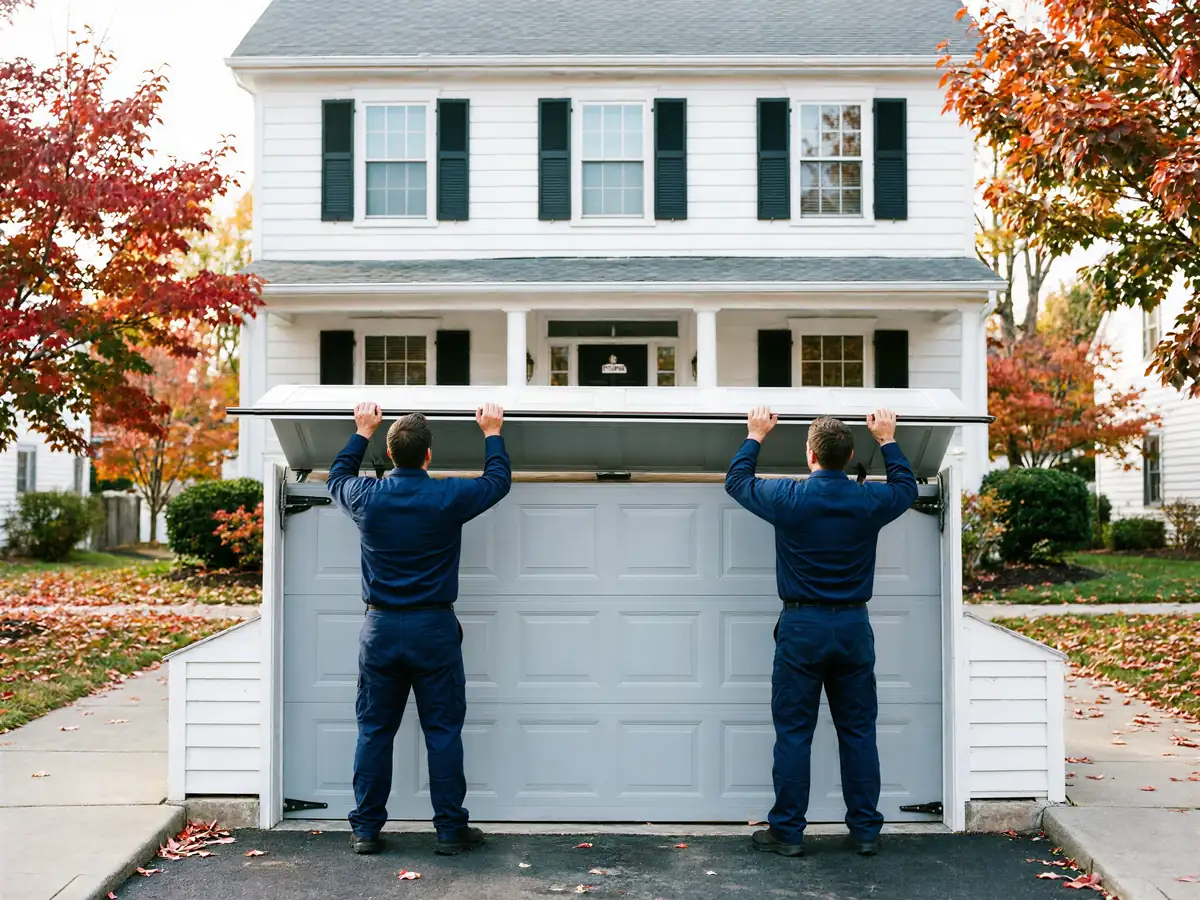
We come out of Waltham, six miles away, so we're not guessing at what we'll find when we get there. A wood door this age is heavy - heavier than the steel door it probably should have been replaced with by now - and a broken torsion spring on a door that heavy is not a job to leave half-done overnight. If the spring snapped while the door was up, don't try to bring it down yourself. We'll walk you through making it safe until we arrive.
We don't stock every obsolete wood-door part on the truck. If yours needs a piece that isn't common anymore, we'll tell you straight whether it's worth sourcing or worth replacing the door instead.
Can You Do This Yourself
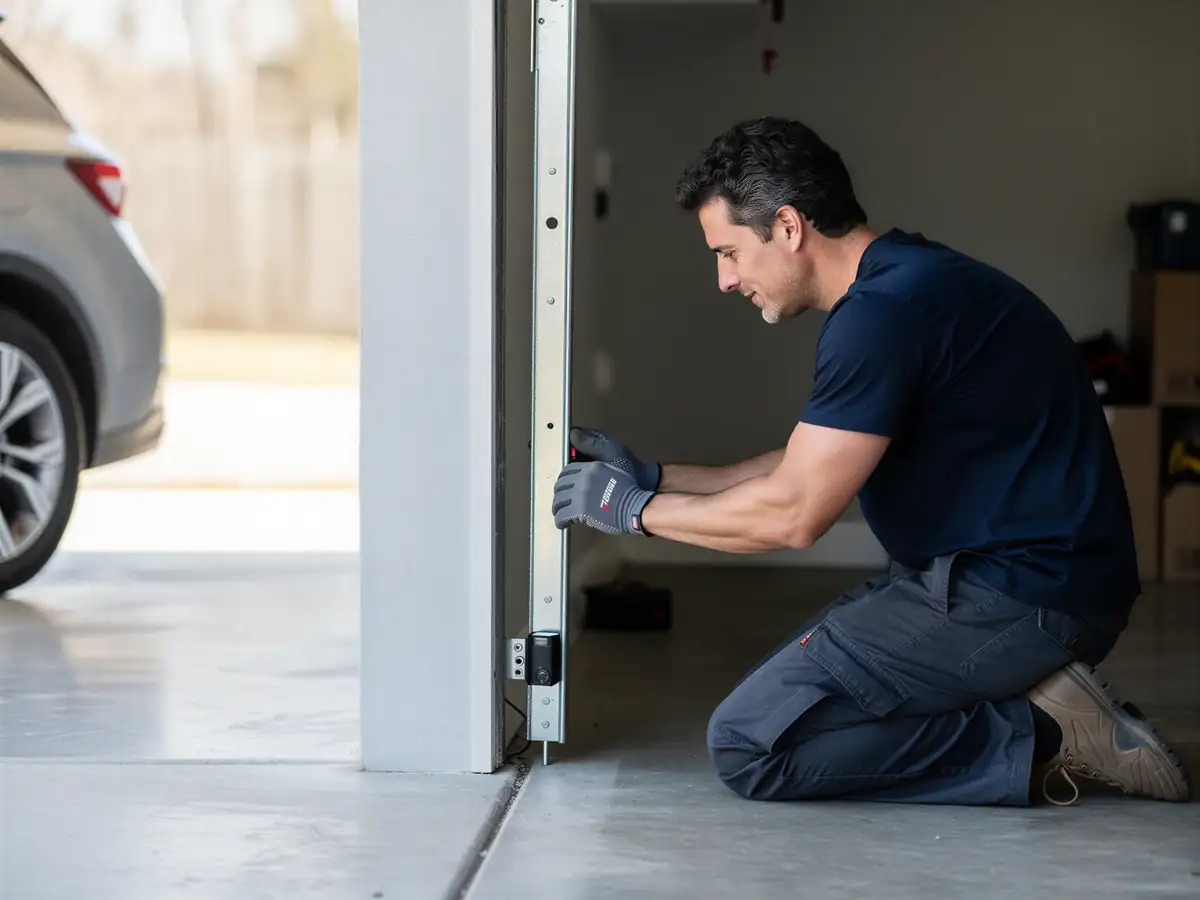
There's a difference between a door that won't close because the sensor's dirty
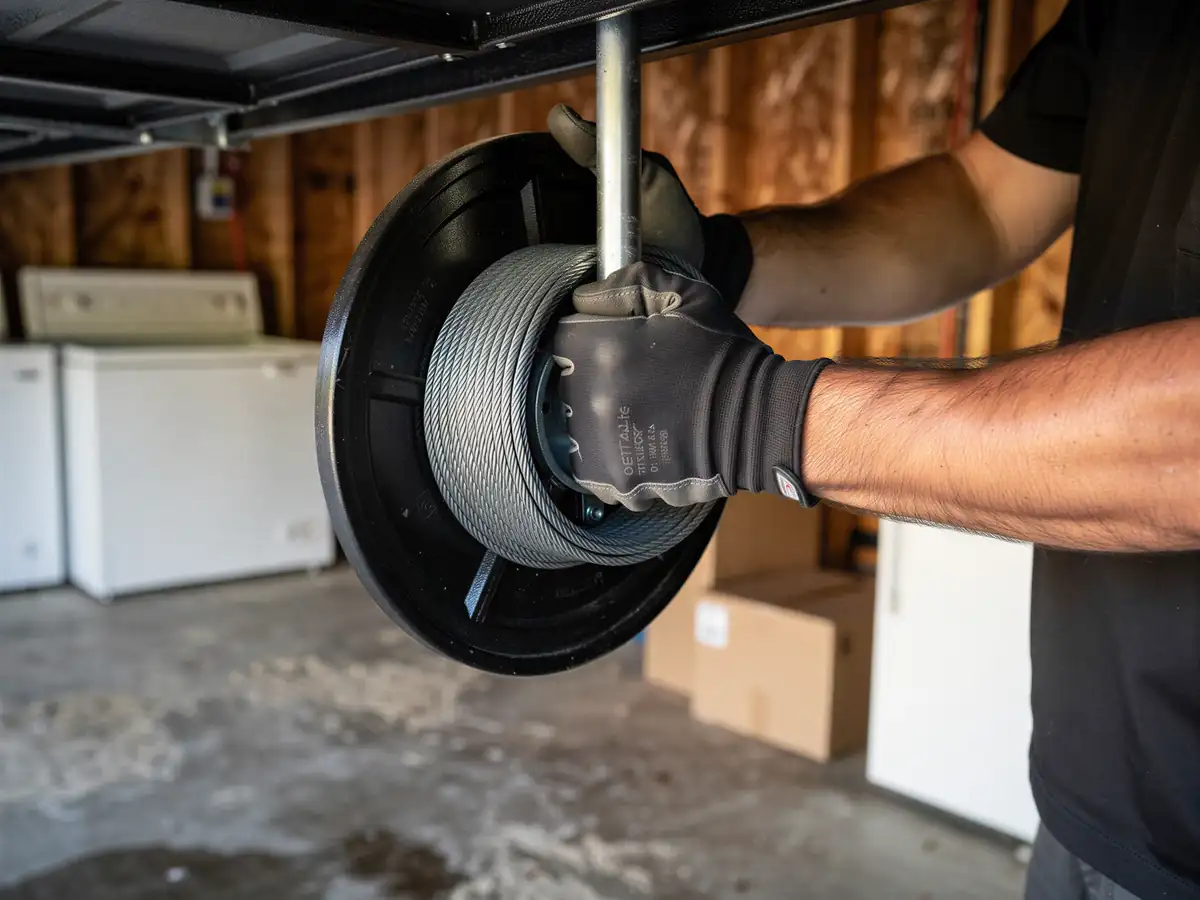
And a door that's jammed because a cable jumped the drum or a spring let go. The first one, go ahead - wipe the sensor eyes, check nothing's blocking the beam. The second one, stop.
On an older wood door like the ones common in Wellesley, the spring is carrying real weight
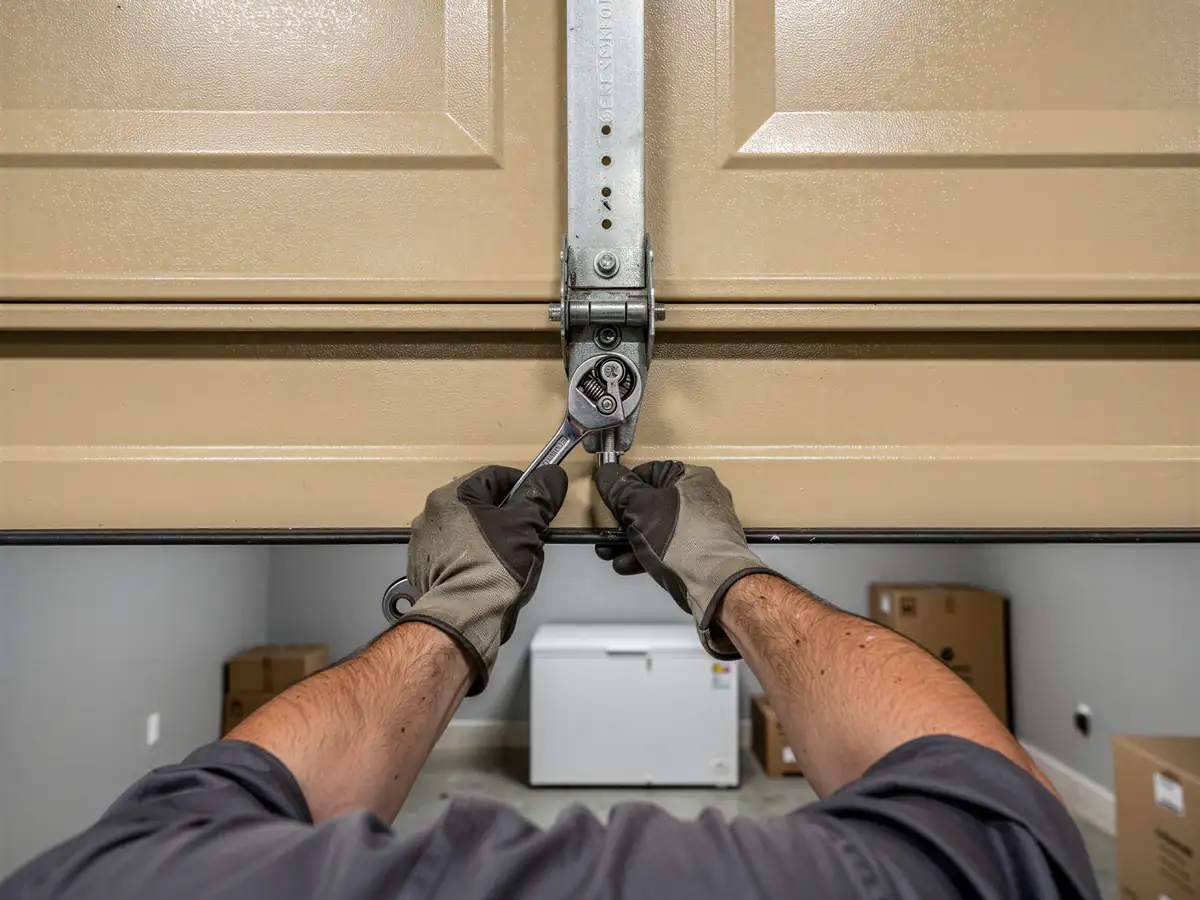
And it's often an off-size spring that was fitted to match the door decades ago, not a part you'll find at a hardware store. Cutting a wound torsion spring, or trying to force a door down on a broken cable, is how people lose fingers, not just doors.
What you can safely do
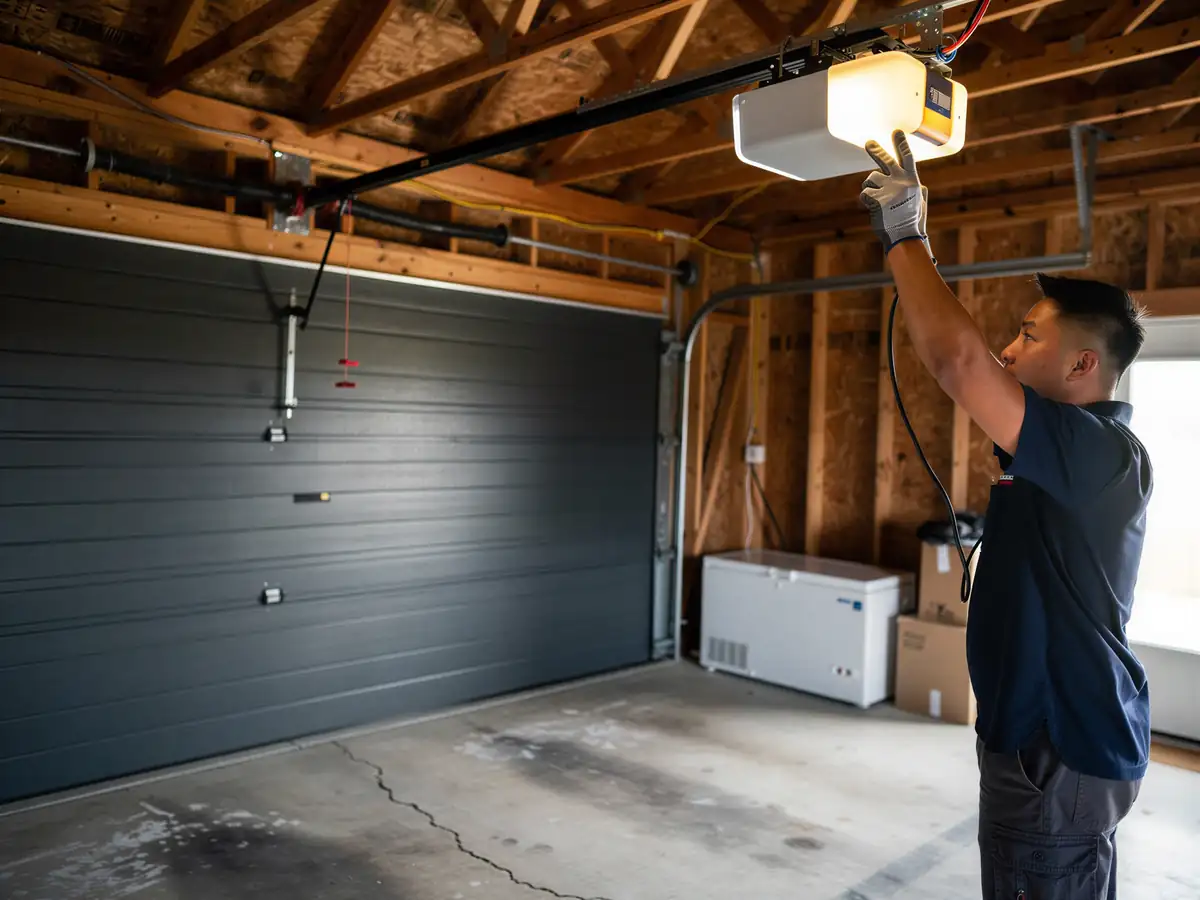
Disconnect the opener by pulling the emergency release cord so the door isn't fighting a motor that thinks it should be moving, and leave the door where it sits. If it's down and jammed, don't force it up. If it's up and the spring's gone, don't try to bring it down on your own. Make the call, and we'll handle the rest from there.
What You Pay
We don't have a Wellesley-specific price list to hand you here, and we're not going to invent one. What we can tell you is what drives the cost on a call like this: whether the part that failed is a common stock size or an older fitting that has to be special-ordered, and whether the fix is a repair or whether the door itself - given its age - is past the point where repair makes sense.
Wellesley's median household income sits well above the wider service area's, and in practice that shows up in what people choose to do with these calls: more owners here replace a cracked or split wood panel outright rather than patch it and wait for the next failure. That's a reasonable call on a door already decades past its design life. It's not the only reasonable call - plenty of these doors can be repaired soundly if the frame and track are still sound.
We'll give you the actual number for your door once we've looked at it, not before.
What You Are Seeing
If your garage sits in one of Wellesley's older sections, the failure pattern tends to follow the door's age. A wood panel door from the 1950s dries out and splits at the panel seams over the years, and once it's split, the hardware mounted to it starts pulling loose under its own weight. That's different from a sagging steel door, where the problem is usually the hinges or a bent track.
Cold winters are hard on both kinds of door, but harder on wood - the panel swells and shrinks with the season, and a door that closed fine in August can bind in January because the frame's moved. If your door is suddenly hard to lift, or the opener strains and reverses partway through, that's often moisture and cold working on old wood, not a motor problem.
With roughly 9,101 households in town, we see both ends of this: original single-bay doors still on their first set of hardware, and newer two-car additions with steel doors from a later remodel. The fix depends entirely on which one's at your address - we won't guess on the phone.