Where This Job Goes Sideways
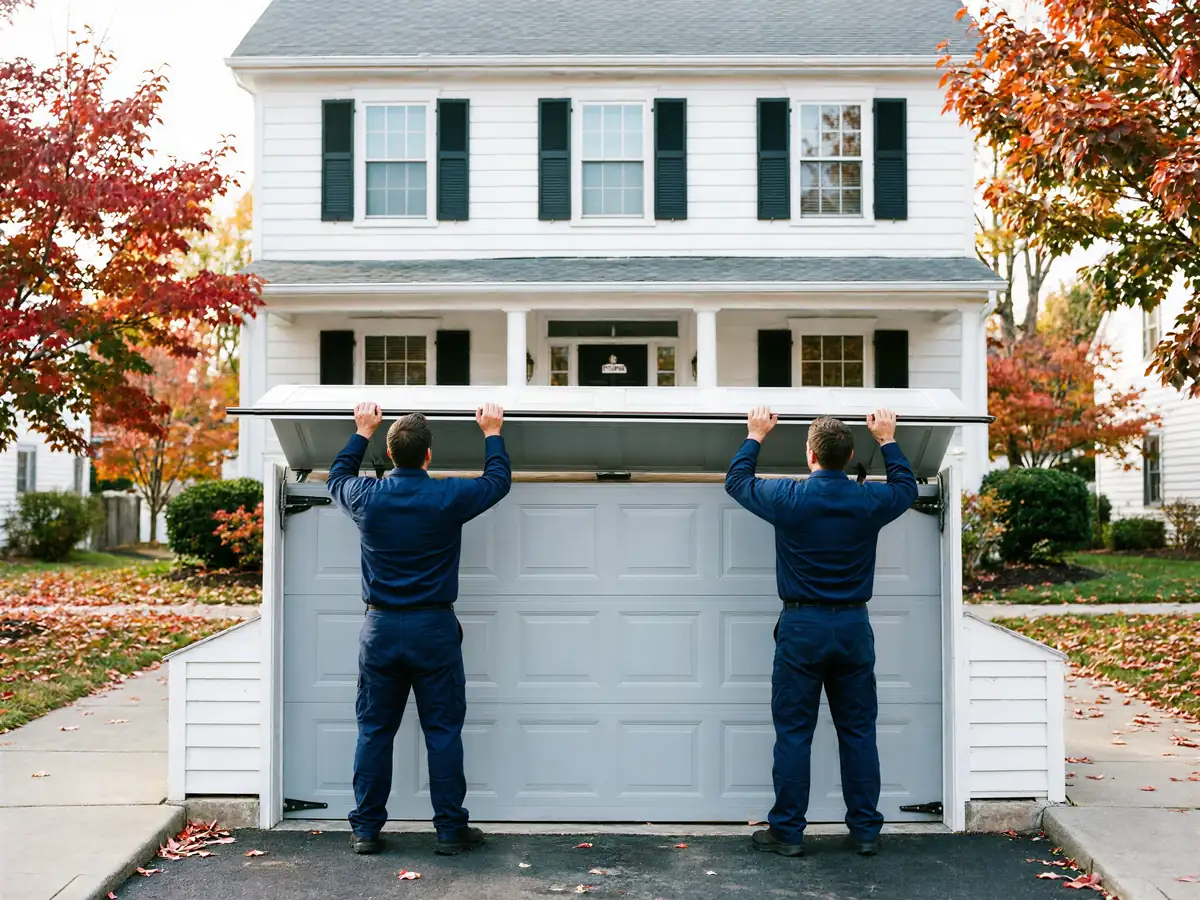
The usual trouble with a new install in Wellesley isn't the door itself - it's the opening it has to fit into. Most houses in town went up around 1954, a good twelve years ahead of the 1966 median across the rest of this company's territory. That decade matters. A house framed in the mid-1950s was usually built around a single, narrow bay, with a header height and jamb depth that doesn't match the 16-foot double-door openings builders started using once two-car garages became standard in the 1960s and 70s.
So the fault we run into isn't a bad door - it's a door ordered to a stock size that doesn't actually fit a stock-size 1954 opening. Trim has to be re-cut, sometimes the header needs reinforcing, and if the original opening was ever widened without updating the framing behind it, that gets found mid-install, not before. None of this is unusual for the era. It's just not the kind of thing you catch by measuring the hole with a tape measure and ordering online.
Can You Do This Yourself
You can hang a garage door yourself
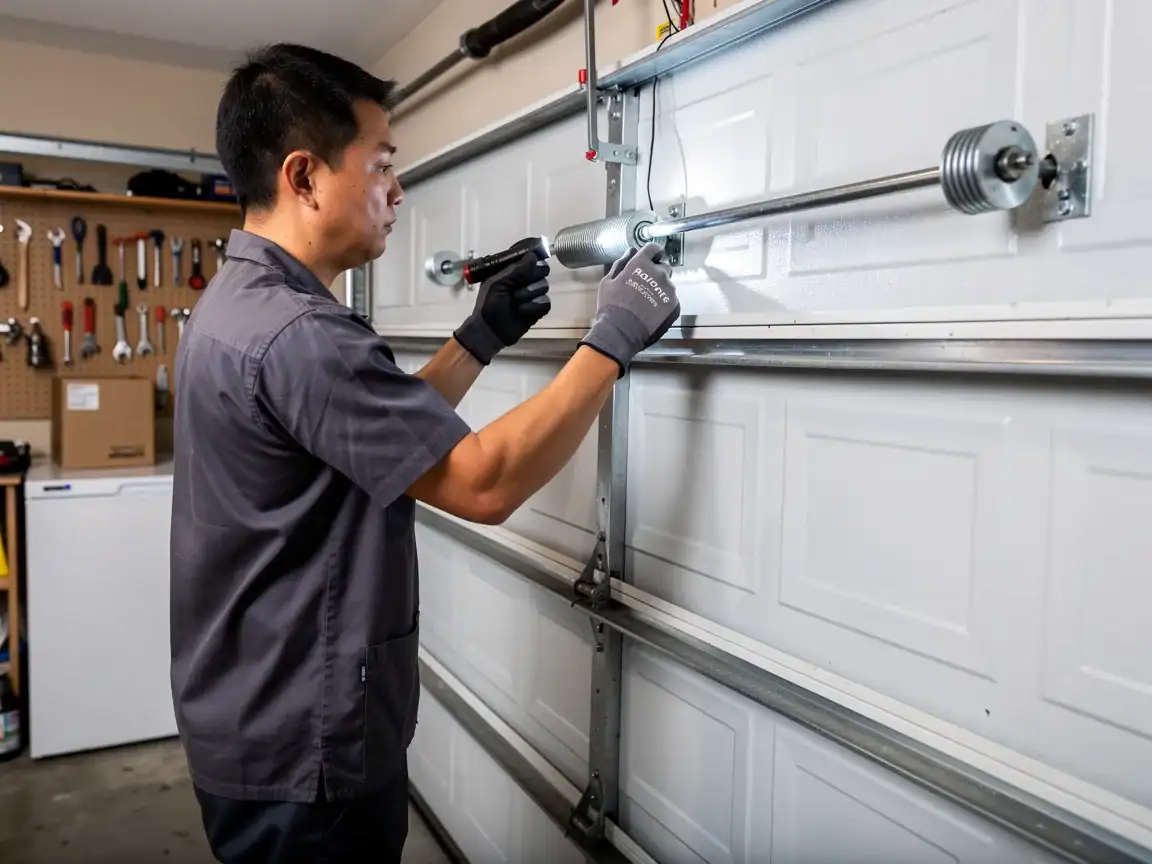
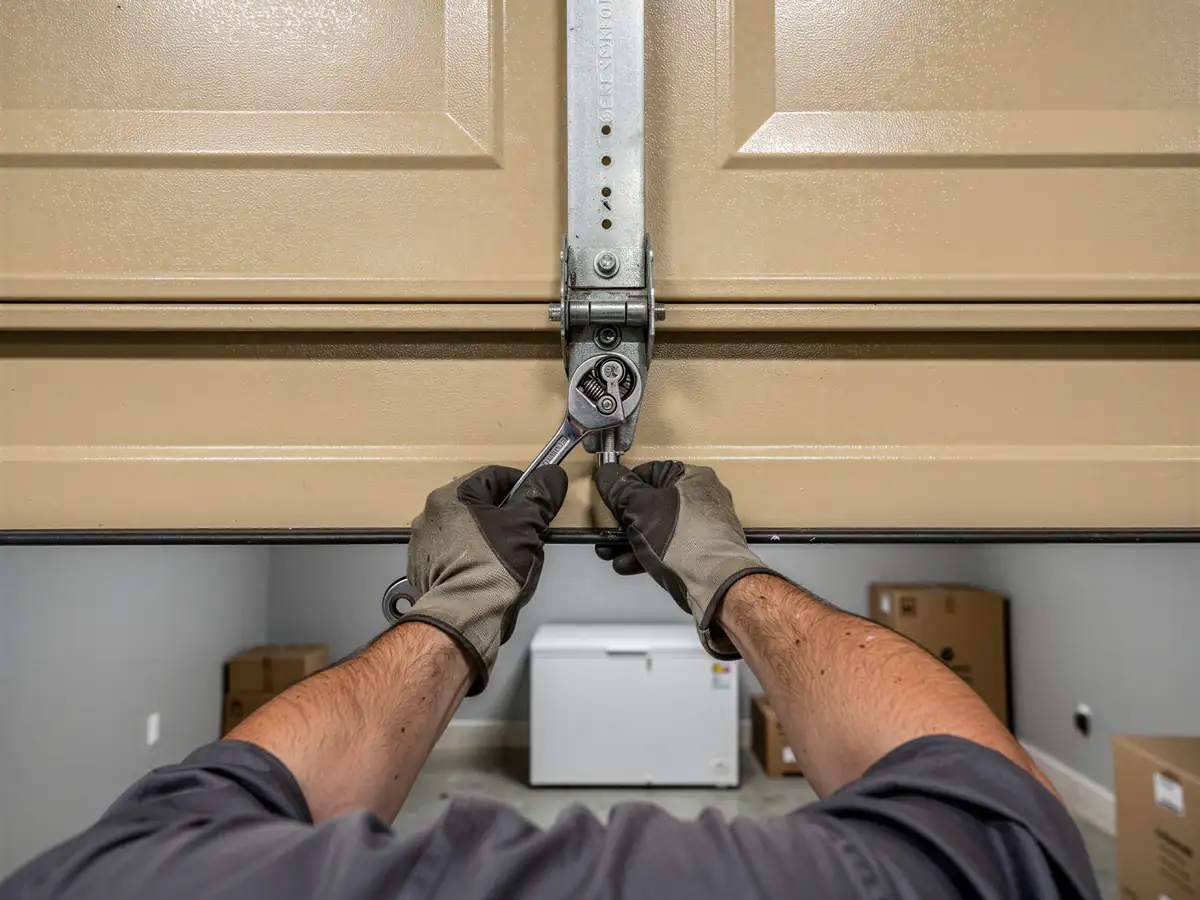
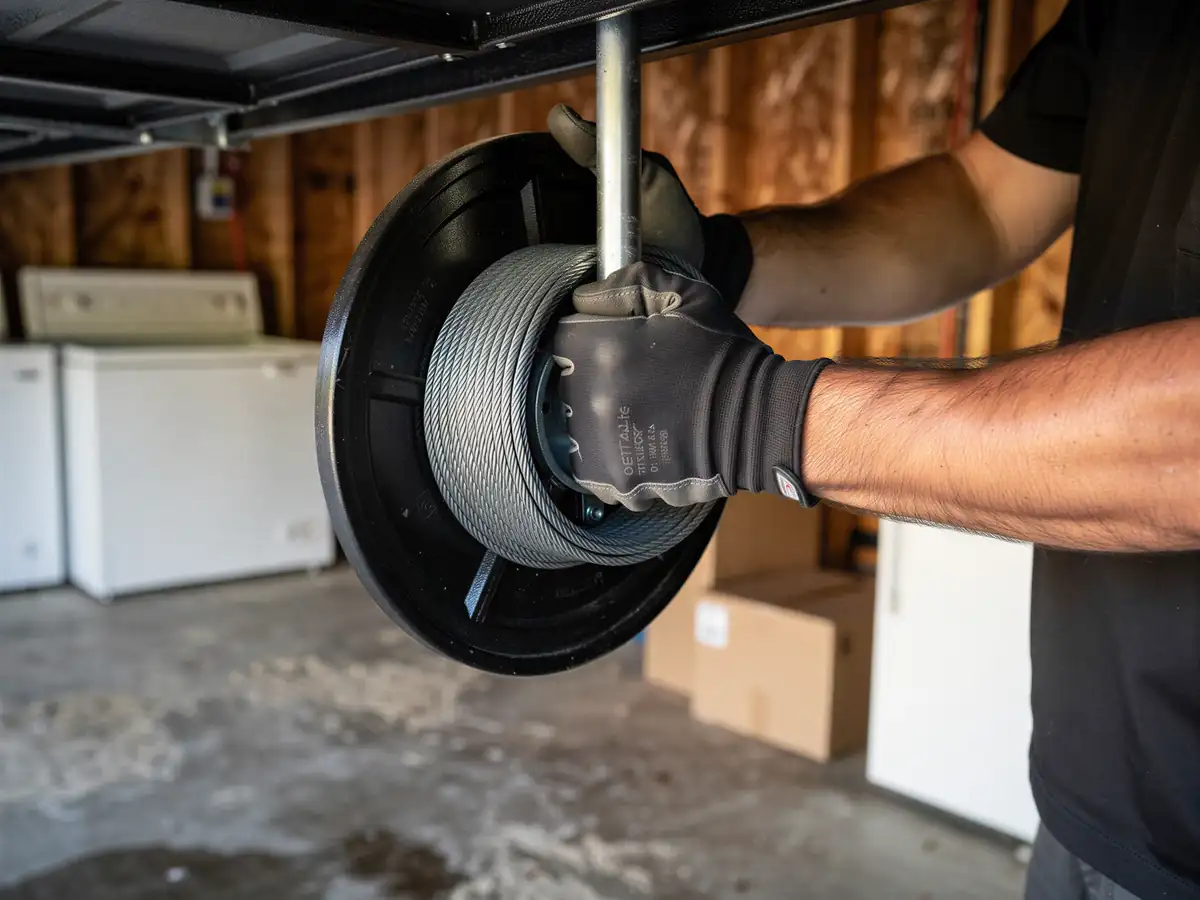
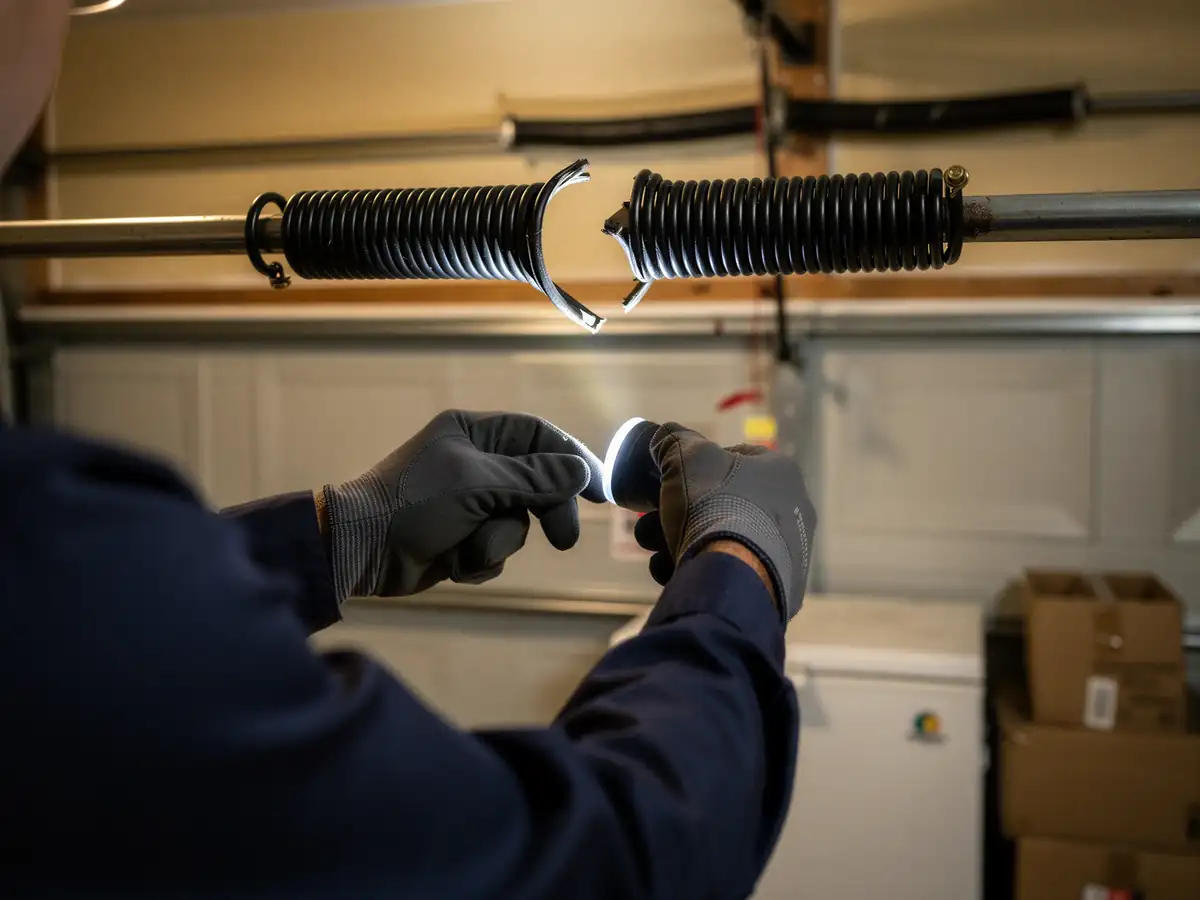
People do it. What trips most DIY installs on a house this age isn't the panel work - it's the torsion spring and the fact that older Wellesley openings often weren't built square to begin with, so a kit designed for a modern, true opening fights you the whole way.
We'll say the honest thing
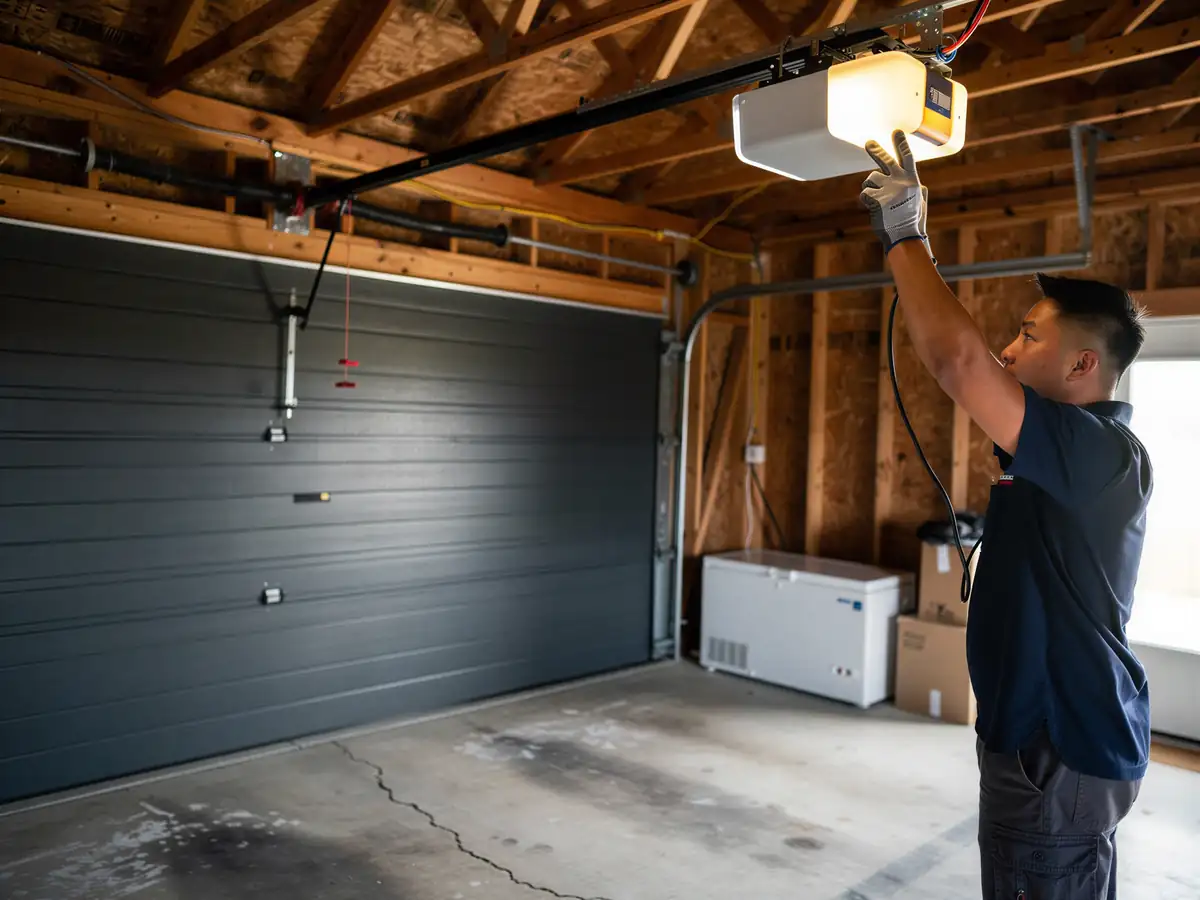
If your opening is a standard, square, modern size, a capable homeowner with the right tools can do this safely. If your house is one of the 1950s builds with an odd header or a jamb that's shifted half an inch over seventy years, you're now doing carpentry and torsion-spring work at the same time, and that's where people get hurt. We don't do the DIY route ourselves on this one - not because it can't be done, but because telling you otherwise would be selling you something we don't believe.
What You Pay
We don't post a flat price here, and we're not going to make one up. What a door costs depends on the size of the opening, whether the framing needs work first, and what kind of door you're putting in - and on a lot of Wellesley's older openings, that first question (does the framing need work) isn't answerable until someone's standing in front of it.
What we can tell you: this isn't a town where income drives the quote. A median household income of $250,001 in Wellesley doesn't change what a standard door costs to install - it tends to change how often people choose a full replacement over another round of patching an old one, compared with the $150,820 median across the rest of the area this company covers. That's a decision about the door, not the price of labor.
What You Are Seeing
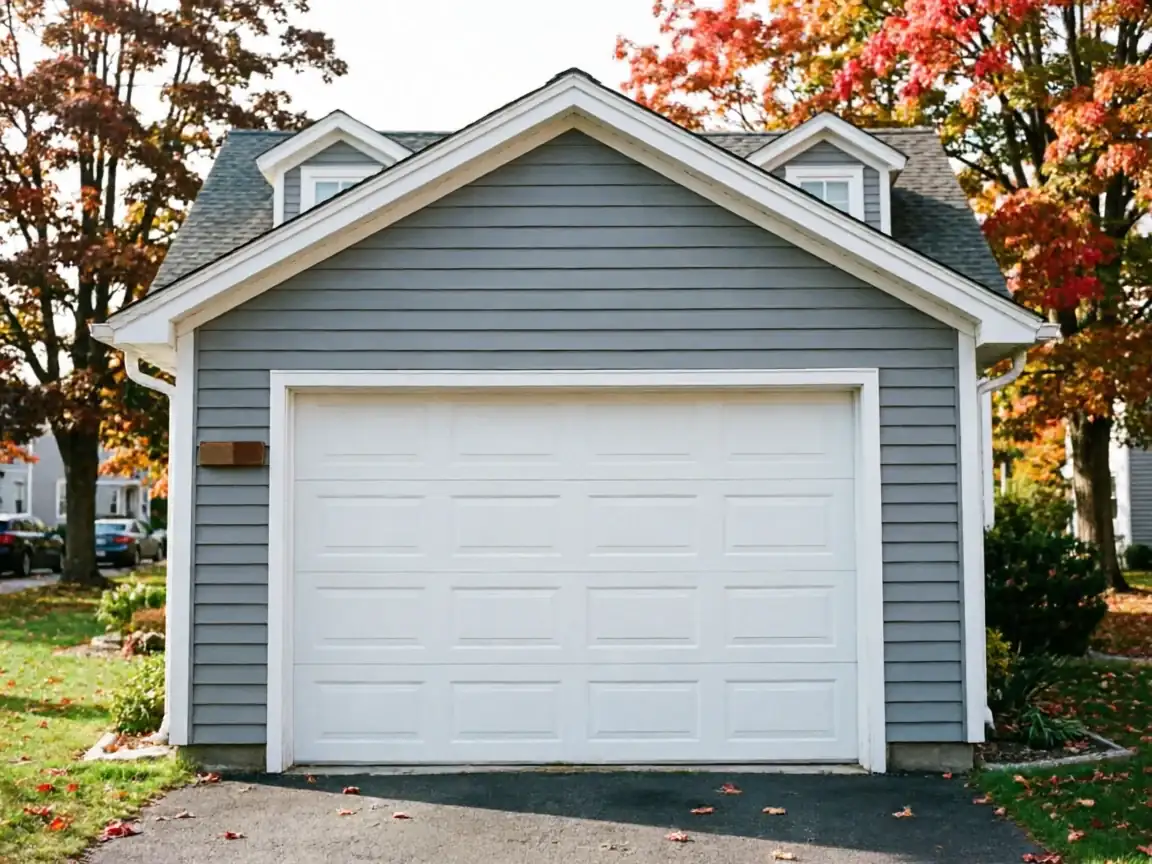
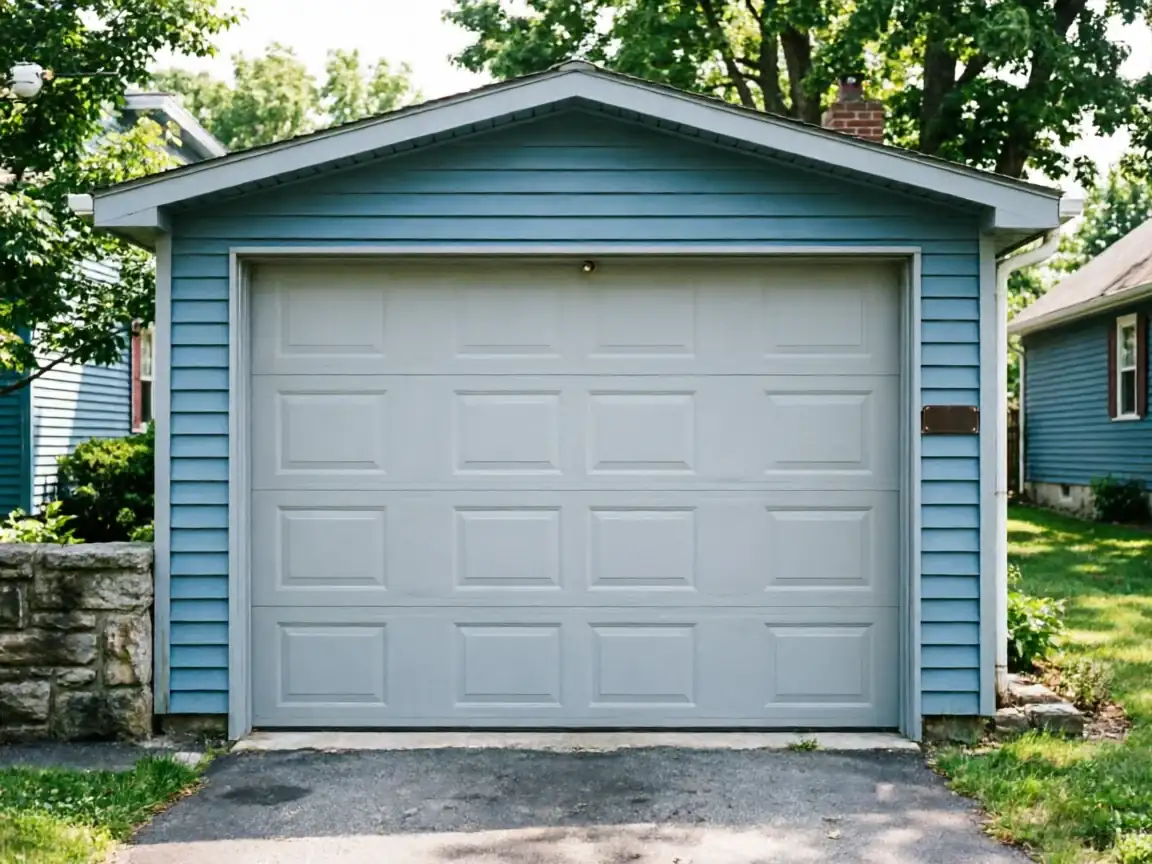
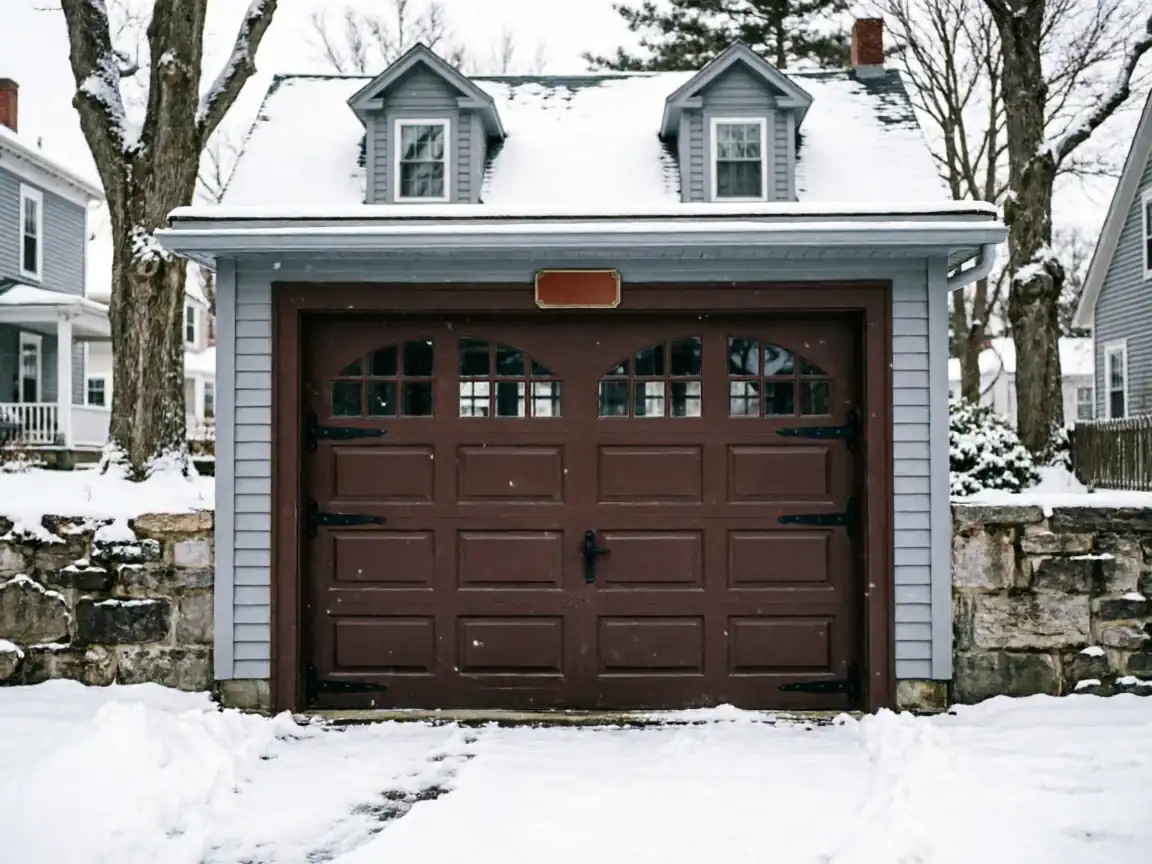
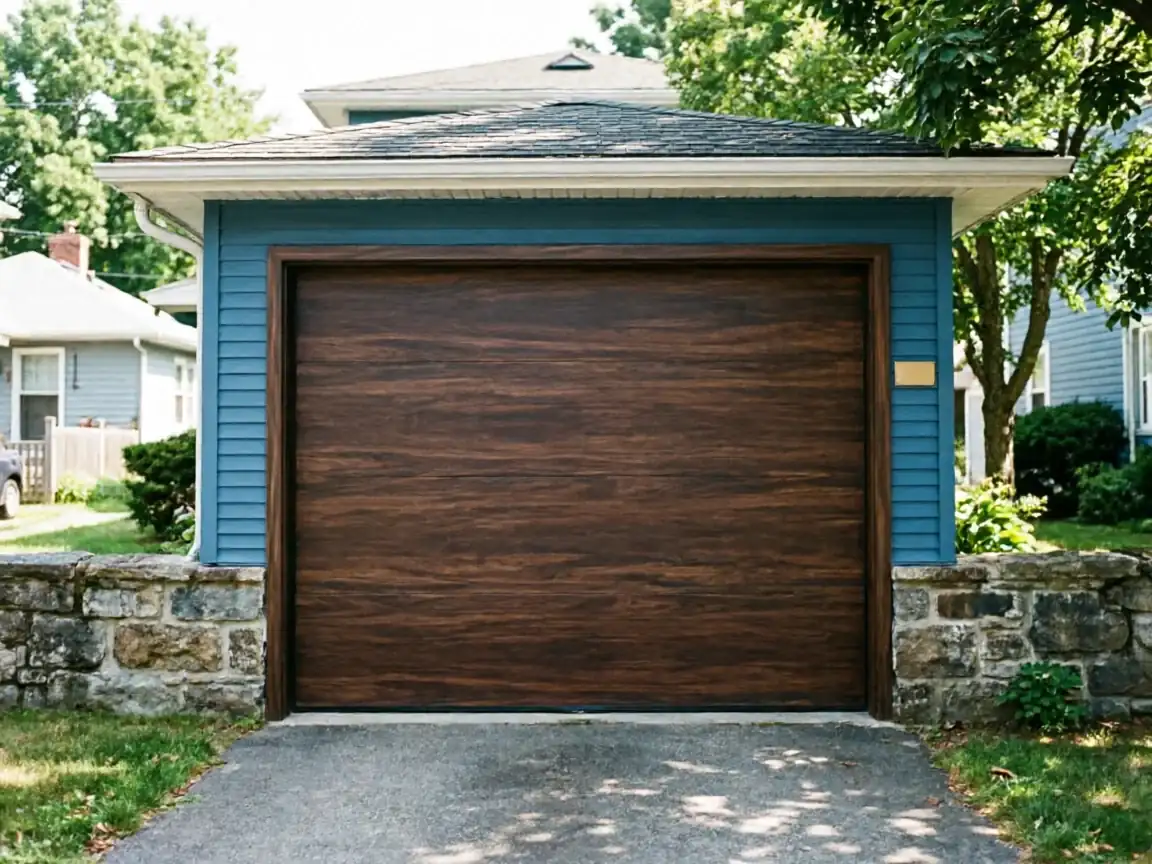
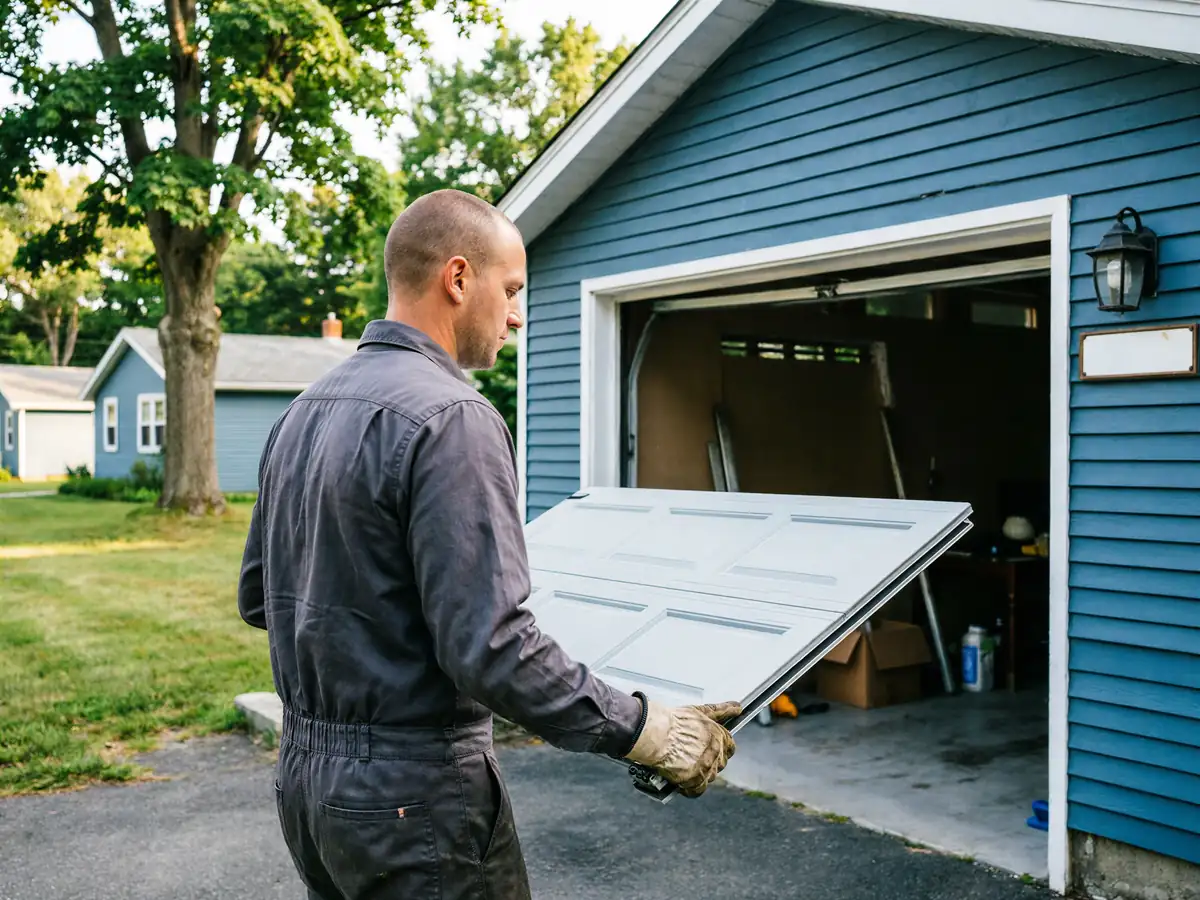
If you're looking at a new install rather than a repair, it's usually because the door you've got is doing one of a few things: it's a single wood or early steel panel door from the 1954-era build, with no foam core, that's heavier than it should be and cold to the touch on the inside wall in January. This whole stretch of Massachusetts sits in a severe cold climate band, and an uninsulated door from that era is one of the places it shows up first - a garage that never warms up, and a door that's visibly sagged at the bottom corners from decades of swinging in wood that's dried and shrunk.
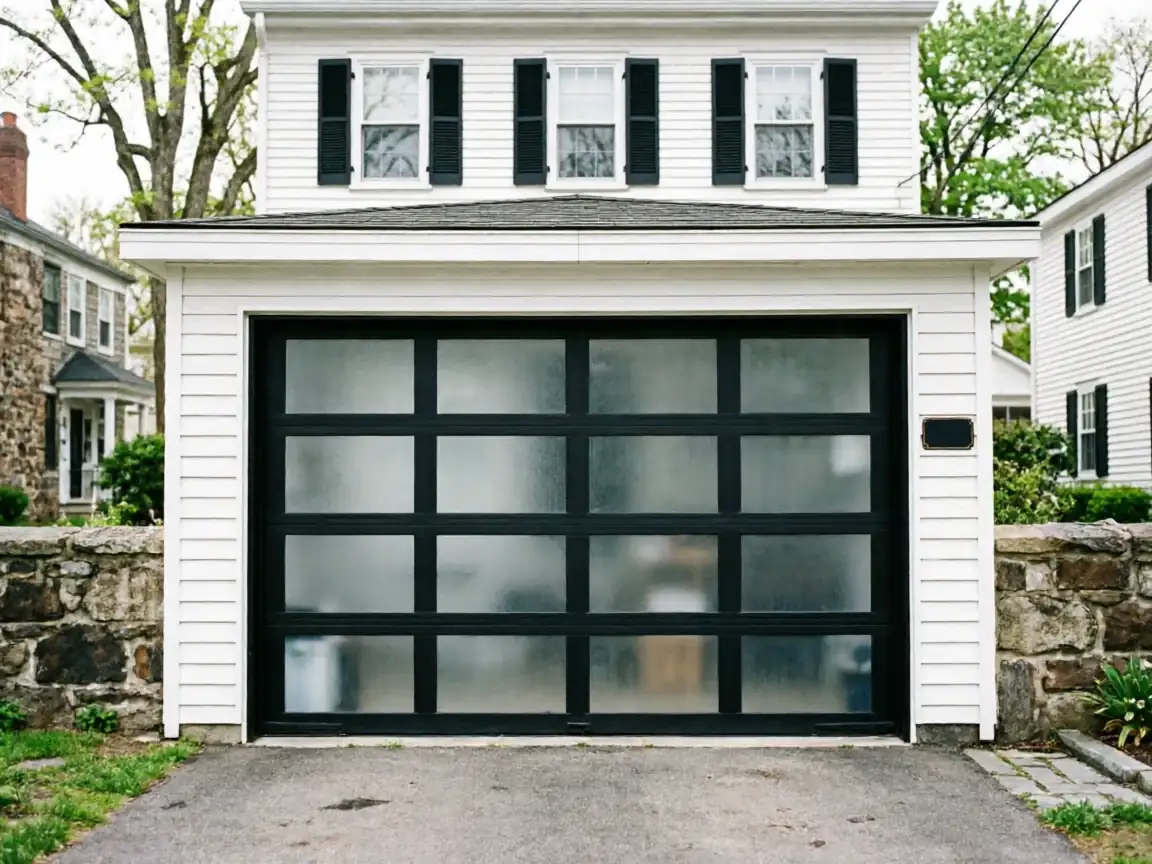
The other common sign is simpler: the door still works, but it's the original narrow single-bay opening and you want the wider two-car door the house never had. Both are legitimate reasons to install new rather than repair, and neither one means anything's actually broken yet.